


Teen Mental Health Treatment Near High Point, NC: Adolescent Therapy And Support Resources
Reviewed by Shantel Sullivan, EdD, LCSW, Chief Executive Officer | Last reviewed
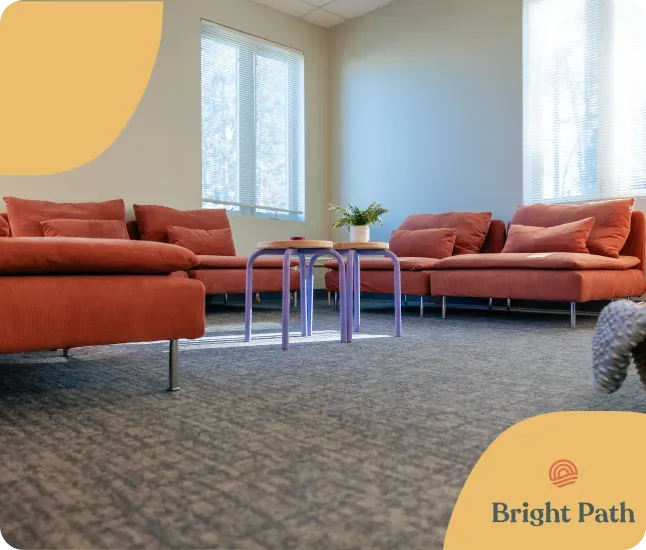
Teens Choose Between Day Treatment and After-School Care
High Point teens choose between two levels of care, and every teen sleeps at home each night. The partial hospitalization program for teens fills each weekday, 9:00 AM through 3:00 PM, in age-matched groups. Our intensive outpatient program for teens in North Carolina meets on three weekday afternoons once classes end, 3:00 to 6:00 PM.
PHP suits a teen whose symptoms keep them out of class, while IOP suits a teen still managing school. Both programs teach Dialectical Behavior Therapy (DBT), a skills-based therapy pairing acceptance of hard feelings with steps toward change. Weekly family therapy belongs to PHP, and both programs keep one primary therapist for the entire stay. Parents in the southern half of Guilford County share that county with adolescent mental health support near Greensboro.
Teens in crisis or thinking about suicide reach the 988 Suicide & Crisis Lifeline 24/7: call or text 988, or chat at chat.988lifeline.org.
What Types of Mental Health Conditions Can Be Treated in High Point, NC?
Depression leads the list of conditions treated for High Point teens, followed by anxiety, self-harm, suicidal thoughts and trauma responses. Each of the 13 concerns fits our admission criteria for PHP and IOP.
- Major depression
- Anxiety that blocks daily activities
- Self-harm
- Suicidal thoughts
- Trauma responses
- Emotion dysregulation
- Social withdrawal
- School refusal
- Identity and self-esteem struggles
- Grief and loss
- Adjustment difficulties
- ADHD with emotional dysregulation
- Mood instability
Depression treatment for teens pairs DBT skills with CBT work on the thought patterns that feed low mood. Challenge groups help High Point teens with anxiety face feared situations together. Self-harm care starts with a written safety plan on the first day and adds daily distress tolerance practice. Families of teens in suicidal ideation treatment receive family safety training, so parents know the plan as well.
Teens needing co-occurring disorders treatment, such as depression and anxiety together, follow one plan. A higher level of care comes first for teens needing 24-hour supervision, or stabilization for psychosis or mania. The same applies to an eating disorder that needs medical monitoring, and our team provides the referral.

Privately Owned Teen Mental Health Treatment Centers Serving High Point, NC
Privately Owned Teen Mental Health Treatment Centers Serving High Point, NC
Bright Path Behavioral Health in nearby Hillsborough provides comprehensive adolescent mental health treatment services for High Point families, located east along I-40, on the route mapped in the directions section below. The facility offers convenient access for teens and families from High Point, with help planning carpools or adjusted schedules for the trip.
Summit Path: High School Program (Ages 15-18)
- Runs weekdays between a 9:00 AM morning huddle and a 2:30 PM afternoon huddle
- Covers romantic relationships, identity and the social side of high school
- Builds independence, from driving to college and career planning
- Saves a 1:30 PM block for homework and school coordination
Meadow Path: Middle School Program (Ages 12-15)
- Opens each weekday with classroom time at 9:30 AM
- Uses shorter, more structured activities for ages 12 to 15
- Teaches peer pressure resistance and early identity work
- Ends at 2:30 PM with a closing circle
River Path IOP: First IOP Experience
- Gathers Tuesday to Thursday afternoons, from 3:00 until 6:00 PM
- Introduces DBT from the first skill, starting with STOP and TIPP
- Opens Tuesday sessions with horticulture therapy
- Holds a Jeopardy-style KIT review game each Thursday
Horizon Path IOP: Advanced Skills Application
- Meets on Monday, Wednesday and Friday afternoons after school
- Welcomes PHP graduates ready to apply DBT skills in daily life
- Works on attachment patterns in a weekly attachment-based group
- Practices executive functioning before independent therapy begins
Other teen mental health treatment centers serving the High Point area include Cone Health Behavioral Health, offering outpatient therapy and psychiatric evaluation for adolescents.
Free Mental Health Support Groups For Teens Near High Point, NC
Free Mental Health Support Groups For Teens Near High Point, NC
High Point teens ages 13 to 17 get a free YMCA of High Point membership with a parent's signature.
- YMCA of High Point Free Teen Membership, usable at the Carl Chavis Memorial, Carl & Linda Grubb Family and Hartley Drive Family branches on days public schools are out of class.
- Kellin Foundation peer support, one-on-one meetings with state-certified peer specialists for teens 13 and older at Greensboro and High Point locations, at free or deeply reduced cost; (336) 429-5600.
Twelve or fewer teens share each Bright Path skills group, so peer support continues inside treatment too.
Free Parent and Family Support Resources Near High Point, NC
Free Parent and Family Support Resources Near High Point, NC
Our CEO leads a weekly caregiver group that stays open to High Point parents for up to six weeks after discharge.
- Bright Path caregiver group, a weekly CEO-led circle with practical strategies and support from other parents, joined during treatment and kept after discharge.
- NAMI Guilford Family Support Group and Family-to-Family, education and support for relatives of a person with a mental health condition, listed by Guilford County; write to nami@namiguilford.org for meeting details.
Local Teen Mental Health Support Services in Guilford County
Local Teen Mental Health Support Services in Guilford County
Public mental health care for High Point teens runs through Trillium in Guilford and Randolph counties and Partners in Davidson.
- Trillium Health Resources, the LME/MCO for Guilford and Randolph counties since February 1, 2024; 1-877-685-2415.
- Partners Health Management, the LME/MCO for Davidson County, which takes in the Thomasville side of High Point; 1-888-235-4673.
- Guilford County Behavioral Health Center, 931 Third St, Greensboro, NC 27405, a walk-in behavioral health urgent care for Guilford County residents, children ages 4 to 17 included, regardless of ability to pay; 336-890-2700.
- School counselors in Guilford County Schools, a first contact for a student who needs help during class hours.
Immediate Help & Crisis Resources for High Point Teens and Families
Immediate Help & Crisis Resources for High Point Teens and Families
A trained Crisis Text Line counselor answers a High Point teen at any hour after a text of HOME to 741741.
Each of the following five steps reaches help for a High Point family, day or night.
- Message the word HOME to 741741 for a free, confidential Crisis Text Line conversation.
- Dial or text 988, or chat online, to reach the Suicide & Crisis Lifeline around the clock.
- Take a Guilford County teen to the Guilford County Behavioral Health Center at 931 Third St, Greensboro, staffed 24/7 for children and teens 4 to 17 (336-890-2700).
- Ring Trillium at 1-877-685-2415 in Guilford or Randolph County, or Partners at 1-888-235-4673 in Davidson County, for the public behavioral health system.
- Phone 911 or go straight to the nearest emergency department whenever a life is in danger.
Psychiatric Care Covers More Than Medication
Every High Point teen at Bright Path meets a psychiatric provider weekly for 30 to 60 minutes, with or without medication. Visit content depends on whether a teen takes a prescription, from dose reviews to sleep habits.
Teens taking medication
- Reviewing how well each medication works
- Managing side effects
- Adjusting dosage
- Deciding next steps together with the teen and parents
Teens without medication
- Improving sleep hygiene
- Linking nutrition and mental health
- Connecting exercise and mood
- Managing stress
- Regulating biological rhythms
Medication stays the family's decision, and teens start PHP or IOP with or without a prescription. Our providers frame the conversation with one question: "If medication could help 30% of your symptoms, which ones matter most to you?"
Medical Director oversight ties each psychiatric visit to the rest of a teen's behavioral health plan, including therapy and family sessions.
Parents Get Support of Their Own
High Point parents receive three supports of their own: a CEO-led parent group, a Teen Care Advocate and family therapy. Each support starts during the first week of treatment.
- A weekly parent group, led by our CEO, trades practical strategies and peer support, and caregivers keep a seat for up to six weeks after discharge.
- Each family's Teen Care Advocate acts as a personal guide, solving transportation problems, work-schedule clashes and sibling concerns as they come up.
- Family therapy in PHP runs 60 minutes each week and centers on communication, boundaries and safety planning at home.
You don't have to do this alone anymore, and the parents in that weekly circle understand the strain firsthand.
What Brings High Point Families to Bright Path's Hillsborough Clinic?
Weekly psychiatric care, direct school partnership and age-matched groups of 12 or fewer bring High Point families to Bright Path's Hillsborough clinic. Five program strengths explain why parents across High Point make that choice.
- Weekly psychiatric care, a 30 to 60 minute visit that coordinates closely with therapy and with parents.
- Direct school partnership, with phone calls to teachers, help at IEP and 504 meetings, and a planned return to class.
- Teen-set goals, chosen by each teen, who also picks one 60-minute or two 30-minute therapy sessions a week.
- One care team, where the same therapist, psychiatric provider and group leaders stay from admission to discharge.
- Age-matched groups, with middle schoolers (12 to 15) and high schoolers (15 to 18) on separate tracks, each capped at 12 teens.
Our Wake Forest clinic runs the same program schedule as Hillsborough for families who prefer it.
Insurance Often Covers 70 to 100 Percent of PHP

How to Get to Bright Path Behavioral Health from High Point, NC?
From High Point City Hall, Hillsborough is the closer clinic, about 57 miles east by I-85 and I-40 in just under an hour. Farther east, the Wake Forest clinic sits about 99 miles away, a drive of about 1 hour 35 minutes, and each site offers the full PHP and IOP schedule.
Closer to High Point
Hillsborough Clinic Directions
- From E Martin Luther King Jr Dr, get on I-85 North/US-29 North.
- Keep right on US-29 North toward Greensboro, then merge onto I-40 East.
- Ride I-40 East, joined by I-85, for about 40 miles past Burlington and Mebane.
- Take exit 164 for Churton St toward Hillsborough, then follow US-70 Business to Corporate Dr.
- Park at 980 Corporate Dr, Hillsborough, NC 27278.
PHP days at our adolescent mental health care in Hillsborough begin at 9:00 AM, and IOP begins at 3:00 PM.
Wake Forest Clinic Directions
- Begin on the same I-85 North/US-29 North ramp from E Martin Luther King Jr Dr.
- Continue east on I-40 through Greensboro, Burlington and Durham.
- Switch to I-540 East past Research Triangle Park and ride it toward US-1.
- Head north on US-1 (Capital Blvd) into Wake Forest, then turn onto Capcom Ave.
- Park at 203 Capcom Ave #104, Wake Forest, NC 27587.
Our Wake Forest youth behavioral health clinic keeps the same weekday and after-school hours.
Families who need help with the trip plan carpools, adjusted schedules or community resources with our team.
Parents Ask These Questions First
Yes, teen PHP and IOP are covered by commercial plans such as Aetna, Cigna, UnitedHealthcare and Blue Cross Blue Shield. Benefits for a High Point family get checked on the first call, free of charge.
PHP is day treatment, so High Point teens attend 9:00 AM through 3:00 PM and sleep at home every night. Inpatient care keeps a teen on a hospital unit around the clock.
Your teen's school hears from us once a parent gives permission, and our Education Liaison handles each contact. During PHP, the liaison arranges homebound status so coursework keeps moving.
Parents and teens decide together, and every medication change waits for a parent's consent. Teens without medication still see a psychiatric provider weekly for sleep, nutrition and stress support.
The first call is a Trailhead Check-In of 15 to 30 minutes with an admissions coordinator. It covers current struggles, past treatment, school and safety, and it verifies insurance benefits.