
-1.svg)
Biofeedback therapy employs techniques that help individuals gain control over physiological functions, making it particularly beneficial for teens facing emotional and physical challenges, including addiction. The growing interest in biofeedback correlates with its proven efficacy in reducing anxiety symptoms. However, a study by Joanneke W. et al., published in the Journal of Medical Internet Research in 2020, reveals that only 1.6% of anxiety patients utilize biofeedback, while about 16% explore alternative therapies. This gap highlights the need for greater adoption of biofeedback in standard treatment practices, especially for adolescents with co-occurring anxiety and addiction issues.
The main types of biofeedback therapy include electromyography (EMG), which measures muscle tension; thermal biofeedback, which tracks skin temperature; and neurofeedback, which focuses on brainwave activity. Each type serves a unique purpose, allowing teens struggling with addiction to address specific concerns, such as stress management and emotional regulation. For instance, neurofeedback has been shown to improve self-regulation of brain activity in approximately 70-85% of participants, which is essential for managing addiction-related challenges, per a study by C. Loriette., et al published in the Revue Neurologique in 2021 titled “Neurofeedback for cognitive enhancement and intervention and brain plasticity.”
In addiction treatment, biofeedback is used to help adolescents manage issues like anxiety, cravings, and the emotional turmoil associated with substance use. By learning to control their physiological responses, teens develop effective coping strategies, enhancing their overall emotional well-being and reducing the likelihood of relapse.
The biofeedback therapy process begins with placing sensors that monitor physiological functions. Teens receive real-time feedback, guiding them in practicing relaxation techniques and self-regulation strategies. This interactive learning environment promotes personal growth and equips them with skills to manage triggers and stressors linked to their addiction.
While biofeedback therapy is generally considered safe, it does carry some risks, such as minor discomfort from sensor placement and potential frustration during the learning process. However, the benefits—like improved emotional regulation, reduced anxiety, and enhanced focus— outweigh these concerns, making biofeedback a valuable tool in addiction treatment for adolescents, helping them build resilience and healthier coping mechanisms.
What is Biofeedback Therapy?
Biofeedback therapy is a therapeutic approach that enables individuals to gain awareness and control over physiological functions, such as heart rate, muscle tension, and breathing patterns, through electronic monitoring devices. This method is particularly effective for teens, as it helps them manage stress, anxiety, and emotional challenges, including those related to addiction.
During a biofeedback session, sensors are placed on the body to monitor these physiological responses. The real-time feedback provided by these sensors allows individuals to learn relaxation techniques and self-regulation strategies, enhancing their emotional well-being and coping mechanisms.
59.6% of patients treated with biofeedback experienced adequate relief, which is significantly higher than the 32.7% of patients who underwent emergency general surgery and the 28.3% who received digital massage, per a study published in Clinics in Colon and Rectal Surgery in 2020 titled “Biofeedback for Pelvic Floor Disorders.”
What Are The Types Of Biofeedback Therapy?
The types of biofeedback therapy are neurofeedback, heart rate variability biofeedback, blood pressure biofeedback, respiratory biofeedback, electromyography (EMG) biofeedback, thermal biofeedback, and galvanic skin response (GSR) biofeedback. Each type targets specific physiological functions and is used to help manage various conditions. For example, neurofeedback focuses on brainwave activity and is used to treat ADHD, anxiety, and PTSD by helping individuals improve self-regulation of their brain functions.
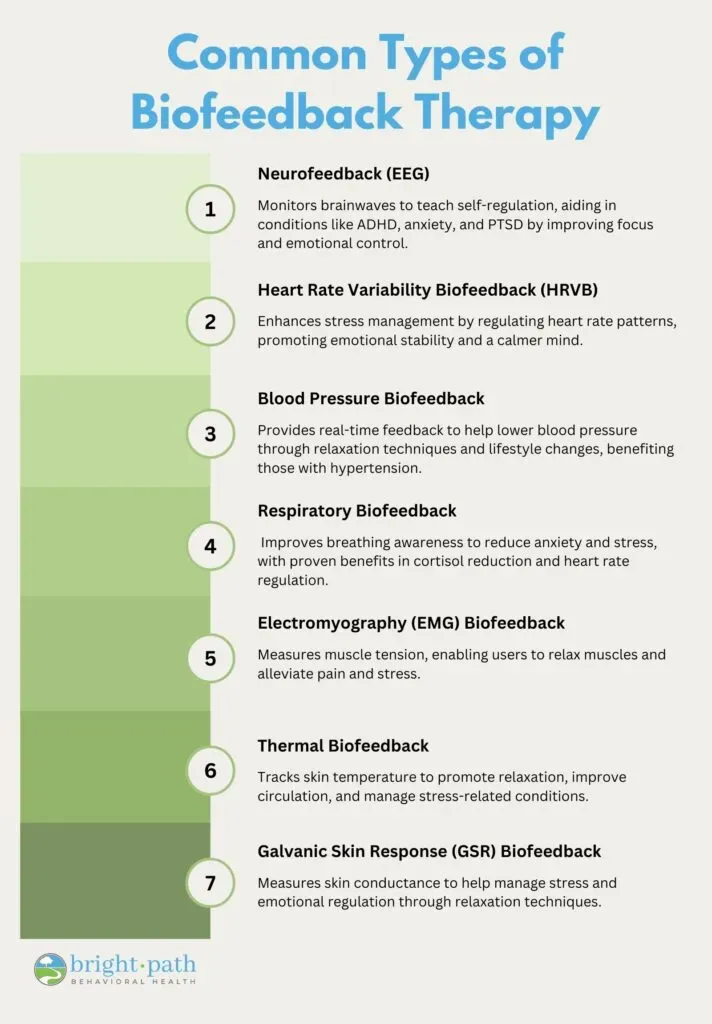
Common types of biofeedback therapy include:
- Neurofeedback (EEG): Neurofeedback monitors brainwave activity and teaches individuals to self-regulate their brain functions. It is particularly effective for conditions like ADHD, anxiety, and PTSD, as it helps users develop better focus, emotional control, and resilience against stress.
- Heart Rate Variability Biofeedback: This therapy focuses on the variation in time between heartbeats. Teaching individuals to control their heart rate patterns enhances emotional regulation and stress management. Improved heart rate variability is linked to better stress responses, leading to a calmer mind. A systematic review by Jaume F. L., et al published in the Applied Psychophysiology and Biofeedback in 2023 titled Methods for Heart Rate Variability Biofeedback (HRVB) indicates that HRVB has mild to moderate efficacy across 143 studies, with specific protocols showing varying effectiveness: 37 studies on Optimal RF, 48 on Individual RF, and 51 on Preset-Pace RF. Improved heart rate variability is linked to better stress responses, promoting a calmer mind and highlighting HRVB’s potential as a valuable therapeutic intervention.
- Blood Pressure Biofeedback: The blood pressure biofeedback approach provides real-time feedback on blood pressure levels, allowing individuals to implement relaxation techniques and lifestyle changes to lower their blood pressure. It is especially beneficial for those with hypertension, empowering them to take control of their cardiovascular health.
- Respiratory Biofeedback: The Respiratory biofeedback type helps individuals become aware of their breathing patterns. Learning to control their breath helps users reduce anxiety and panic attacks, as regulated breathing promotes relaxation and helps manage stress responses. A study by Eglė M., et al published in the Behavioral Sciences in 2022 titled “Dynamics of Physiological, Biochemical and Psychological Markers during Single Session of Virtual Reality-Based Respiratory Biofeedback Relaxation” found that a single session of virtual reality-based respiratory biofeedback significantly reduced salivary cortisol levels from 2.24 ng/mL to 1.85 ng/mL (p = 0.002), heart rate from 70.9 bpm to 69.35 bpm (p = 0.002), and improved self-reported fatigue from 3.41 to 4.13 (p < 0.001) and strain from 3.85 to 4.38 (p = 0.001). These results indicate that the relaxation technique effectively promotes stress reduction and enhances psychological well-being, reflecting a high success rate for respiratory biofeedback in managing stress.
- Electromyography (EMG) Biofeedback: EMG biofeedback measures muscle tension and helps users recognize when they are holding tension in their muscles. By learning to relax these muscles, individuals alleviate pain, reduce stress, and improve overall physical comfort.
- Thermal Biofeedback: This therapy monitors skin temperature as a measure of stress and relaxation. Individuals learn to raise their skin temperature through relaxation techniques, which improve circulation and promote a sense of calm, helping to manage stress-related issues.
- Galvanic Skin Response (GSR) Biofeedback: GSR biofeedback measures the electrical conductance of the skin, which changes with sweat gland activity related to emotional arousal. Becoming aware of their physiological responses to stress helps individuals to practice relaxation techniques to mitigate anxiety and improve emotional regulation.
What Conditions Are Treated With Biofeedback Therapy?
The conditions treated with biofeedback therapy include anxiety, depression, eating disorders, ADHD, and PTSD. This therapy helps teens manage their physiological responses to stress and anxiety, promoting relaxation and self-regulation. Learning to control bodily functions, such as heart rate and muscle tension, helps adolescents cope with emotional challenges and improve their overall mental health.
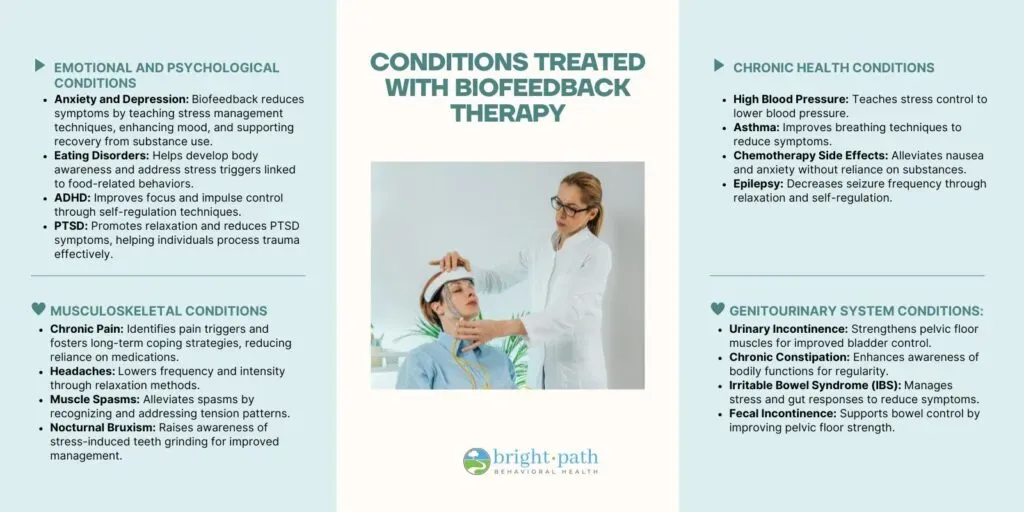
The common conditions that are treated with biofeedback therapy include:
Emotional and Psychological Conditions
Common emotional and psychological disorders treated with biofeedback therapy include:
- Anxiety and Depression: Biofeedback helps teens recognize physiological signs of anxiety, teaching techniques to reduce symptoms and improve mood. This approach benefits those struggling with substance use, as anxiety contributes to relapse. A meta-analysis conducted by J Fernández-Alvarez et al published in the Psychological Medicine in 2021 titled “Efficacy of bio- and neurofeedback for depression” indicated that biofeedback and neurofeedback are associated with a significant reduction in depressive symptoms, with an effect size of Hedges’ g = 0.717 for within-group analyses and g = 1.050 for between-group analyses in patients with major depressive disorder (MDD).
- Eating Disorders: This therapy develops body awareness and addresses stress triggers related to eating habits, which connect with addictive behaviors around food.
- Attention Deficit Hyperactivity Disorder (ADHD): Biofeedback enhances focus and attention by training self-regulation of attention-related physiological responses, aiding in the management of impulsivity seen in addiction.
- Post-Traumatic Stress Disorder (PTSD): This therapy manages stress responses and promotes relaxation, helping teens process the trauma that leads to substance use as a coping mechanism. A systematic review of ten clinical trials by Mirjana A. et al, published in the European Journal of Psychotraumatology in 2023 titled “Neurofeedback for post-traumatic stress disorder,” noted that neurofeedback significantly reduced PTSD symptoms. The pooled data showed a standardized mean difference (SMD) of -1.76 (95% CI -2.69, -0.83), indicating a substantial effect on symptom reduction. The mean remission rate for PTSD symptoms was notably higher in the neurofeedback group at 79.3%, compared to 24.4% in the control group.
Musculoskeletal Conditions
Musculoskeletal conditions treated with biofeedback therapy include:
- Chronic Pain: Biofeedback helps teens identify pain triggers and develop coping strategies to manage discomfort, which is essential for those avoiding substance use for pain relief. Biofeedback resulted in significant small-to-medium effect size for pain intensity reduction, with Hedges’ g = 0.60 (95% confidence interval [CI] 0.44, 0.76), per a meta-analysis of 21 studies involving 1,062 patients conducted by Robert S., et al published in the International Journal of Behavioral Medicine in 2017 titled “Efficacy of Biofeedback in Chronic Back Pain.” This effect size remained stable over an average follow-up period of 8 months, indicating that the benefits of biofeedback are sustained over time.
- Headaches: This therapy reduces headache frequency and intensity through relaxation techniques, decreasing reliance on pain medications.
- Muscle Spasms: Biofeedback recognizes muscle tension patterns, enabling teens to learn relaxation techniques to alleviate spasms, fostering healthier stress management. Biofeedback effectively treats conditions associated with muscle spasms, such as Levator Ani Syndrome (LAS). 87% of patients with “highly likely” LAS reported adequate relief from symptoms after undergoing biofeedback therapy. This was significantly higher than the relief reported from electrogalvanic stimulation (45%) and massage (22%), according to a study by Giuseppe C., et al published in the Gastronology Journal in 2011 titled “Biofeedback is superior to electrogalvanic stimulation and massage for treatment of levator ani syndrome” comparing biofeedback to other treatments.
- Nocturnal Bruxism: This therapy raises awareness of teeth-grinding habits, exacerbated by stress and anxiety related to addiction.
Chronic Health Conditions
Common chronic health conditions treated with biofeedback therapy include:
- High Blood Pressure: Biofeedback teaches stress management techniques that lead to lower blood pressure readings, reducing health risks associated with substance use.
- Asthma: This therapy manages asthma symptoms by improving breathing techniques, necessary for individuals recovering from addiction to respiratory issues.
- Chemotherapy: Biofeedback assists teens in managing nausea and anxiety related to cancer treatment, offering alternative coping strategies rather than turning to substances.
- Epilepsy: This therapy reduces seizure frequency through relaxation techniques and self-regulation strategies, important for those with a history of substance use.
Genitourinary System Conditions
Genitourinary system conditions treated with biofeedback therapy include:
- Urinary Incontinence: Biofeedback strengthens pelvic floor muscles, improving bladder control, valuable for individuals recovering from addiction.
- Chronic Constipation: This therapy teaches relaxation techniques and awareness of bodily functions to promote regular bowel movements, supporting overall health during recovery.
- Irritable Bowel Syndrome (IBS): Biofeedback manages stress and gut responses, alleviating symptoms exacerbated by substance use. A review of eight randomized trials published in the Cochrane Library in 2019 titled “Biofeedback for treatment of irritable bowel syndrome,” involving 300 adult participants, indicated that biofeedback interventions could lead to clinical improvement in IBS symptoms.
- Fecal Incontinence: This therapy strengthens the pelvic floor and enhances awareness of bowel control, impacted by substance use and recovery processes.
What Is the Process Of Biofeedback Therapy?
The process of biofeedback therapy involves real-time monitoring of physiological functions to help individuals gain awareness and control over their bodily responses. During a typical session, sensors are applied to the skin to measure various metrics, such as heart rate, muscle tension, or brain wave activity. The data collected is then displayed on a monitor, allowing the patient to visualize their physiological responses. A trained therapist guides the patient through exercises aimed at promoting relaxation and self-regulation, using techniques such as deep breathing, progressive muscle relaxation, or visualization. As patients practice these techniques, they receive immediate feedback on how their body responds, helping them learn to modify their physiological processes intentionally. Over time, this training leads to improved management of conditions such as anxiety, chronic pain, or stress-related disorders, empowering patients to apply these skills in their daily lives.
What Relaxation Techniques Are Used During Biofeedback Therapy?
The relaxation techniques used during biofeedback therapy are deep breathing exercises, where individuals focus on slow, controlled breaths to activate the body’s relaxation response and reduce stress. Progressive muscle relaxation involves systematically tensing and then relaxing different muscle groups, which helps patients become more aware of tension in their bodies and promotes overall relaxation. Guided imagery is another technique, where patients visualize calming and peaceful scenes to induce a state of tranquility. Also, mindfulness meditation is integrated, encouraging patients to focus on the present moment without judgment, which helps reduce anxiety and enhance emotional regulation. These techniques are used to lower physiological arousal, improve emotional resilience, and empower individuals with skills to manage stress and discomfort more effectively.
Are There Any Risks Associated With Biofeedback Therapy?
Yes, there are some risks associated with biofeedback therapy for teens, although they are considered safe and non-invasive. One of the primary concerns is the potential for temporary discomfort from the sensors applied to the skin, which affects about, particularly those with sensitive skin or allergies. This discomfort is related to skin irritation caused by the adhesive used to attach the sensors. Also, some teens experience anxiety or frustration during the learning process, especially if they do not see immediate results or struggle to control their physiological responses effectively.
While serious adverse events are rare, a systematic review by Meagan L., et al published in Children in 2021 titled “Adverse Events of Mind-Body Interventions in Children: A Systematic Review” found that only 64 out of 441 pediatric mind-body intervention studies (14.5%) reported on adverse events (AEs), with biofeedback specifically linked to two AEs in one study involving 16 participants—one case of anxiety and one case of foot pain. These AEs were classified as Grade 1, indicating mild severity. Overall, the review identified 37 AEs across all mind-body interventions, underscoring the need for better reporting on safety outcomes.
What Are The Benefits Of Biofeedback Therapy?
The benefits of biofeedback therapy are improved self-regulation of physiological functions, reduced anxiety, and enhanced coping skills. Physically, it helps manage conditions like chronic pain, headaches, and hypertension by teaching individuals to control bodily processes such as heart rate and muscle tension. Psychologically, biofeedback promotes relaxation, increases self-awareness, and empowers individuals to manage stress more effectively, leading to an overall improvement in mental well-being.
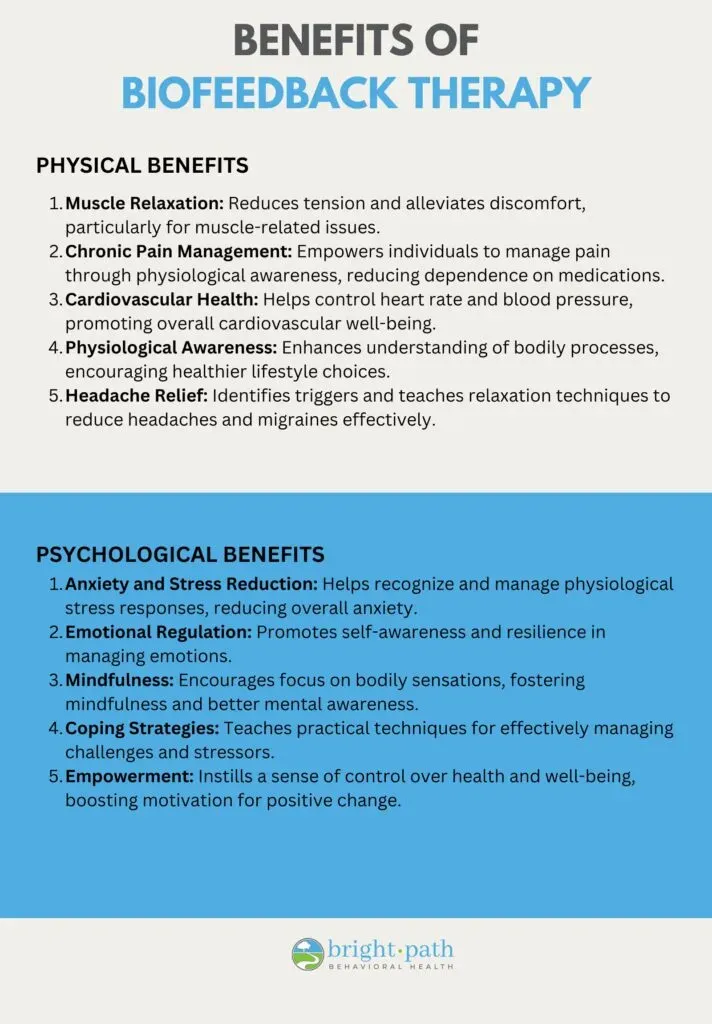
The benefits of biofeedback therapy are explained below:
Physical Benefits of Biofeedback Therapy
The physical benefits of biofeedback for teens refer to the specific improvements in physical health and bodily functions that adolescents achieve through biofeedback therapy. These benefits include:
- Improved muscle relaxation and reduced tension: Biofeedback techniques help individuals learn to relax their muscles, alleviating tension and discomfort, which is particularly beneficial for those with muscle-related issues.
- Enhanced control over chronic pain management: Teaching patients to recognize and modify physiological responses, and biofeedback empowers individuals to better manage chronic pain conditions, reducing reliance on medication.
- Lowered blood pressure and improved cardiovascular health: Biofeedback assists individuals in learning to control their heart rate and blood pressure, contributing to better overall cardiovascular health.
- Increased awareness of physiological processes, leading to better health choices: Through real-time feedback, teens become more aware of their bodily functions, enabling them to make healthier lifestyle choices.
- Support in managing headaches and migraines effectively: Biofeedback enables people to identify triggers and learn relaxation techniques that reduce the frequency and severity of headaches.
Psychological Benefits of Biofeedback Therapy
The psychological benefits of biofeedback for teens refer to the mental and emotional improvements that adolescents experience through biofeedback therapy. These benefits include:
- Reduced anxiety and stress levels: Biofeedback helps individuals recognize physiological signs of stress and anxiety, teaching them techniques to manage these feelings effectively.
- Improved emotional regulation and resilience: Fostering self-awareness through biofeedback enhances an individual’s ability to manage their emotions, leading to greater resilience in the face of challenges.
- Increased self-awareness and mindfulness: The feedback provided during biofeedback sessions encourages individuals to focus on their bodily sensations, promoting mindfulness and a deeper understanding of their mental state.
- Enhanced coping strategies for dealing with challenges: Through biofeedback, individuals learn practical techniques to cope with stressors, equipping them with tools to handle difficult situations more effectively.
- Greater empowerment in managing health and well-being: Actively participating in their treatment allows teenagers to feel more in control of their health, leading to a greater sense of empowerment and motivation to maintain positive changes.
How Effective Is Biofeedback Therapy?
Biofeedback therapy is very effective, with success rates ranging from approximately 70-85% in helping participants self-regulate their brain activity, which is important for managing addiction-related behaviors, as indicated in a study by C. Loriette., et al published in the Revue Neurologique in 2021 titled “Neurofeedback for cognitive enhancement and intervention and brain plasticity.” Additionally, biofeedback also provides benefits for fecal incontinence, although the evidence is less robust compared to headaches and urinary issues.
Is Biofeedback Therapy FDA Approved?
Yes, biofeedback therapy is FDA-approved for certain applications. The FDA has cleared various biofeedback devices, particularly those used for specific conditions such as chronic pain, anxiety, and urinary incontinence. For instance, the RESPeRATE device, which is designed to help lower blood pressure through controlled breathing, is FDA-approved, according to research published by the US Pharmacist in 2018 titled “Biofeedback Therapy.”.
Additionally, neurofeedback, a type of biofeedback that uses EEG to monitor brain activity, has been recognized for its effectiveness in managing conditions like ADHD and anxiety disorders, although it is important to note that not all neurofeedback devices have received FDA approval. While the FDA’s approval indicates that these devices have met safety and efficacy standards for specific uses, the effectiveness of biofeedback varies by individual and condition, and ongoing research continues to explore its broader applications and benefits.
How Long Does Biofeedback Therapy Take?
Biofeedback therapy takes about 30 to 60 minutes. The number of sessions required varies depending on the individual and the specific condition being treated, but most people need between 6 to 12 sessions to experience significant benefits. Some conditions require more extensive treatment, while others show improvement in fewer sessions. During the initial sessions, patients learn how to use biofeedback equipment to monitor physiological functions, and later sessions focus on applying these techniques to manage symptoms effectively.
How Much Does Biofeedback Therapy Cost?
The cost of biofeedback therapy ranges from $35 to $85 per research by Kendra Cherry published in VeryWell Mind in 2023 titled “How Biofeedback Works.” Some practitioners offer package deals, which reduce the overall cost if multiple sessions are purchased upfront. Also, insurance coverage for biofeedback therapy varies; some plans cover part of the cost, especially if the therapy is deemed medically necessary for conditions like anxiety or chronic pain. Before starting treatment, individuals should check with their insurance provider and consult with the therapist about potential costs and payment options.
Does Biofeedback Therapy Work for Anxiety?
Yes, biofeedback therapy works for managing anxiety. It helps individuals gain better control over physiological responses associated with anxiety, such as heart rate and muscle tension. In a review published in the JMIR mHealth and uHealth in 2021 titled “Biofeedback-Based Connected Mental Health Interventions for Anxiety” of 13 studies, interventions combining biofeedback with techniques such as virtual reality and music therapy yielded positive outcomes, with many showing significant reductions in anxiety symptoms. Additionally, techniques like heart rate variability training enhance emotional regulation, further supporting the use of biofeedback in anxiety management.