Bright Path treats co-occurring disorders in teens ages 12–18 in Wake Forest and Hillsborough, NC. Each teen's main concern is depression, anxiety or another mental health condition, alongside ADHD, autism or trauma. In the 2022 National Survey of Children's Health, 43.3% of teens with current ADHD had anxiety problems. Our PHP and IOP treat both conditions together under one clinical team. We partner with teens to build coping skills, flexibility, and confidence rather than simply addressing isolated symptoms.
Licenses, Accreditations and Awards
License numbers MHL-092-975 (Wake Forest) and MHL-068-168 (Hillsborough) from NC DHHS cover both locations, and CARF accredits PHP and IOP.
CARF accredited
NC DHHS licensed
Wake Forest Area Chamber member
Which Co-Occurring Conditions Does Bright Path Treat Alongside Depression and Anxiety?
Bright Path treats depression, anxiety and mood dysregulation in teens when they come alongside ADHD, autism or trauma. Co-occurring conditions change how that depression or anxiety looks, because ADHD, OCD, autism and trauma each add patterns. The four tabs below describe signs caregivers notice for each condition. They describe patterns, not a diagnosis, and our clinical team confirms the full picture at assessment.
Attention-Deficit/Hyperactivity Disorder (ADHD)
ADHD is a neurodevelopmental condition affecting attention, impulse control, activity level and executive functioning across school, home and friendships. At Bright Path, ADHD is treated as a co-occurring condition when emotional dysregulation is part of the picture. Caregivers notice challenges beyond typical distractibility or forgetfulness, including these ten signs:
Difficulty sustaining attention, especially for tasks that feel boring, overwhelming or long
Forgotten assignments or lost items
Trouble following multi‑step directions
Impulsivity, such as blurting out, interrupting, or taking risks without thinking through consequences
Emotional reactions that feel big or fast (crying, shutting down, yelling, or frustration outbursts)
Trouble starting or finishing tasks, and frequent procrastination
Difficulty with organization, planning or time management
Conflicts with peers or siblings related to impulsivity or misunderstandings
Frustration with expectations, or feeling “behind” or “overwhelmed”
Avoidance of tasks that require sustained mental effort
Obsessive Compulsive Disorder (OCD)
OCD pairs distressing intrusive thoughts with repetitive actions or mental rituals that a teen feels driven to perform. Many caregivers notice the behaviors before they understand the anxiety driving them. These eight signs are the ones families describe most:
Repetitive behaviors such as checking, washing, re‑doing, arranging, or seeking reassurance
Rituals the teen feels “must” be done a certain way to prevent something bad or to reduce anxiety
Distress when routines are interrupted or things feel “not right”
Frequent questions (“Are you sure?” “Did I do that wrong?”) meant to ease fears
Avoidance of situations that trigger obsessive thoughts
Long delays getting ready, finishing schoolwork or going to bed
Increased irritability or shutdowns when unable to perform rituals
Mental compulsions such as repeating phrases in their head or reviewing past events
Autism
Autism shapes how a teen communicates, processes sensory input, navigates social situations and handles change. Bright Path supports teens with autism whose main need is depression, anxiety or another mental health condition, and refers teens with autism requiring substantial support to specialized care. Caregivers recognize autism in these eight patterns:
Sensory sensitivities (sounds, textures, crowded spaces) or sensory‑seeking behaviors
Overwhelm when routines change or transitions come unexpectedly
Difficulty reading social cues or navigating peer dynamics
Intense interests that provide comfort, joy, or a sense of mastery
Challenges with flexible thinking when plans shift or expectations feel unclear
Fatigue or irritability after a full day of masking or social effort
Communication differences such as literal interpretation, difficulty expressing emotions, or shutdowns
Executive functioning differences, including organization or task initiation challenges
Trauma
Trauma responses are lasting reactions to acute events, chronic stress, unsafe environments or repeated emotional hurts. Bright Path treats trauma responses that affect daily functioning with trauma-informed care, and deeper trauma work happens in individual therapy rather than group. Teens don't always talk about what they've experienced, but caregivers see the shifts in behavior or mood, including these nine signs:
Heightened startle responses or appearing on edge
Difficulty sleeping, nightmares, or fear of being alone
Avoidance of places, people, or situations that recall past events
Emotional numbing, withdrawal, or seeming “checked out”
Sudden irritability, aggression, or emotional swings
Trouble concentrating or remembering information
Physical complaints such as headaches or stomachaches without a medical cause
Increased distrust, hypervigilance, or scanning for threats
Overwhelming guilt, shame, or self‑blame
What Are Co-Occurring Disorders in Teens?
Co-occurring disorders in teens are two or more conditions present at the same time, such as depression alongside ADHD. SAMHSA uses the same term, also called dual diagnosis, for a substance use disorder alongside a mental health condition. At Bright Path, co-occurring care means treating a primary mental health condition plus a second condition that shapes treatment. For our teens, that second condition is ADHD with emotional dysregulation, autism or trauma. A CDC analysis of 2022 survey data found 77.4% of U.S. teens ages 12–17 with current ADHD had a co-occurring disorder.
Mental health first
Depression, anxiety, self-harm or suicidal thoughts lead care
Treated together
ADHD with emotional dysregulation, autism and trauma
Two levels of care
PHP on weekdays and IOP after school
Referral, not detox
Specialized substance use care arranged elsewhere
When Is Bright Path the Right Fit for a Teen with Co-Occurring Conditions?
Bright Path fits a teen when a mental health condition is the main concern and a co-occurring condition shapes care. Our clinical team sorts primary from secondary concerns with each family during assessment. Bright Path is a fit for teens with these five presentations:
Depression, anxiety or mood instability affecting school or home life
Self-harm behaviors or suicidal thoughts beyond what weekly therapy covers
ADHD emotional dysregulation disrupting family or school life
Autism alongside a mental health condition, without a need for substantial daily support
Trauma responses affecting daily functioning
Specialized care elsewhere is the safer first step for teens with these six needs:
Substance use requiring detox or primary substance use disorder treatment
Autism requiring substantial support
Intellectual disability affecting group participation
Psychosis or active mania requiring medication stabilization
Active eating disorder requiring medical monitoring
Safety needs requiring 24-hour supervision
When another program comes first, our team explains why, gives specific referrals and follows up to confirm your family connected.
Teens in crisis or thinking about suicide reach the 988 Suicide & Crisis Lifeline 24/7: call or text 988, or chat at chat.988lifeline.org.
What If My Teen Also Uses Alcohol or Other Substances?
Bright Path treats the mental health condition first and refers teens whose substance use needs detox or addiction treatment. Bright Path's state licences cover day activity and partial hospitalization programs, not substance use treatment. Those licences mean detox is not offered at either location. In North Carolina's 2025 high school survey, 16% of students reported current alcohol use and 10.6% reported current marijuana use. Inside treatment, the DBT PLEASE skill teaches teens to avoid mood-altering substances. Psychiatric sessions also explain how alcohol and other substances interact with medications.
How Does Bright Path Support Twice-Exceptional Teens?
Bright Path supports twice-exceptional teens, gifted teens with mental health challenges, by accommodating their learning differences. Twice-exceptional teens also get support in these three areas:
Balancing ability with struggle
Perfectionism and anxiety
Imposter syndrome
Our Education Liaisons advocate for IEP and 504 plans with your teen's school.
What Co-Occurring Disorder Treatment Programs Does Bright Path Offer in North Carolina?
Bright Path offers a full-day PHP and an after-school IOP for teens whose depression, anxiety or emotional dysregulation comes with ADHD, autism or trauma. Both programs run at our Wake Forest and Hillsborough locations. The tabs below compare what each program includes.
Programs
Partial Hospitalization Program (PHP) for Teens with Co-Occurring Conditions
Description
Our Partial Hospitalization Program gives daily structure to teens ages 12–18 whose depression, anxiety or mood dysregulation comes with ADHD, autism or trauma. PHP runs Monday to Friday, 9:00 AM to 3:00 PM, on two tracks: Meadow Path for ages 12–15 and Summit Path for ages 15–18. Track placement depends on developmental assessment, not just age, and new teens are admitted throughout the week.
What to Expect
Each PHP week combines these five parts:
DBT skills groups in interpersonal effectiveness, mindfulness, emotion regulation and distress tolerance
Weekly individual therapy with the same primary therapist
Weekly psychiatric sessions, with or without medication
Weekly 60-minute family therapy
Daily academic hour, with homebound status arranged with your teen's school
Programs
Intensive Outpatient Program (IOP) for Teens with Co-Occurring Conditions
Description
Our Intensive Outpatient Program meets three afternoons a week after school, from 3:00 PM to 6:00 PM. River Path meets Tuesday, Wednesday and Thursday for teens new to DBT, and Horizon Path meets Monday, Wednesday and Friday for PHP graduates or teens with prior DBT experience.
What to Expect
IOP gives your teen 9 hours of group therapy a week across 3 afternoons, plus 1 hour of individual therapy, in five parts:
River Path (Tuesday to Thursday, 3:00 to 6:00 PM): Distress tolerance, emotion regulation and interpersonal effectiveness groups, plus horticulture therapy, Challenge Group and creative expression
Horizon Path (Monday, Wednesday and Friday, 3:00 to 6:00 PM): A dedicated executive functioning group every Wednesday at 3:00 PM, attachment-based group therapy, social and life skills, and DBT skills review
Individual therapy: One hour a week with the teen's own primary therapist
Psychiatric care: Available as needed, with or without medication
Caregivers: Bi-weekly updates from the teen's primary therapist
Advantages of Working with Bright Path for Teen Co-Occurring Disorder Treatment in North Carolina
Teens with co-occurring conditions get integrated treatment, with DBT, executive functioning practice and school coordination from one team at Bright Path.
ADHD-Specialized DBT with Executive Functioning Integration
Bright Path adapts DBT for teens with ADHD by putting impulse control at the center of skills practice. Each teen designs a personal organization system with their therapist, built around their own schedule and challenges. Hands-on practice covers time management, planning, task initiation and follow-through, so new habits carry back into class. These tools also fit the executive functioning profiles common in autism and anxiety-based conditions.
Developmentally Appropriate Track System
We serve teens ages 12–18 through age-separated programming. Meadow Path (ages 12–15) focuses on middle school development, and Summit Path (ages 15–18) addresses high school challenges, including college preparation and complex relationships. Mature 15-year-olds join Summit when developmental assessment supports it. With a cap of 12 teens per track, this separation creates safe environments where teens connect with developmentally similar peers facing comparable challenges.
Flexible Admissions Scheduling
Flexible admissions scheduling lets each family pick a start that fits school, work and what is happening at home. Families set the start date around their own calendar, rather than fitting into a date chosen for them. That choice matters most for families managing ADHD crises, when emotional dysregulation is escalating at home. Caregivers choose the timing that works for their situation, and our admissions team plans around it.
Comprehensive School Coordination
Our education department establishes homebound status for every PHP student, removing academic pressure during treatment. Our Education Liaison, who has an MSW and a teaching background, oversees all school coordination. Education Liaisons handle daily assignments and talk directly with your teen's teachers. A daily classroom hour in PHP covers coursework and organization skills, and pre-discharge meetings prepare teens and schools for a successful return.
Weekly Psychiatric Support for Everyone
Psychiatric providers see every PHP teen once a week, for 30 to 60 minutes, regardless of medication status. Our providers hold Psychiatric Nurse Practitioner or Physician Assistant credentials with adolescent ADHD expertise. Sessions cover sleep hygiene, nutrition, exercise and stress management, not just medication. Teens set the priorities by naming the symptoms that bother them most, so appointments are conversations rather than medication-only consultations.
Dialectical Behavior Therapy Foundation with Executive Functioning Skills
DBT is the primary framework across every track and the core of our emotional dysregulation treatment. Teens learn distress tolerance, mindfulness, emotion regulation and interpersonal effectiveness through 5-week curriculum rotations. Horizon Path adds attachment-based group therapy on relationship patterns for teens with prior DBT experience. Horizon Path teens also attend a dedicated executive functioning group every Wednesday at 3:00 PM.
Integrated Family Support
PHP families meet with a family therapist for an hour every week, covering communication patterns, family rules, boundary setting and safety planning. Sessions put stabilization ahead of deep trauma work, which is saved for outpatient care. Caregivers from every family also meet weekly in our support group, both during treatment and for six weeks after it ends.
Individualized Therapy Session Structure
Each teen gets 60 minutes of individual therapy a week, structured around the teen's preference. Teens pick a single hour or two half-hour sessions, and the weekly total holds steady either way. In PHP, a brief daily check-in is a third option for teens who find a long session hard to sustain. Sessions stay with one primary therapist throughout, so your teen never starts over with someone new.
Multiple Weekly Admissions Opportunities
Admissions run across the week, so a family ready to start does not wait for a single weekly start date. Multiple admission opportunities each week help avoid the long waits common when a program offers limited availability. Our admissions team moves at the pace your family needs once our clinicians agree whether PHP or IOP fits.
Integrated Admissions Day Assessment
On admission day, your teen, a caregiver, the primary therapist and a psychiatric provider meet for one 30-minute integrated assessment. Your teen shares their history one time, in one room, and every clinician starts from the same information. Repeating a story to four separate people is tiring for any teen, and attention fatigue hits teens with ADHD harder. One shared meeting reduces that frustration from the first hour of care.
Creative and Expressive Therapy Integration
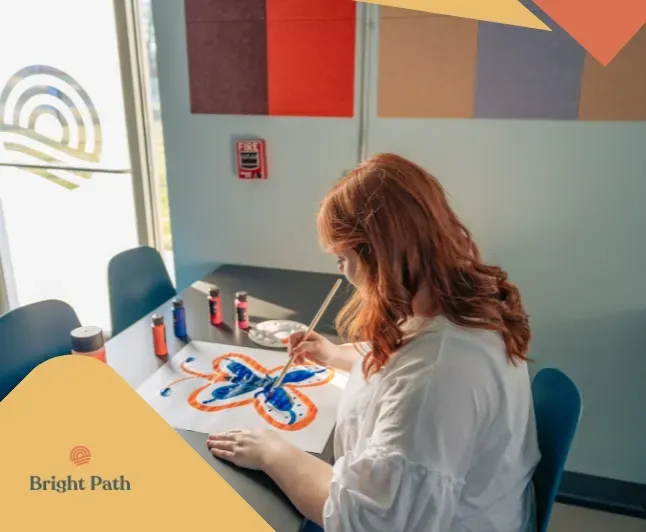
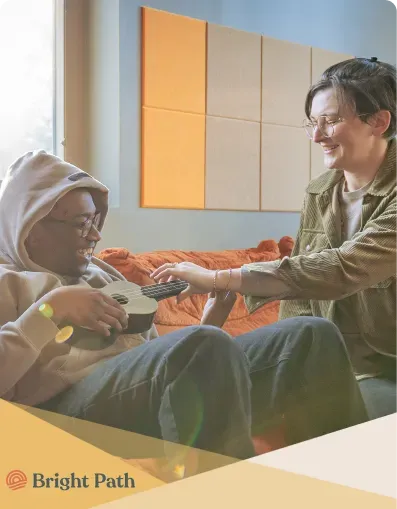
Creative therapies run across tracks, with music therapy and horticulture therapy each led by its own specialist therapist. Horticulture therapy offers grounding through nature and non-verbal processing, and music therapy gives teens a way to express what is hard to put into words. These creative therapies give teens who process better through doing than talking a second route into treatment.
Statewide Access Through Three Service Options
Families across North Carolina choose from three service options, full-day PHP, River Path IOP and Horizon Path IOP. All three run at the Wake Forest and Hillsborough locations alike, so no family relocates for co-occurring care. PHP fills the school day on weekdays, and both IOP paths meet three afternoons a week after school. Families from Raleigh, Durham, Chapel Hill and Burlington reach one of the two sites.
From First Call to First Day
1
Contact Us
2
Trailhead Check-In
3
Clinical Review
4
First Day of Care
1
Contact Us
2
Trailhead Check-In
3
Clinical Review
4
First Day of Care
Bright Path collaborates with leading North Carolina health systems, school districts, and universities, including
Bright Path is led by a Team Who Is Both Skilled And Deeply Human
Bright Path’s team includes licensed therapists, psychiatry providers, educators, and other professionals who are both skilled and passionate about adolescent mental health.
Shantel Sullivan - Chief Executive Officer
A licensed clinical social worker with over a decade of clinical leadership.
North Carolina Teen Mental Health Treatment Center Reviews
Choosing a teen mental health treatment center in North Carolina means selecting a facility trusted by teens experiencing overwhelming co-occurring symptoms, families navigating impulsive behaviors and emotional outbursts, schools supporting students with ADHD challenges, and referring clinicians seeking evidence-based ADHD intervention partners.
Scout O’Brien
This place is awesome!!!! From my experience as a patient here, all the staff are really kind and patient and have helped me through my crisis and my therapy journey. They also have snacks!!! I highly recommend this place for anyone who needs it. :D
Posted on
Google
Sandy
Brightpath provided a safe place for our son who received a professional and caring team to help him navigate the personal struggles that he had been experiencing. They not only provided him with such wonderful therapy but also the necessary tools for him to continue treatment outside of their facility. They provided him with such care that we as a family will always be grateful for. We can't say enough good things about Brightpath. Thank you, to all the Brightpath team but a special Thanks to Zkhia, Michele, and Jordan. We could not have asked for a better group of people to come into our lives at a time that was needed the most! Brightpath team will forever be in our hearts and prayers:)
Posted on
Google
Joanna Rojas
We’re so grateful for the help all the staff (therapists, medication providers, patient liaisons, education coordinators, etc.) at bright path provided to our daughter and family during her time there. Kendall and Lia were outstanding, the staff truly cares for the patients and worked closely with us on her treatment. This is a great place!
Posted on
Google
Caroline Brucks
This place is top notch. The team leaves no parent or child behind. They keep you informed and are focused on your child’s wellbeing. I have been amazed by these people and how they keep surpassing my expectations. Mental health is their focus and they listen with compassion and have answers and guidance. I deeply want to thank them. This review is one way I hope to repay their love for our children and community.
Posted on
Google
Lesley Ireland
I don’t typically leave reviews but I do not want any other child or family to struggle when there is an amazing resource like Bright Path in our community. My daughter is still a patient in the PHP and has also been in the IOP. I can’t say enough wonderful things about the program, the staff and most importantly, the significant improvement in my daughter’s symptoms. It is not an exaggeration when I say she is a different person and for the better. She was suffering with symptoms she didn’t understand and the team at Bright Path has given her the tools to continue her mental health self care throughout her life. I wish every teen had this opportunity. I can’t thank BP enough and I wish I could give a million stars rather than 5!
Posted on
Google
K Farnsworth
My child went through the PHP program and it was a major turning point in their recovery. It was Bright Path or residential, and having that option for PHP at a place that felt safe with practitioners who truly care was a godsend. I can’t say enough good things about how my child did. The bonus was that my child also liked going! They made some true friends there.
Posted on
Google
Tiffany Munro
I can't say enough good things about Bright Path. They are so different than other PHPs in the Raleigh area. The staff genuinely cares about the clients and their families. From intake to graduation from the program we felt care and professionalism every step of the way. Positive attitudes, willingness to look deeper into issues, communication is excellent, and always willing to listen to find solutions or just be the support we needed. I wish they could train other PHPs in the state, because they are doing it the right way.
North Carolina Teen Co-Occurring Disorders Treatment FAQ
ADHD often appears alongside anxiety or depression in teens rather than on its own. In the 2022 National Survey of Children's Health, 43.3% of teens 12–17 with current ADHD also had anxiety problems. Bright Path treats ADHD as a co-occurring condition when emotional dysregulation is part of the picture.
Yes, ADHD is a co-occurring disorder when it appears alongside another condition, such as anxiety or depression. Bright Path treats ADHD in that co-occurring role when emotional dysregulation is present, and does not offer standalone ADHD treatment.
Bright Path assesses co-occurring conditions in two steps, before admission and on the first day. Before admission, the Clinical Director reviews both parent and teen perspectives to recommend a level of care. On the first day, an Integrated Assessment brings your teen, parents, primary therapist and psychiatric provider together, followed by private time for your teen.
River Path is for teens new to intensive treatment who need to learn DBT skills from the foundation. Horizon Path is for teens who have completed PHP or already have substantial DBT experience. Our clinical team decides the path based on the assessment.
PHP includes 1 hour of individual therapy and more than 25 hours of group therapy each week. IOP includes 1 hour of individual therapy and 9 hours of group therapy each week. Teens often accept feedback from peers they would reject from adults.
Most PHP teens finish a 5-week curriculum, with extra time added when a clinician recommends it. IOP length is set individually, and the treatment team discusses an expected timeline with your family at admission. Teens finishing PHP step down to Horizon Path IOP before weekly outpatient therapy.
No, medication is not a condition of admission or of staying in the program. Parents or guardians consent to every medication change, and teens take part in decisions suited to their age. Teens complete treatment at Bright Path without any medication when that is the family's choice.
Yes, what teens share stays confidential within North Carolina's legal and safety limits. Therapists share progress and general functioning updates with parents, and process groups keep what teens share there inside the group. The clinical team always tells parents about a safety concern.
Co-occurring treatment cost comes down to your insurance plan, your remaining benefits and the program your teen attends. Bright Path checks your coverage at no charge and gives you an estimate before the first day.
Discharge day brings a written aftercare plan with appointments already booked. That plan names the providers your teen needs next, such as an outpatient therapist or a psychiatric provider for medication management. Community activities such as sports teams, art groups or the Boys and Girls Club round out the plan as social prescriptions.
Booster sessions are available when old patterns come back, and the alumni program runs monthly alumni groups and a parent alumni network. The door stays open if your teen's circumstances change.
Teen Mental Health Insurance Providers We Work with in North Carolina
Bright Path works with major insurance providers for teen co-occurring care, and checking your benefits costs nothing. Carriers we accept are listed below:
We Serve Teens with Co-Occurring Conditions Throughout North Carolina
Bright Path serves teens with co-occurring conditions statewide from its Wake Forest site in Wake County and its Hillsborough site in Orange County. Each location offers both PHP and IOP.
Wake Forest Location
203 Capcom Ave #104, Wake Forest, NC 27587, is the address of our Wake Forest behavioral health center for teens. It serves Raleigh, Durham, Cary, Chapel Hill, Apex, Holly Springs, Garner, Clayton, Knightdale, and Wake County communities. The facility provides convenient access for families throughout the Research Triangle region with Wake Forest Chamber of Commerce membership demonstrating our community engagement commitment.
Hillsborough Location
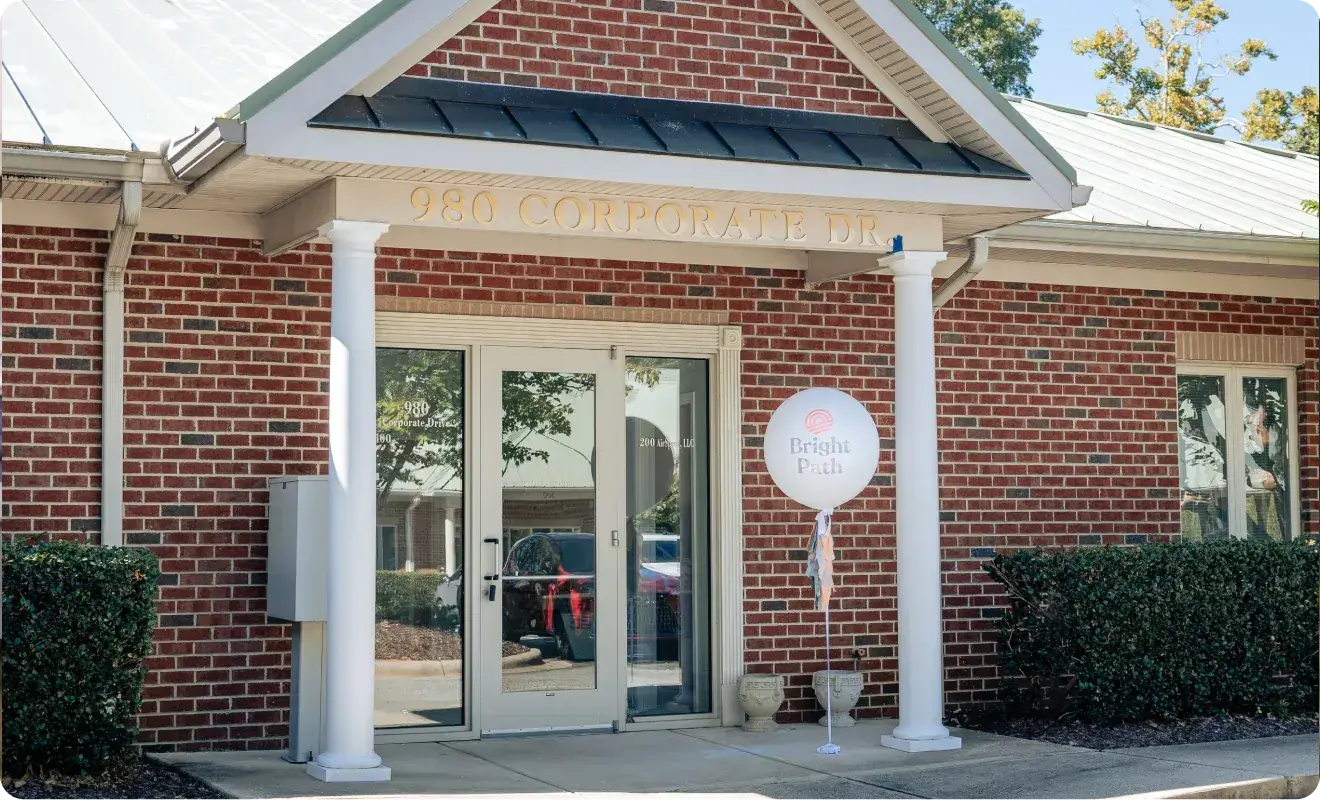
Our location for Hillsborough behavioral health care for adolescents at 980 Corporate Dr, Hillsborough, NC 27278 serves Chapel Hill, Durham, Carrboro, Mebane, Burlington, and Orange County communities. Orange County Chamber of Commerce membership reflects our commitment to local families and community partnerships addressing teen mental health challenges. The Hillsborough facility brings co-occurring care for teens closer to Orange County and Piedmont families.
Take a Tour of Our Teen Mental Health Facilities in North Carolina
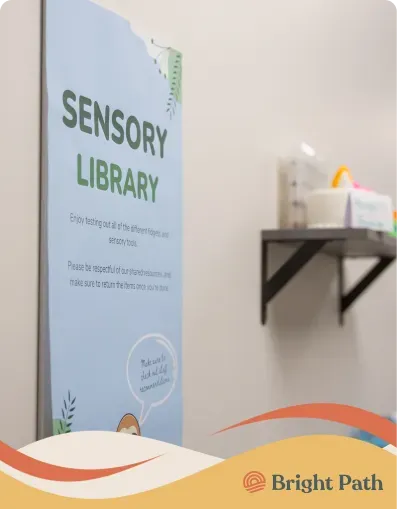
Bright Path's Wake Forest and Hillsborough facilities are non-clinical spaces built for group therapy, private sessions and daily schoolwork. Each facility includes these four kinds of space:
Track rooms: Separate group therapy spaces, one per age track
Private therapy offices: Confidential rooms where teens meet their primary therapist each week
Classroom space: Room for the daily academic hour, where PHP teens keep coursework and organization skills on track
Shared common areas: Space where teens enjoy the rewards they choose, from special lunches to lunchtime activities
Staff supervise through clear backpack and clear water bottle policies, which keeps oversight light and respectful of each teen.
Which Mental Health Conditions Do We Treat in Teens?
Bright Path treats depression, anxiety, self-harm and suicidal ideation in teens, each with or without a co-occurring condition.