


Behavioral disorders involve persistent patterns of disruptive, aggressive, or socially inappropriate actions that interfere with functioning in school, home, or social settings. The main symptoms of behavioral disorders include impulsivity, defiance, irritability, poor concentration, and emotional dysregulation.
Core causes of behavioral disorder are a combination of genetic predisposition, environmental stressors, and neurobiological dysfunction. Common types of behavioral disorders include Attention-Deficit/Hyperactivity Disorder (ADHD), Oppositional Defiant Disorder (ODD), and Conduct Disorder. A study by Tsai (2014) titled “Exploring Teacher Ratings of ADHD, ODD, and CD Disorders: Exploratory and Confirmatory Factor Analysis” confirmed that these three disorders form distinct but related diagnostic categories within the DSM classification of disruptive behavior disorders, based on behavioral assessments in school-age children.
Dual diagnosis describes the simultaneous presence of behavioral disorders and co-occurring mental health conditions such as substance use or depression. Early intervention targets symptom reduction, behavior stabilization, and academic improvement. Contributing factors include family conflict, trauma exposure, inconsistent parenting, and prenatal substance exposure.
Diagnostic procedures involve clinical interviews, standardized behavior assessments, and criteria from the DSM-5. Cognitive Behavioral Therapy (CBT) restructures maladaptive thinking patterns and establishes coping mechanisms in behavioral disorders. Behavioral disorder treatment approaches integrate behavior therapy, structured routines, social skills training, and, when necessary, medication. Bright Path’s PHP and IOP programs serve teens ages 12 to 18 whose emotion dysregulation disrupts family or school life, using Dialectical Behavior Therapy (DBT) as the primary framework alongside CBT and family therapy, held weekly in PHP.
Common medications for treating behavioral disorders include stimulants and antipsychotics, which produce side effects such as sleep disturbances, appetite suppression, or increased anxiety. Family therapy reinforces communication, boundaries, and supportive parenting strategies to reduce oppositional behavior. A strong correlation exists between behavioral disorders and depression, particularly in adolescents. Medication at Bright Path is optional, prescribed and monitored by Bright Path’s psychiatric providers, and decided together with the teen and family.
What is behavioral disorder?
A behavioral disorder is a diagnosable mental health condition characterized by consistent patterns of disruptive behavior, poor emotional regulation, and social dysfunction that persist over time and impair daily functioning. Behavioral disorders involve excessive impulsivity, aggression, defiance, and difficulties following rules or norms in structured environments. These conditions interfere with academic performance, peer relationships, and family dynamics. Common types include Attention-Deficit/Hyperactivity Disorder (ADHD), Oppositional Defiant Disorder (ODD), and Conduct Disorder, each reflecting specific behavioral patterns that deviate from expected developmental norms. Behavioral disorders fall under psychiatric classifications due to their measurable impact on cognitive processes, emotional expression, and interpersonal behavior.
What are the symptoms of behavioral disorders?
The symptoms of behavioral disorders are patterns of disruptive actions and emotional dysregulation that interfere with functioning in school, home, or relationships. Behavioral disorders show psychological symptoms that often affect social interaction and impulse control.
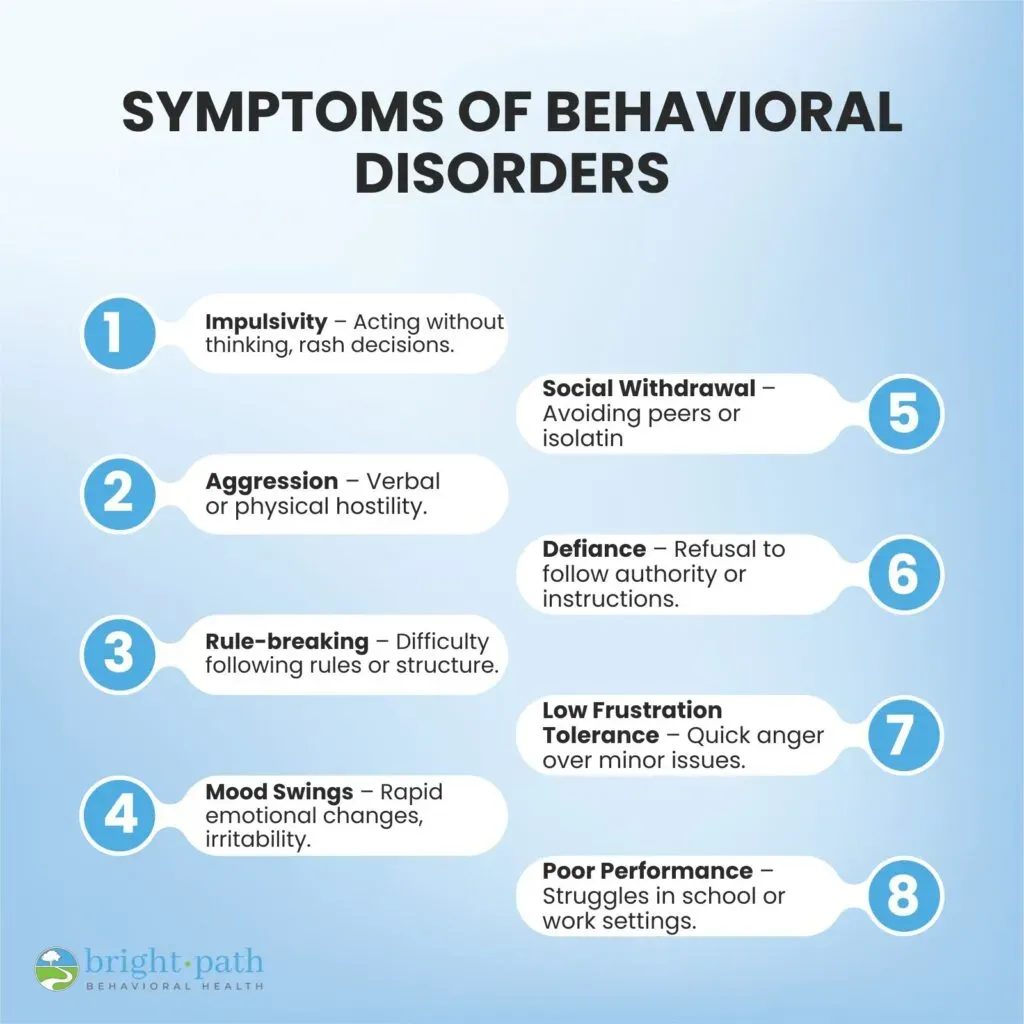
Below are 8 main symptoms of behavioral disorders:
- Impulsivity
- Aggressive behavior
- Difficulty following rules
- Frequent mood swings
- Social withdrawal
- Defiance of authority
- Low frustration tolerance
- Poor academic performance
Impulsivity includes acting without considering consequences. Behavioral disorders disrupt inhibition control, leading to rash decisions, unsafe actions, or verbal outbursts.
- Aggressive behavior
Aggressive behavior involves verbal or physical hostility. Individuals exhibit bullying, fighting, or destructiveness in response to minimal provocation.
- Difficulty following rules
Difficulty following rules reflects opposition to structure. Behavioral disorders interfere with compliance in home, academic, or legal settings.
- Frequent mood swings
Frequent mood swings cause unpredictable emotional responses. Mood instability affects interpersonal communication and often coexists with frustration and irritability.
- Social withdrawal
Social withdrawal includes avoiding interactions or isolating from peers. This symptom restricts emotional development and amplifies behavioral issues.
- Defiance of authority
Defiance of authority involves repeated resistance to adult instructions. Behavioral symptoms extend to arguments, refusal, and deliberate rule-breaking.
- Low frustration tolerance
Low frustration tolerance leads to rapid escalation during stress. Individuals struggle to cope with minor challenges or delays, often reacting explosively.
- Poor academic performance
Poor academic performance results from inattention, absenteeism, or classroom disruption. Long-term outcomes include educational delays and employment instability.
What causes behavioral disorders?
The causes of behavioral disorders are rooted in genetic predispositions, neurological dysfunctions, and environmental triggers. Hereditary factors increase the likelihood of behavioral dysregulation when close family members exhibit similar conditions.
A study by Tuvblad et al. in 2009 titled “A Common Genetic Factor Explains the Covariation Among ADHD, ODD and CD Symptoms in 9–10 Year Old Boys and Girls” found that more than half of the variation in these behavioral disorders can be explained by a shared genetic influence, supporting the idea that genetic risk is a core contributor across ADHD, ODD, and CD. Behavioral disorder also happens when there are abnormalities in brain function, particularly in the prefrontal cortex and amygdala, impair decision-making, impulse control, and emotional processing.
Environmental influences, including exposure to trauma, inconsistent parenting, family conflict, and socioeconomic stressors, escalate behavioral dysregulation during developmental stages. Behavioral disorders emerge when these risk factors interact and disrupt normal brain maturation, particularly in children and adolescents with heightened neurobiological sensitivity.
What are types of behavioral disorders?
The types of behavioral disorders include several neurodevelopmental and stress-related conditions that interfere with emotional regulation, impulse control, and interpersonal behavior. These disorders alter day-to-day functioning, disrupt learning environments, and require structured interventions for behavior modification.
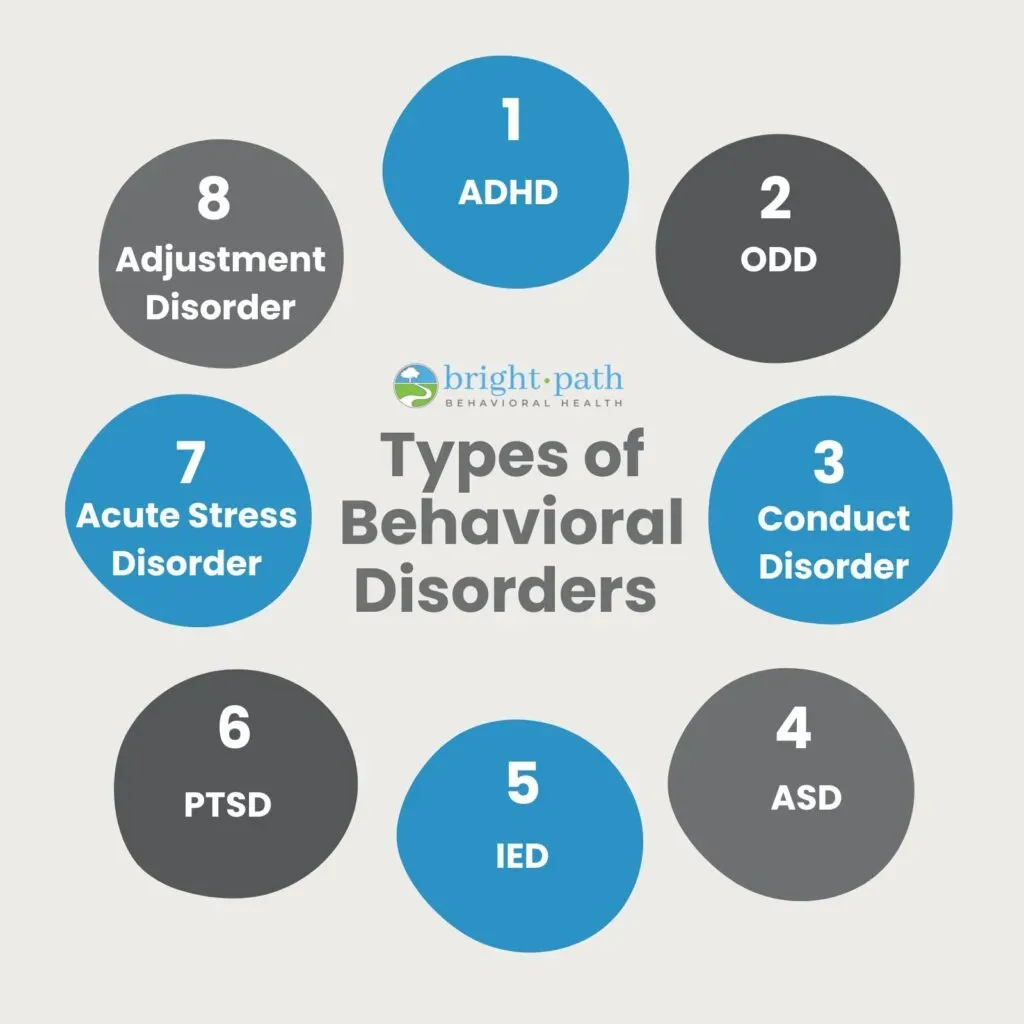
Below are 8 types of behavioral disorders:
- Attention-Deficit/Hyperactivity Disorder (ADHD)
- Oppositional Defiant Disorder (ODD)
- Conduct Disorder (CD)
- Autism Spectrum Disorder (ASD)
- Intermittent Explosive Disorder (IED)
- Post-Traumatic Stress Disorder (PTSD)
- Acute Stress Disorder
- Adjustment Disorder
What is dual diagnosis in behavioral disorders?
Dual diagnosis in behavioral disorders refers to the co-occurrence of behavioral disorders alongside substance use disorders or other mental health conditions. Individuals with behavioral disorders like ADHD, ODD, or CD often face heightened vulnerability to developing substance abuse problems as they struggle with impulse control and emotional regulation.
The complex interaction between mental health and addiction complicates treatment strategies, requiring integrated therapeutic approaches to address both disorders simultaneously. A study by the National Institute on Drug Abuse titled “Co-occurring Disorders: Mental Health and Substance Use Disorders” in 2020 found that individuals with dual diagnoses have higher rates of treatment dropout and greater challenges in rehabilitation. Effective management of dual diagnosis requires comprehensive, multi-faceted treatment plans that incorporate mental health and addiction counseling in tandem.
How can early intervention help in managing behavioral disorders?
Early intervention helps in managing behavioral disorders by facilitating timely diagnosis, enabling access to appropriate therapy, and preventing long-term developmental issues. Identifying behavioral disorders in children and adolescents at an early stage reduces the severity of symptoms and improves long-term outcomes.
Studies have shown that early therapy, such as Cognitive Behavioral Therapy (CBT) and family support, promotes emotional regulation and reduces problematic behaviors. Preventive care allows children and teens to develop coping strategies and healthier emotional responses, which enhances overall development.
What factors contribute to behavioral disorders?
The factors that contribute to behavioral disorders are influenced by a combination of genetic, environmental, and neurological elements.
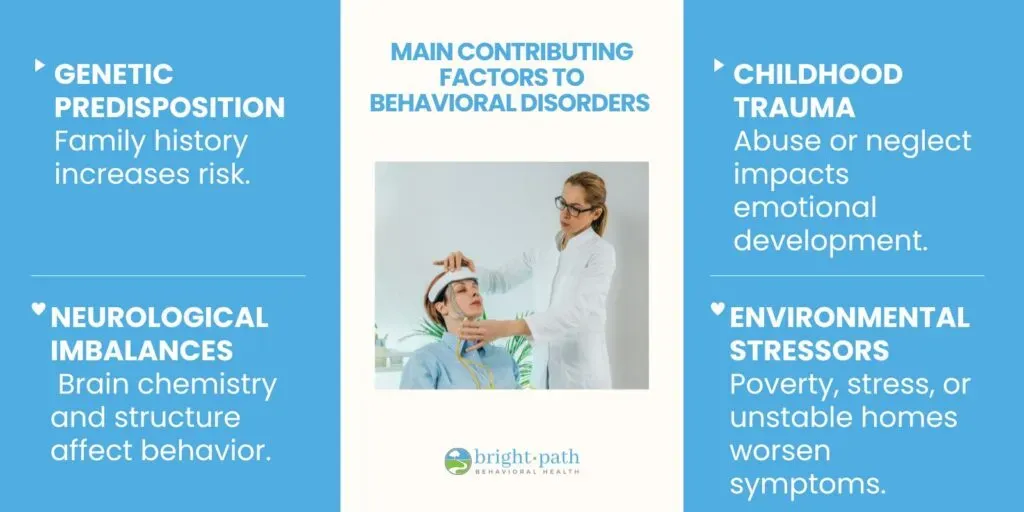
Below are 4 main contributing factors of behavioral disorder.
- Genetic predisposition
- Childhood trauma
- Neurological imbalances
- Environmental stressors
Genetic predisposition refers to inherited traits that increase the likelihood of developing behavioral disorders. A 2009 twin study by Tuvblad et al. of 1,219 children ages 9 to 10 found that genetic influences explained more than half of the variance in a shared externalizing factor behind ADHD, ODD, and CD symptoms.
- Childhood trauma
Childhood trauma, including abuse, neglect, or witnessing violence, significantly impacts psychological development. Exposure to such traumatic experiences during formative years leads to emotional dysregulation and behavior problems later in life.
- Neurological imbalances
Neurological imbalances occur when brain chemicals or neural pathways function abnormally. Conditions like ADHD or autism spectrum disorder often involve such imbalances, influencing behavior patterns and emotional responses.
- Environmental stressors
Environmental stressors, such as socioeconomic instability, lack of support, or chronic stress, triggers behavioral disorders. These stressors disrupt normal psychological development and coping mechanisms.
How are behavioral disorders diagnosed?
Behavioral disorders are diagnosed through psychological evaluations, clinical interviews, and standardized assessments. Mental health professionals utilize diagnostic tools like the DSM-5 criteria to identify symptoms and patterns of behavior consistent with specific disorders such as ADHD, ODD, or CD.
The evaluation process often includes gathering information from multiple sources, such as parents, teachers, and caregivers, to ensure a comprehensive understanding of the individual’s behavior. In cases where disorders go untreated, short-term effects include academic struggles, relationship difficulties, and emotional instability. Long-term effects lead to more severe psychological issues, including anxiety, depression, and potential criminal behavior. Proper diagnosis allows for early intervention, which significantly mitigates these risks.
What is Cognitive Behavioral Therapy (CBT) for behavioral disorders?
Cognitive Behavioral Therapy (CBT) for behavioral disorders is a structured, goal-oriented form of psychotherapy aimed at helping individuals manage and change negative thought patterns and behaviors. CBT is effective in modifying disruptive behaviors and improving emotional regulation by identifying the underlying cognitive distortions that drive maladaptive actions.
Cognitive Behavioral Therapy equips patients with coping strategies and problem-solving skills to better manage their impulses and reactions. CBT is widely used in treating a range of behavioral disorders, including ADHD and ODD, by teaching individuals how to replace negative thought patterns with more constructive, adaptive ones.
How are behavioral disorders treated?
Behavioral disorders are treated through a variety of methods, often combining therapeutic interventions, medication, and lifestyle adjustments. Bright Path offers partial hospitalization (PHP) and intensive outpatient (IOP) programs for teens ages 12 to 18 when weekly therapy is not enough.
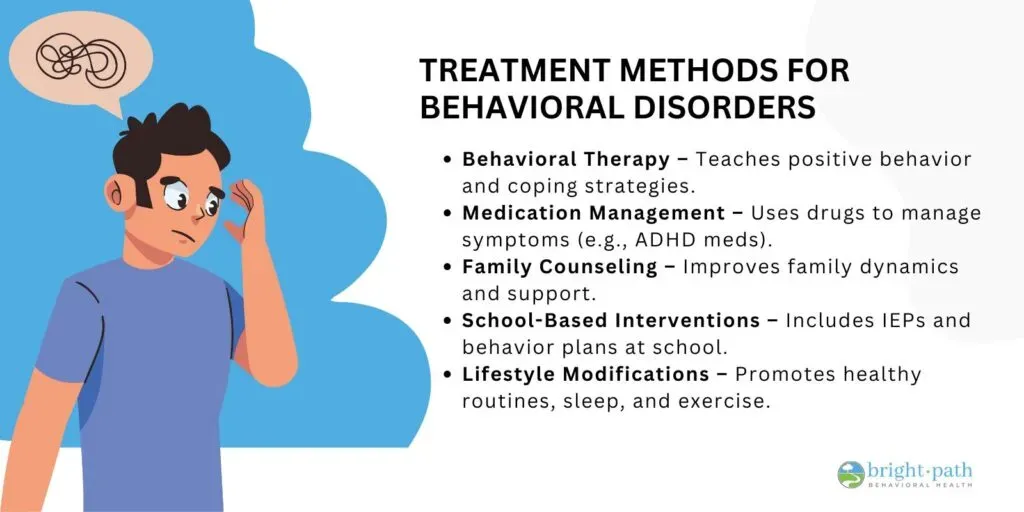
Below are 5 key treatment methods for behavioral disorder.
- Behavioral therapy
- Medication management
- Family counseling
- School-based interventions
- Lifestyle modifications
Behavioral therapy focuses on changing negative patterns of behavior by reinforcing positive behaviors and teaching coping strategies. This therapy, such as Cognitive Behavioral Therapy (CBT), helps individuals understand the triggers of their behavior and develop more appropriate responses.
- Medication management
Medication management involves the use of prescribed drugs to address symptoms of behavioral disorders, particularly those linked to mood or anxiety disorders. Medications like stimulants for ADHD or antidepressants for mood disorders helps regulate behavior and improve functioning.
- Family counseling
Family counseling addresses issues within the family dynamics that contribute to the behavioral disorder. It helps improve communication, resolve conflicts, and support the individual’s recovery.
- School-based interventions
School-based interventions are strategies implemented within educational settings to help students manage behavioral disorders. These interventions include behavior modification programs, individualized education plans (IEPs), and support from school counselors.
- Lifestyle modifications
Lifestyle modifications include changes in daily habits, such as establishing routines, promoting physical activity, improving sleep patterns, and encouraging healthy diets. These modifications reduces symptoms and improve overall well-being.
What are the side effects of medications for behavioral disorders?
The side effects of medications for behavioral disorders include various physical and psychological reactions that impact daily functioning. Psychiatric medications, such as methylphenidate (commonly used for ADHD) or sertraline (an antidepressant), have different side effects depending on the drug type and individual response. These side effects range from mild issues like nausea or fatigue to more severe reactions, potentially affecting treatment adherence. Below are 5 common side effects of medications for behavioral disorder
- Drowsiness
- Weight gain
- Increased anxiety
- Reduced appetite
- Sleep disturbances
How family therapy helps in managing behavioral disorders?
Family therapy helps in managing behavioral disorders by improving communication, understanding, and support within families. This therapeutic approach focuses on enhancing family dynamics, allowing for better interaction between family members and reducing conflict. Parent training plays a significant role in treating behavioral disorders by equipping parents with strategies to handle challenging behaviors effectively. Family therapy also provides a safe space for family members to express concerns and learn coping mechanisms that contribute to the overall well-being of the patient.
What is the connection between behavioral disorders and depression?
The connection between behavioral disorders and depression lies in their overlapping symptoms, shared risk factors, and common treatment strategies. Individuals with behavioral disorders often experience heightened emotional regulation difficulties, which contributes to or co-occur with depression.
Both conditions share risk factors such as trauma, genetic predisposition, and environmental stressors. Treatment for these conditions frequently involves similar approaches, including psychotherapy and medication, addressing both the behavioral symptoms and depressive states.
Can medications for behavioral disorders be misused?
Yes, stimulant medications prescribed for ADHD carry a risk of misuse, abuse, and addiction. In May 2023, the U.S. Food and Drug Administration (FDA) required an updated boxed warning describing these risks across all prescription stimulants, and the FDA advises that sharing stimulants with others can lead to substance use disorder in the person who receives them.
Medication at Bright Path is optional and collaborative. Bright Path’s psychiatric providers prescribe and monitor any medication in weekly psychiatric sessions, review effectiveness and side effects, and make each decision together with the teen and family. Teens not on medication work with the psychiatric provider on sleep, nutrition, exercise, and stress management instead.


Clinically reviewed by Dr. Shantel Sullivan, Ed.D., LCSW, Chief Executive Officer