
-1.svg)

If your loved one in Wake Forest is constantly overwhelmed by worry, struggles to sleep, or finds it hard to concentrate due to stress, they are dealing with Generalized Anxiety Disorder (GAD). Generalized Anxiety Disorder (GAD) causes persistent, uncontrollable anxiety about everyday concerns, like health, finances, or work, without a clear trigger. GAD affects over 870,000 people in North Carolina, many of whom go undiagnosed or untreated.
GAD symptoms last six months or more and interfere with work, relationships, and daily functioning. People living with GAD experience fatigue, irritability, muscle tension, and trouble focusing. A study by the National Alliance on Mental Illness of North Carolina adults, titled “Mental Health in North Carolina Report,” in 2021, found that 452,000 adults in the state did not receive needed mental health care, and 45% of them cited cost as the primary barrier.
In Wake Forest and across North Carolina, access to care is limited, especially for those living in underserved areas. Over 2.6 million residents live in regions without enough mental health professionals. Fortunately, evidence-based treatments like cognitive behavioral therapy (CBT), medication, and lifestyle changes have helped thousands of North Carolinians find relief from anxiety.
What Is Generalized Anxiety Disorder (GAD)?
Generalized Anxiety Disorder (GAD) is a chronic mental health condition marked by persistent, excessive worry about everyday issues such as health, finances, work, or relationships. This anxiety occurs on most days for at least six months and is difficult to control, even when no specific threat is present.
People with GAD in North Carolina experience constant tension, restlessness, fatigue, irritability, and trouble sleeping or concentrating. These symptoms interfere with daily activities, relationships, and job performance. A study by Mental Health America of U.S. states, titled “2023 Access to Care Data,” in 2023, found that North Carolina ranks 39th for overall mental health and access to care, indicating one of the worst access rates for adults in the country.
GAD remains underdiagnosed despite rising need. According to the North Carolina Behavioral Health Barometer, about 1.47 million adults in NC live with a mental health condition. Many report difficulty accessing support due to stigma or a lack of providers. Wake Forest residents, like many in the state, face long wait times or limited insurance coverage options.
Getting a diagnosis for GAD requires a licensed mental health provider to assess symptoms using criteria from the DSM-5. Early intervention is crucial to prevent long-term complications, including depression, substance use, or heart disease.
What Are the Defining Features of GAD?
The defining features of GAD are excessive worry, physical symptoms, cognitive challenges, avoidance behavior, and emotional distress that last six months or longer.
Wake Forest residents with GAD experience multiple symptoms that affect daily life, including the ability to work, socialize, and care for family.
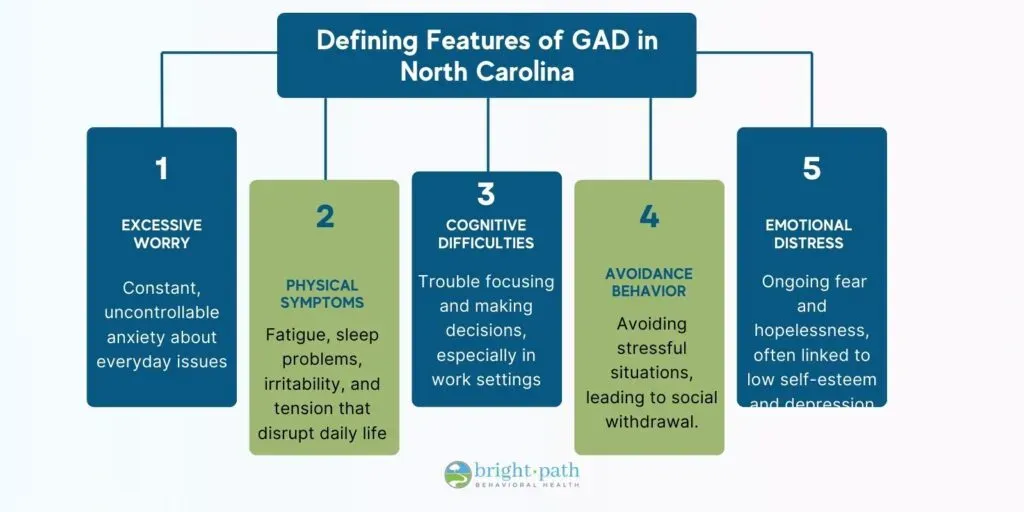
Listed below is a breakdown of GAD features.
- Excessive Worry: Chronic anxiety over everyday concerns (e.g., health, money, relationships) that feels uncontrollable and disproportionate to actual events.
- Physical Symptoms: Common issues include restlessness, fatigue, sleep problems, irritability, and muscle tension. These result in missed work or school days in North Carolina, especially in rural counties with limited mental health services.
- Cognitive Difficulties: Difficulty concentrating or making decisions is common. This is especially problematic in jobs requiring focus, an issue cited by many adults in NC’s annual behavioral health surveys.
- Avoidance Behavior: Individuals avoid situations they associate with stress, which worsens social isolation. In rural towns like Wake Forest, avoidance means skipping church, avoiding family gatherings, or not attending school events.
- Emotional Distress: Persistent fear, dread, and hopelessness affect confidence and self-worth, leading to comorbid depression.
According to the Western NC Health Network, mental health concerns in the region have grown, with 22% of adults reporting more than 7 days of poor mental health per month in 2021. Many of these individuals exhibit GAD symptoms but remain undiagnosed.
What Are the Symptoms of GAD?
The symptoms of Generalized Anxiety Disorder (GAD) include persistent worry, sleep disturbances, irritability, physical tension, and difficulty concentrating.
These emotional and physiological signs affect individuals across different age groups and genders, including teens’ mental health.
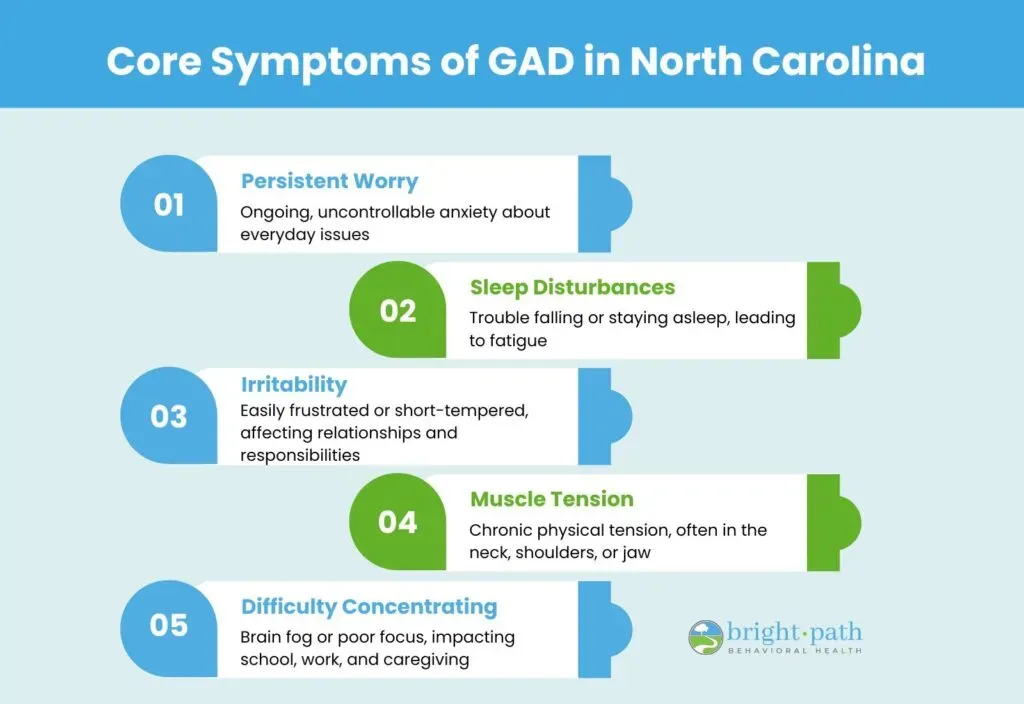
Listed below is a summary of the core symptoms of GAD.
- Persistent Worry: Individuals constantly worry about a range of daily matters, anticipating the worst-case scenario. In NC, nearly 25% of adults reported frequent anxiety in 2023, a common hallmark of GAD.
- Sleep Disturbances: Many struggle with falling asleep or waking up too early. These patterns contribute to fatigue and worsen anxiety. Over 60–70% of people with GAD report poor sleep quality.
- Irritability: Short temper and impatience interfere with work, parenting, and relationships, particularly in households already facing stress from caregiving or financial strain.
- Muscle Tension: Chronic pain, especially in the neck, shoulders, or jaw, is frequently tied to anxiety. A 2023 study found elevated EMG levels in GAD patients during stressful tasks, reflecting constant physical arousal.
- Difficulty Concentrating: Many describe brain fog or an inability to focus. In teens, this shows up as poor academic performance or skipping classes. In adults, it reduces workplace productivity or leads to errors in caregiving.
About 128,000 adolescents in NC experience depression annually, and many also exhibit GAD-related symptoms like poor sleep and irritability. Yet over 50% do not receive treatment.
How Is GAD Diagnosed?
GAD is diagnosed through a structured clinical evaluation and is considered serious due to its impact on functioning and high risk of co-occurring disorders.
In Wake Forest and across North Carolina, providers use tools like the GAD-7 questionnaire alongside DSM-5 criteria, which require six months of excessive worry and at least three symptoms such as fatigue, restlessness, or poor concentration.
GAD interferes with work, school, and relationships. Many adults in NC already face limited access to care, and over 2.67 million residents live in areas with a shortage of mental health professionals. Untreated GAD worsens outcomes: A study by NC Child of North Carolina youth, titled “2023 NC Child Health Report Card,” in 2023, found that 11% of children aged 3 to 17 were diagnosed with depression or anxiety in 2022, a 48.7% increase since 2016.
Early diagnosis is critical to prevent decline in functioning, especially for low-income and rural residents in Wake Forest who experience both stigma and access barriers.
What Causes Generalized Anxiety Disorder?
GAD is caused by a mix of genetics, brain chemistry, stress, and life experiences, with risk heightened by certain traits and adverse events.
In North Carolina, mental health is shaped by both inherited and environmental factors. Imbalances in brain chemicals like GABA also impair the brain’s ability to calm itself under stress. Risk increases with traits like perfectionism, low self-esteem, and chronic worry. Environmental stressors, job loss, trauma, and family instability are common in under-resourced communities. For youth in Wake Forest and statewide, adverse childhood experiences (ACEs) are a leading factor. A study by the North Carolina Department of Health and Human Services, titled “Emergency Department Visit Data 2016–2021,” in 2022, found that females aged 10 to 14 experienced a 46% increase in self-inflicted injury emergency department visits, a sharp rise associated with underlying trauma, anxiety, and mood disorders.
How Is GAD Treated?
GAD is treated with therapy, medication, and holistic strategies that reduce symptoms and improve function.
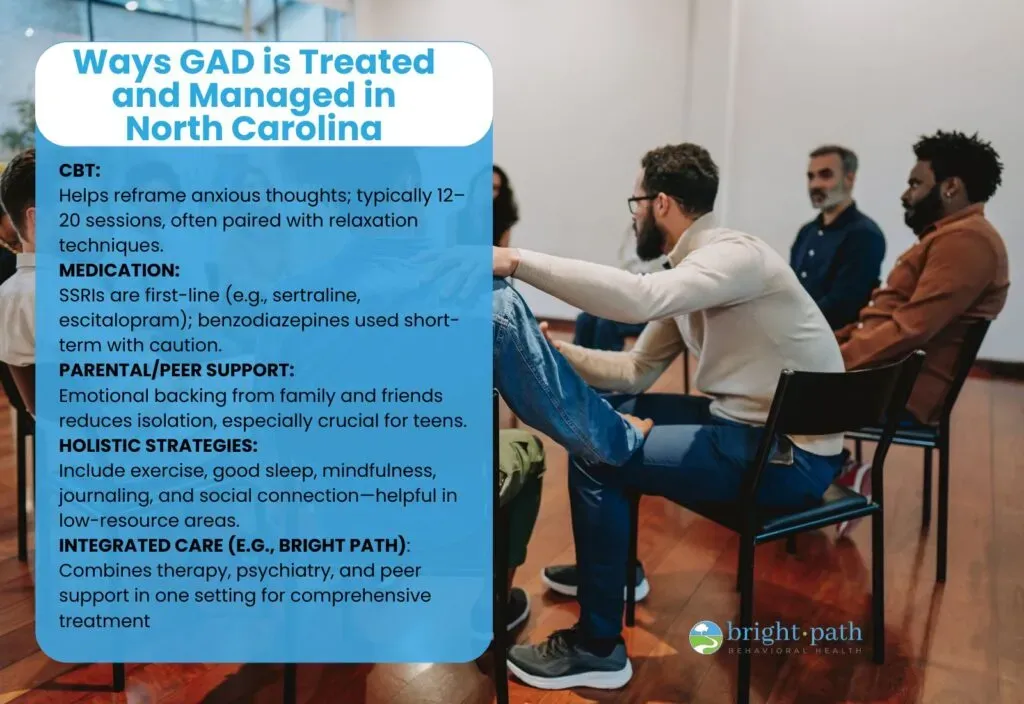
Listed below are ways GAD is treated and managed.
- CBT: helps individuals recognize and reframe anxious thought patterns, requiring 12–20 sessions. It is most effective when combined with relaxation techniques.
- Medication: includes SSRIs like sertraline and escitalopram, which are first-line treatments and reduce anxiety. Benzodiazepines are used short term but carry dependency risks.
- Strong Parental support networks: Friends, family, and groups help ease loneliness and offer emotional support. For teens, parental support fosters trust and open communication.
- Holistic strategies: These involve exercise, sleep hygiene, mindfulness, journaling, and strong social support, which are especially beneficial in regions with limited mental health infrastructure.
- Bright Path’s Wake Forest clinic integrates therapy, psychiatric care, peer support, and mindfulness-based interventions under licensed clinical teams.
Can GAD Be Cured?
Generalized Anxiety Disorder (GAD) can be effectively managed and, in some cases, cured, though long-term support is essential to prevent relapse and mitigate health risks. Cognitive Behavioral Therapy (CBT) provides lasting symptom relief, with relapse rates as low as 0–14% over 12 months. Without treatment, GAD increases the likelihood of depression and chronic conditions such as high blood pressure.
Medication, particularly SSRIs, helps control symptoms but poses cardiovascular risks, especially in low-income populations. Long-term effects of untreated GAD include reduced life satisfaction, strained relationships, and impaired decision-making. However, individuals who receive therapy, medication, and engage in holistic strategies lead stable lives. Bright Path’s Wake Forest clinic offers comprehensive care, including therapy, relapse prevention, and family-based support to ensure sustained mental well-being.
How Does GAD Compare with Other Anxiety Disorders?
Generalized Anxiety Disorder (GAD) differs from other anxiety disorders in its persistent and wide-ranging worry, affecting multiple aspects of life. Unlike panic disorder, which causes sudden physical symptoms, or social anxiety disorder, which is triggered by social situations, GAD involves ongoing concerns about everyday matters such as family, finances, or health. In 2021, a study by the North Carolina Department of Health and Human Services found that 43% of high school students felt persistently sad or hopeless, while 33% reported frequent loneliness, both linked to trauma and anxiety disorders like GAD.
Specific phobias are tied to singular fears, whereas GAD encompasses broader anxieties. Treatment includes Cognitive Behavioral Therapy (CBT), lifestyle adjustments, and SSRIs, while phobias and social anxiety respond better to exposure therapy or social skills training.
Risk factors for GAD include genetic predisposition, personality traits like perfectionism or low self-worth, chronic stress from financial or family instability, trauma or adverse childhood experiences, and chronic illnesses such as IBS or thyroid disorders. The rehab center provides early screening, integrated care, and specialized teen anxiety programs to support individuals at risk.
Where Can You Get Generalized Anxiety Disorder (GAD) Treatment in Wake Forest, NC?
Teens with GAD can get care in Bright Path's anxiety treatment program for teens. Outpatient programs include CBT, medication support, and holistic strategies like mindfulness and structured coaching to meet the local needs of Wake County residents. Bright Path also works closely with families, helping patients build lifelong coping tools, not just quick fixes.
Does Insurance Cover GAD Treatment in North Carolina?
Yes, insurance covers GAD treatment in North Carolina. Most plans, including Medicaid, Blue Cross Blue Shield, and Cigna, offer benefits for therapy, psychiatric evaluation, and medication for anxiety disorders.
You must always verify your insurance to understand your out-of-pocket costs. Bright Path accepts most major plans and assists with verification and financial planning.


Clinically reviewed by Dr. Shantel Sullivan, Ed.D., LCSW, Chief Executive Officer