
-1.svg)
Parenting a child with ADHD in North Carolina, or anywhere, can feel overwhelming at times, but you’re not alone, and support is within reach.
ADHD, or Attention-Deficit/Hyperactivity Disorder, is a common neurodevelopmental condition that affects a child’s ability to focus, sit still, and control impulses.
As a parent, you find everyday routines more challenging, from getting out the door in the morning to managing schoolwork or bedtime. These struggles are real, but with the right guidance and mindset, you can create a positive and supportive environment that helps your child thrive. Structure, consistency, and empathy are the foundation of effective ADHD parenting.
By understanding your child’s needs and applying practical strategies, like breaking tasks into steps, offering consistent routines, and responding with patience, you reduce stress for both of you and nurture growth, confidence, and connection along the way.
What is ADHD?
ADHD, or Attention-Deficit/Hyperactivity Disorder, is a brain-based condition that affects how a person pays attention, controls their impulses, and manages their activity level. It begins in childhood and continues into adolescence and adulthood.
Children with ADHD have trouble sitting still, following instructions, staying organized, or completing tasks. They seem forgetful, overly energetic, or easily distracted, not because they’re misbehaving, but because their brains process information and respond to the world differently.
ADHD isn’t caused by bad parenting or lack of discipline; it’s a medical condition that is managed with the right support, structure, and understanding.
What is Acceptable Behavior in ADHD Children?
Acceptable behavior in ADHD children includes actions that are respectful, safe, and within clearly defined boundaries, such as using kind words, following simple instructions, completing tasks with support, and expressing feelings without aggression. While children with ADHD struggle with focus or impulse control, they are still capable of learning appropriate ways to behave when expectations are clear and consistent.
Acceptable behavior means understanding and allowing for occasional distractions or restlessness while still expecting basic cooperation and kindness. Unacceptable behavior, on the other hand, includes actions that harm others, destroy property, or involve constant defiance. The key difference lies in intent and impact; acceptable behavior is imperfect but is respectful and effortful, while unacceptable behavior crosses limits that affect safety or relationships. Setting these boundaries helps children with ADHD learn self-control and build healthy habits over time.
What are the Tips for Parenting a Child with ADHD?
The tips for parenting a child with ADHD include creating a supportive, structured, and understanding environment that helps your child feel secure and capable. Children with ADHD struggle with attention, impulse control, and emotional regulation, which make everyday routines more challenging. However, with the right strategies and a calm, consistent approach, you can help your child develop healthy habits, improve behavior, and build confidence in their daily life.
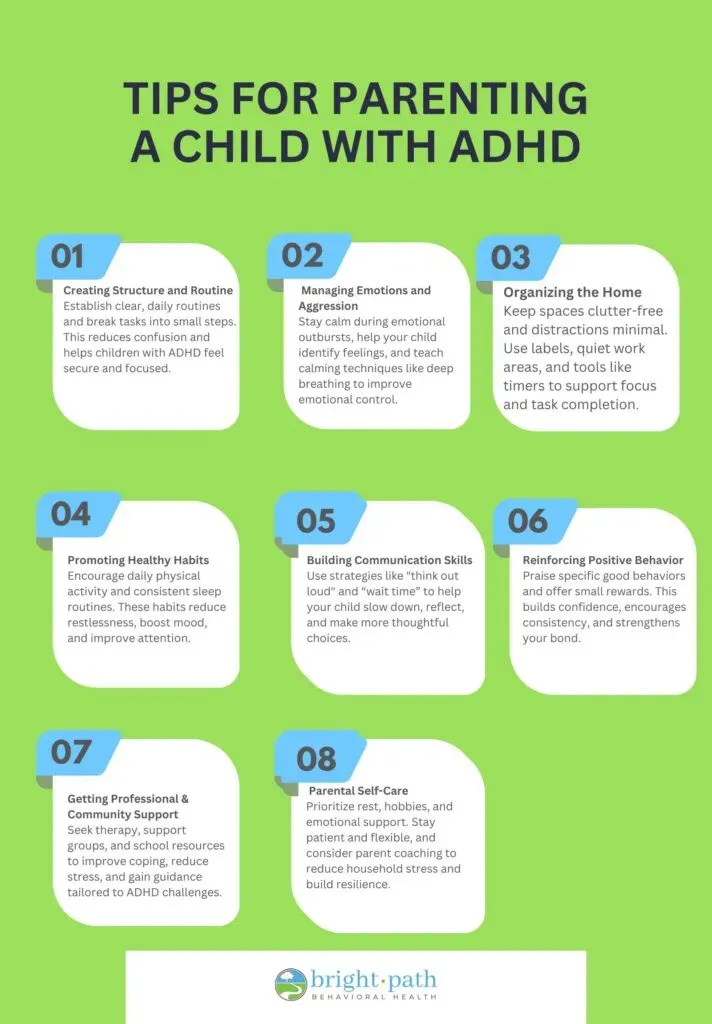
Here are the tips for parenting a child with ADHD:
- Creating a Structured and Supportive Environment
Creating a structured and supportive environment is important for helping children with ADHD feel more in control and less overwhelmed. A clear structure provides a sense of security, reduces confusion, and helps manage their energy and attention more effectively. One of the most helpful ways to do this is by establishing consistent daily routines. Predictable schedules for waking up, meals, schoolwork, playtime, and bedtime help your child know what to expect and what’s expected of them. It reduces resistance and builds positive habits over time.
Another key strategy is breaking tasks into smaller, manageable steps. Large or complex tasks feel overwhelming for a child with ADHD, leading to frustration or shutdown. By breaking activities into simple parts and guiding them step-by-step, you make it easier for your child to stay focused, feel a sense of progress, and complete what they start without feeling defeated.
- Managing Emotions and Aggression
Managing emotions and aggression in children with ADHD requires patience, empathy, and clear boundaries. Emotional outbursts, like yelling, crying, or sudden anger, stem from frustration, overstimulation, or difficulty expressing feelings. These reactions aren’t usually intentional but are signs that your child is struggling to cope.
Responding to emotional outbursts starts with staying calm yourself. Your steady tone and body language help de-escalate the situation. Give your child space to cool down if needed, then gently guide them to identify what they’re feeling. Use simple language and offer tools like deep breathing, counting to ten, or taking a break. Over time, teach them how to recognize early signs of frustration and choose healthier ways to respond. Consistent support and modeling emotional control will help your child build the skills to manage their reactions more effectively.
- Simplifying and Organizing the Home
Simplifying and organizing the home makes a big difference in supporting a child with ADHD. A clutter-free, predictable environment helps reduce distractions and makes it easier for your child to focus and follow routines. Keep commonly used items like school supplies, clothes, and toys in clearly labeled bins or designated spaces so your child knows where things belong.
Reducing environmental distractions is especially important during tasks that require concentration, like homework or chores. Choose a quiet, low-stimulation area free from noise, screens, and clutter. Use tools like timers, visual schedules, or noise-canceling headphones to help your child stay on task. When their surroundings are calm and organized, your child is more likely to feel settled, stay focused, and succeed in daily responsibilities.
- Promoting Healthy Habits
Promoting healthy habits is important for managing ADHD symptoms and supporting your child’s overall well-being. Encouraging regular physical activity helps release excess energy, improves mood, and boosts focus. Activities like biking, swimming, team sports, or even a walk after school provide a positive outlet for restlessness and support emotional regulation.
Regulating sleep patterns is equally important. Children with ADHD struggle with falling or staying asleep, which worsens symptoms like irritability, inattention, and impulsivity. Establish a consistent bedtime routine with calming activities such as reading, dimming lights, or limiting screen time before bed. A well-rested child is better equipped to manage their emotions, stay focused during the day, and follow through on expectations.
- Building Communication and Cognitive Skills
Building communication and cognitive skills helps children with ADHD develop better self-awareness, problem-solving, and emotional control. One effective technique is teaching out-loud thinking, where you encourage your child to verbalize their thoughts before acting. For example, they say, “First, I’ll do my homework, then I’ll play.” This helps slow impulsive reactions and promotes mindful decision-making.
Another helpful tool is the “wait time” strategy. When your child is excited or frustrated, gently prompt them to pause and think before responding. You model this by saying, “Let’s take a moment to think about what we want to say.” Giving your child that brief pause allows them to process their thoughts, reflect, and respond more thoughtfully rather than reacting immediately. These small, consistent practices gradually strengthen your child’s ability to communicate clearly and think before acting.
- Reinforcing Positive Behavior
Reinforcing positive behavior is one of the most effective ways to guide and support a child with ADHD. The power of positive reinforcement lies in recognizing and rewarding the behaviors you want to see more often. Instead of focusing only on mistakes or misbehavior, catch your child doing something right, whether it’s following directions, staying on task, or showing kindness, and offer specific praise like, “I liked how you cleaned up your toys without being asked.”
You also use small rewards such as stickers, extra playtime, or a favorite activity to motivate consistent effort. Positive reinforcement helps build confidence, encourages self-control, and strengthens the parent-child relationship. Over time, it shifts your child’s attention toward success and encourages them to make positive choices more often.
- Seeking Professional and Community Support
Seeking professional and community support makes a significant difference in managing ADHD and reducing the stress felt by both children and parents. Counseling and therapy for ADHD, such as behavioral therapy or parent-child interaction therapy, help children build coping skills, manage emotions, and improve behavior. It also provides parents with tools to respond more effectively and consistently to their child’s needs.
ADHD support groups for parents offer a sense of connection and shared experience. These groups, whether in-person or online, provide a space to exchange practical advice, learn from others facing similar challenges, and feel understood. For families in North Carolina, many mental health centers like Bright Path Behavioral Health’s ADHD treatment and schools offer resources or referrals to ADHD professionals and support networks. Getting help isn’t a sign of weakness; it’s a smart and empowering step toward building a more balanced and hopeful future for your family.
- Taking Care of Yourself as a Parent
Taking care of yourself as a parent is just as important as caring for your child, especially when raising a child with ADHD. The demands are emotionally and physically draining, which is why parental self-care is important. Making time for rest, healthy meals, hobbies, and emotional support helps you stay grounded and better equipped to handle daily challenges with clarity and compassion. Join parent coaching groups to uncover unhealthy patterns that contribute to stress or emotional distress at home and offer strategies to create a more supportive, stable environment.
Staying flexible and patient is also key. ADHD parenting means plans shift, routines break, and progress slows, but that’s okay. Flexibility allows you to adjust without feeling defeated, while patience helps you respond with understanding instead of frustration. When you care for your well-being, you’re not only protecting your health, you’re modeling resilience and emotional strength for your child.
Why is structure important for children with ADHD?
Structure is important for children with ADHD because it provides the predictability and routine they need to feel secure and stay focused. With clear expectations and consistent schedules, children are less likely to become overwhelmed or distracted. Structure helps them manage time, complete tasks, and develop positive habits, making daily life more manageable and reducing stress for both the child and the family.
Can diet and sleep affect a child’s ADHD symptoms?
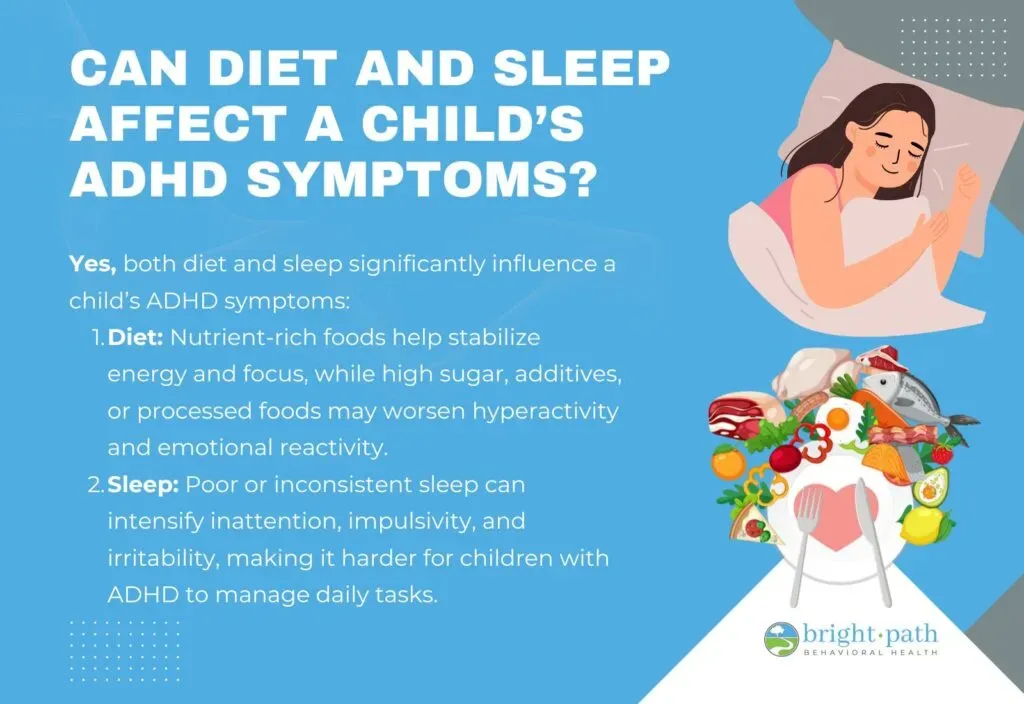
Yes, diet and sleep can affect your child’s ADHD symptoms. A balanced diet with regular meals supports steady energy and focus, while excessive sugar or processed foods increase hyperactivity or mood swings. Likewise, consistent, quality sleep is important; lack of rest worsens inattention, irritability, and impulsivity. Supporting healthy eating and sleep routines helps improve overall behavior and daily functioning.
Can ADHD improve with age?
Yes, ADHD can improve with age, especially with the right support and coping strategies. While some children continue to experience symptoms into adulthood, many learn to manage them better over time. Maturity, therapy, lifestyle changes, and skill-building all contribute to improved focus, self-control, and emotional regulation as they grow older.