
-1.svg)
A Partial Hospitalization Program (PHP) is a highly structured mental health treatment option for teens who need intensive care during the day but return home at night. It offers a level of support between inpatient hospitalization and traditional outpatient therapy, allowing adolescents to receive focused treatment without leaving the comfort of their home environment.
In North Carolina, approximately one in five adolescents experiences a mental health disorder each year, according to data from the North Carolina Department of Health and Human Services. PHPs are designed to meet the emotional, behavioral, and developmental needs of teens aged 13 to 18 in North Carolina through evidence-based therapies, family involvement, and personalized care plans.
What Is a Partial Hospitalization Program for Teens?
A Partial Hospitalization Program for teens is a day-based mental health treatment model that provides intensive therapeutic care without requiring overnight stays. It offers hospital-level services during structured daytime hours, allowing adolescents to return home each evening.
This approach is ideal for teens experiencing severe mental health symptoms who need more support than outpatient therapy but do not meet the criteria for full inpatient hospitalization.
What Mental Health Issues Are Treated in a Teen PHP?
The mental health issues treated in a teen PHP include major depression, obsessive-compulsive disorder, and ADHD. They range from moderate to severe psychiatric and emotional disorders that impair daily functioning but do not require 24-hour supervision.
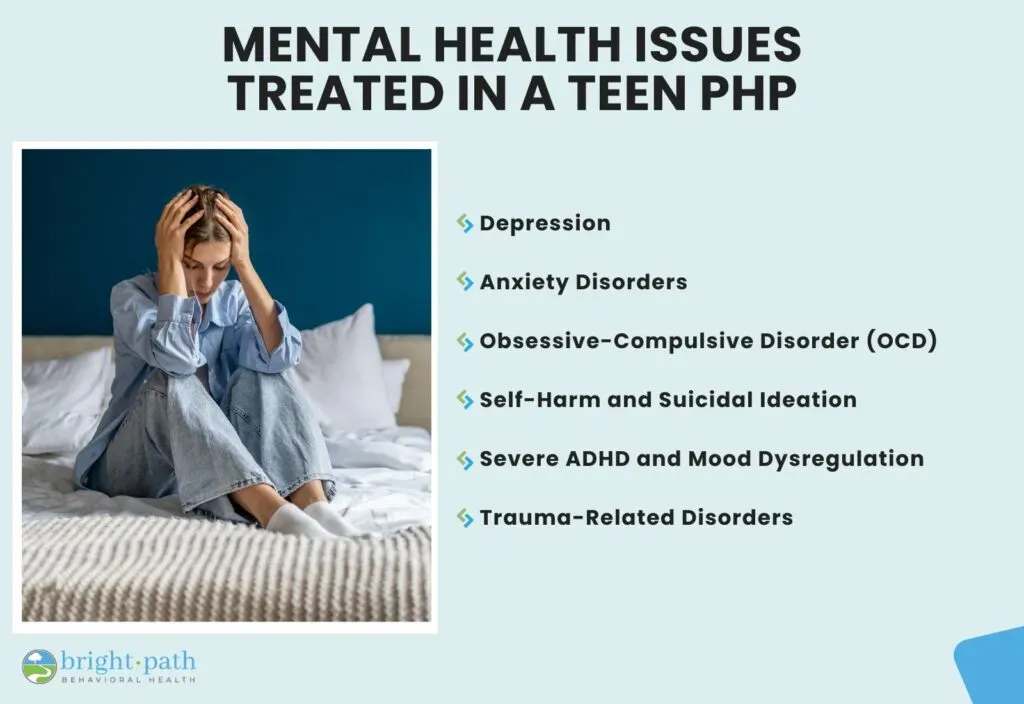
The following are the common conditions addressed in a teen PHP:
Depression
Teens experiencing persistent sadness, irritability, lack of motivation, or social withdrawal are offered structured support to manage major depression. Such programs in Wake Forest use evidence-based treatments like cognitive behavioral therapy (CBT) and behavioral activation to help teens re-engage with daily life, build emotional resilience, and regain a sense of purpose.
Anxiety Disorders
For teens dealing with generalized anxiety, social anxiety, or panic attacks, PHPs provide a supportive environment that fosters gradual exposure to fears and the development of practical coping skills. Therapy focuses on helping adolescents challenge catastrophic thinking, build confidence in social situations, and learn practical relaxation techniques.
Obsessive-Compulsive Disorder (OCD)
Teens with OCD benefit from a structured approach that includes exposure and response prevention (ERP) alongside CBT. These therapies help reduce the power of intrusive thoughts and compulsive behaviors while promoting healthier patterns of thinking and emotional regulation.
Self-Harm and Suicidal Ideation
Adolescents struggling with self-injury or suicidal thoughts receive close clinical monitoring and immediate therapeutic intervention. PHPs create a safety-first treatment space where teens learn emotional regulation skills, distress tolerance, and safety planning, all essential for stabilization and long-term healing.
Severe ADHD and Mood Dysregulation
Teens with ADHD, high impulsivity, frequent outbursts, or difficulty focusing receive targeted support through behavioral therapy, executive functioning training, and, when appropriate, medication management. The structured setting of a PHP provides consistency and routines that help these teens develop better self-control and emotional balance.
Trauma-Related Disorders
For teens impacted by trauma, including abuse, neglect, or loss, PHPs offer trauma-informed care that prioritizes emotional safety and empowerment. Individual and group therapy address symptoms like hypervigilance, flashbacks, and dissociation, helping adolescents process their experiences in a supportive, nonjudgmental environment.
What Are the Benefits of a Partial Hospitalization Program for Teens?
The benefits of a Partial Hospitalization Program for teens include intensive therapy, structured daily routines, and consistent emotional support in a flexible, non-residential format.
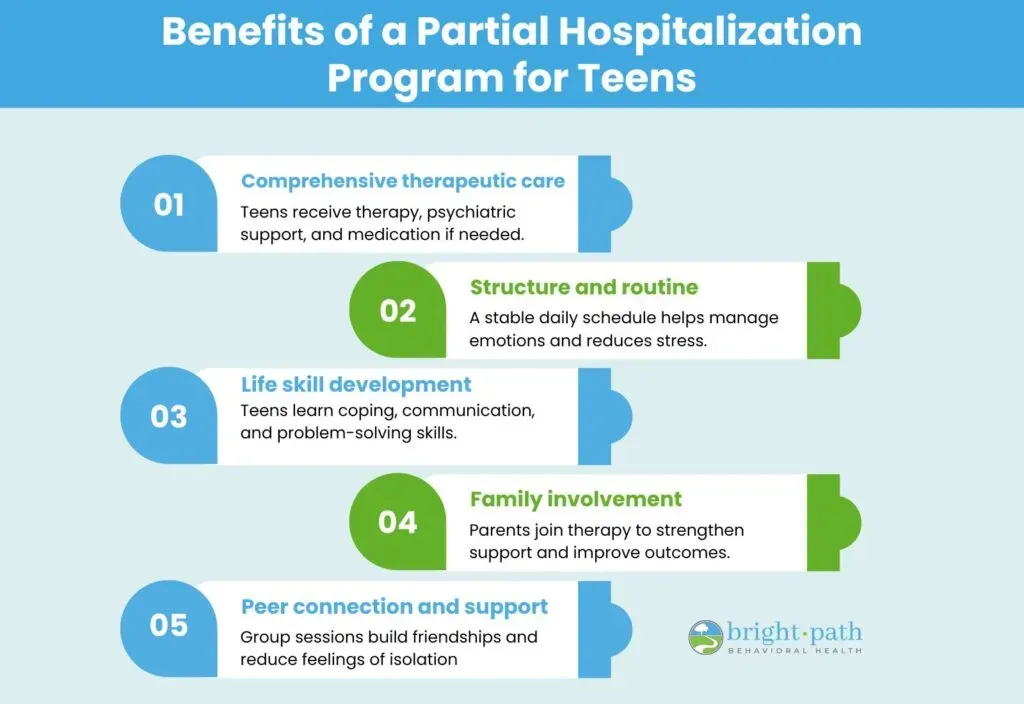
The following are the key benefits of PHP for adolescents:
- Comprehensive therapeutic care: Teens participate in individual, group, and family therapy sessions alongside psychiatric evaluations and medication management.
- Structure and routine: A predictable daily schedule fosters emotional stability and reduces the chaos often associated with mood disorders and anxiety.
- Life skill development: Programs focus on teaching communication, problem-solving, emotional regulation, and relapse prevention strategies that teens use daily.
- Family involvement: Through family therapy and education, parents and guardians are included in the healing process to support long-term recovery.
- Peer connection and support: Group therapy settings help teens relate to others with shared experiences, reducing isolation and promoting healthy social interaction.
What Therapies Are Included in a PHP for Teens?
The therapies included in a PHP for teens are designed to treat the underlying causes of emotional distress and equip adolescents with tools for long-term wellness.
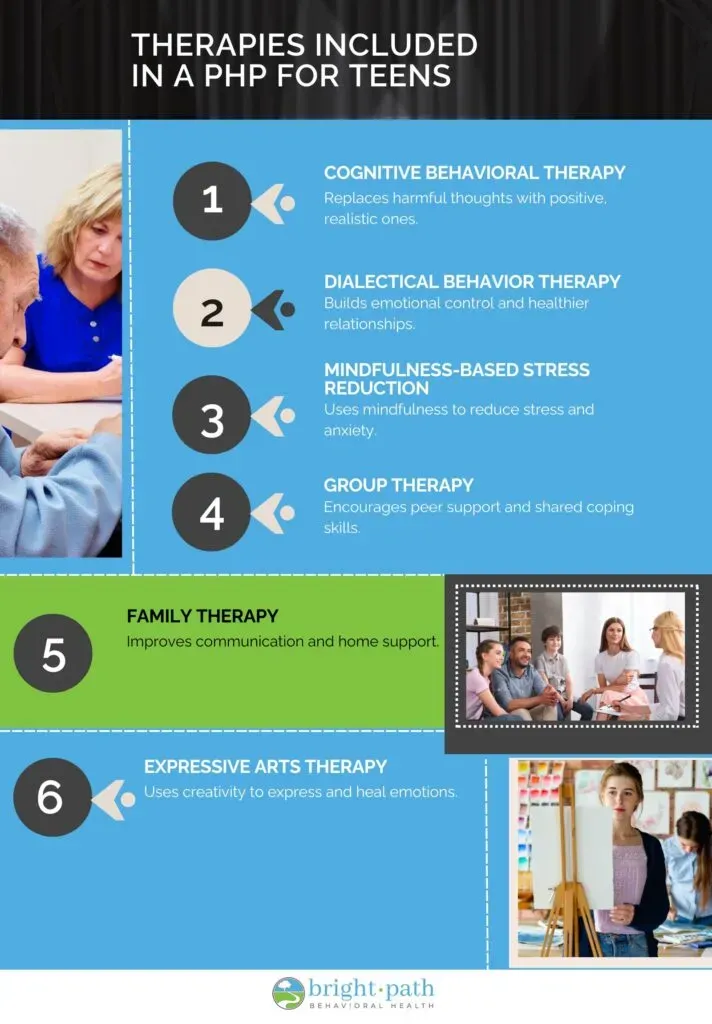
The following are the therapeutic modalities commonly used in teen PHPs:
- Cognitive Behavioral Therapy (CBT): Helps teens identify negative thought patterns and replace them with healthier, more constructive beliefs and behaviors.
- Dialectical Behavior Therapy (DBT): Focuses on distress tolerance, emotional regulation, and interpersonal effectiveness, particularly for those with self-harming behaviors.
- Mindfulness-Based Stress Reduction (MBSR): Teaches teens to manage anxiety and depression through present-moment awareness and relaxation techniques.
- Group therapy: Offers structured, peer-led discussions where teens build empathy, share coping tools, and develop trust.
- Family therapy: Facilitates open communication, strengthens relationships, and creates a supportive home environment critical to teen recovery.
- Expressive arts therapy: Creative outlets like music, art, and journaling help teens process emotions when words fall short.
What Does a Typical Day in a Teen PHP Look Like?
A typical day in a teen PHP involves a full schedule of therapeutic activities focused on mental, emotional, and social development within a supportive clinical setting.
The following are the components of a day in a teen PHP:
- Morning check-in: Teens begin with a guided emotional check-in to set goals and acknowledge current challenges.
- Group therapy sessions: The bulk of the day includes peer groups focused on skill-building, emotional processing, and relationship dynamics.
- Individual therapy: Each teen meets with a licensed therapist for personalized support and progress evaluation.
- Skill-building workshops: Activities include mindfulness practice, conflict resolution, academic planning, and healthy habit formation.
- Medication management: A psychiatrist monitors any psychiatric medications, making adjustments as needed based on daily observations.
- End-of-day reflection: Teens participate in wrap-up discussions and grounding exercises before returning home.
Who Is a Good Candidate for a Teen Partial Hospitalization Program?
A good candidate for a teen Partial Hospitalization Program is an adolescent who is struggling with severe mental health issues but remains safe to return home each evening.
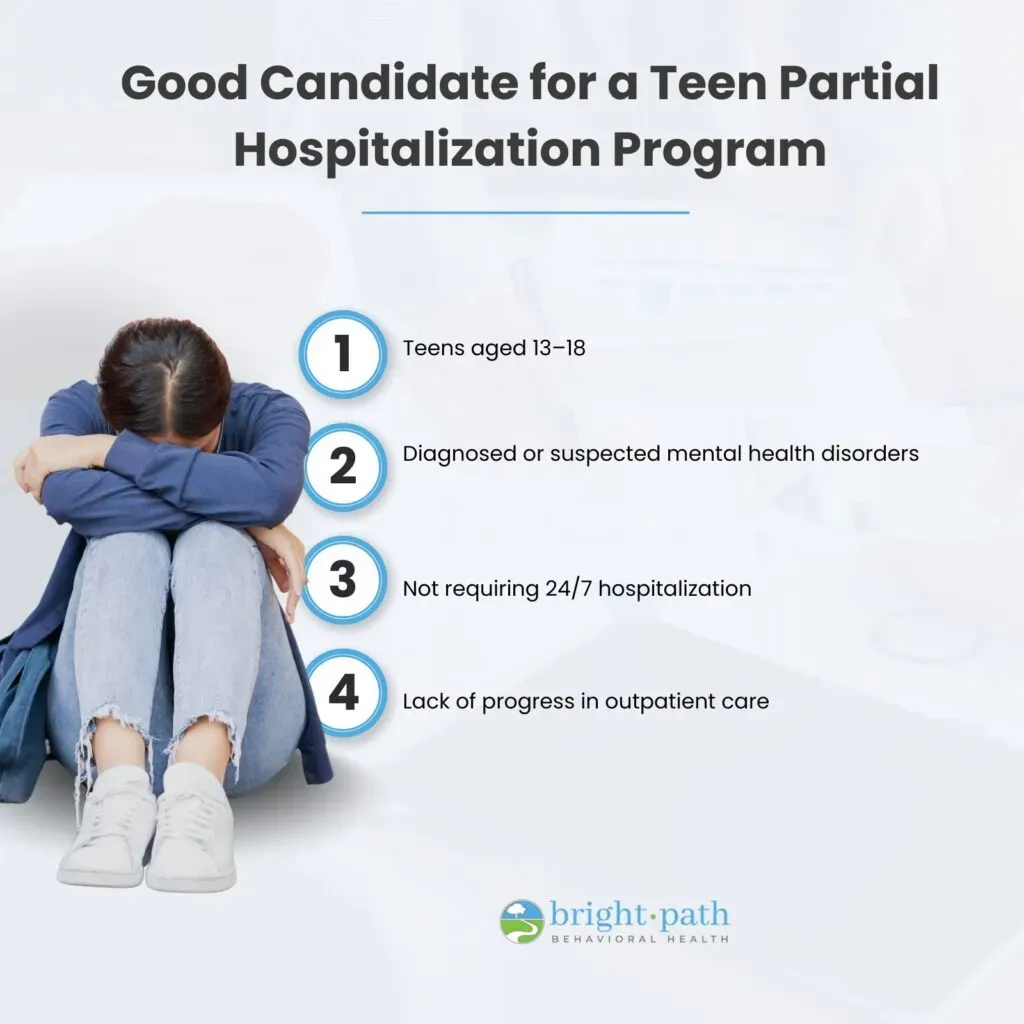
The following are the eligibility criteria for a teen PHP:
- Teens aged 13–18: Adolescents in middle or high school experiencing significant emotional or behavioral difficulties.
- Diagnosed or suspected mental health disorders: Teens with symptoms that disrupt school, relationships, or daily functioning.
- Not requiring 24/7 hospitalization: Candidates must be medically and psychiatrically stable enough to live at home outside program hours.
- Lack of progress in outpatient care: Teens who haven’t improved with weekly therapy sessions and need a higher level of care.
- Family support at home: A supportive home environment that encourages participation in therapy and reinforcement of skills learned in treatment.
How Long Does a Partial Hospitalization Program Last for Teens?
The duration of a Partial Hospitalization Program (PHP) for teens ranges from 2 to 6 weeks, depending on the individual’s needs, progress, and treatment goals. Most adolescents participate for about 3 to 5 weeks, though some benefit from a longer stay if their symptoms require continued support.
Teens attend the program five days a week for approximately 4 to 6 hours each day, allowing them to receive intensive therapeutic care while still managing school or family obligations. As teens begin to stabilize, they transition to a lower level of care, such as an Intensive Outpatient Program (IOP) or regular outpatient therapy, ensuring continuity of support through each phase of recovery.
How Does a Teen PHP Support Transition Back to Daily Life?
A teen PHP supports transition back to daily life by equipping adolescents with skills, strategies, and therapeutic support that bridge the gap between clinical care and everyday responsibilities.
The following are ways PHP eases the return to regular routines:
- Skill generalization: Teens practice coping techniques in real-time, applying what they learn in therapy to home and school settings.
- Family coaching: Parents receive tools to support their teens’ behavior at home and reinforce treatment progress.
- Educational coordination: Programs collaborate with schools to help teens stay on track academically or manage reentry post-treatment.
- Step-down care: Teens are referred to IOPs, outpatient therapy, or community resources for continued support after PHP discharge.
Why Choose a Partial Hospitalization Program for Teen Mental Health in Wake Forest, NC?
Choose a Partial Hospitalization Program in Wake Forest, North Carolina, because they offer access to specialized teen-focused mental health services in a familiar, community-based setting.
The following are reasons why Wake Forest PHP programs are uniquely beneficial:
- Age-specific treatment: Programs are designed exclusively for adolescents, with therapists trained in teen development and communication styles.
- Local accessibility: Teens attend intensive treatment without leaving their home community, preserving support systems and minimizing disruption.
- Evidence-based care: PHPs in Wake Forest use proven therapies like CBT, DBT, and family systems approaches to drive meaningful outcomes.
- Holistic support: Beyond therapy, teens engage in creative expression, physical activity, and social skills practice for well-rounded growth.
What Should Parents Know Before Enrolling Their Teen in a PHP?
Before enrolling their teen in a PHP, parents should understand the program’s goals, structure, and the paramount role they play in the healing process.
The following are key considerations for families:
- Collaborative treatment: Parents are essential partners in therapy, participating in sessions and learning how to support their teen at home.
- Insurance coverage: Many programs accept commercial insurance, and verification is offered before admission to estimate cost coverage.
- Assessment required: An intake assessment determines clinical need and ensures the program is a good fit for the teen’s mental health status.
- Continuity of care: PHPs offer discharge planning and referrals for ongoing outpatient care to support long-term stability and recovery.
Does Insurance Cover Teen PHP in North Carolina?
Yes, most insurance plans do cover teen Partial Hospitalization Programs (PHP) in North Carolina, including both private insurance and Medicaid, depending on the provider and medical necessity. Coverage includes therapy sessions, psychiatric evaluations, and medication management when the PHP is deemed essential for stabilizing a teen’s mental health condition.
Insurance companies generally require a formal diagnosis and referral from a licensed mental health professional to authorize PHP services. Families are encouraged to verify benefits, check for in-network providers, and request a preauthorization to ensure minimal out-of-pocket costs. Many PHPs in North Carolina work directly with insurers to streamline approvals and help families access care without delays.
Is a Partial Hospitalization Program Right for Your Teen?
Yes, a Partial Hospitalization Program is right for your teen if they’re experiencing serious mental health struggles that disrupt daily life but do not require round-the-clock care. These programs offer the structure, therapy, and support teens need to regain emotional balance and move forward with confidence.