
-1.svg)
Stress management for teens means building a set of simple skills that ease tension quickly and strengthen resilience over time. The most effective coping skills include deep breathing, grounding exercises, physical activity, steady sleep, time management, cognitive reframing, social support, and creative outlets.
Adolescence brings academic pressure, social change, and constant connectivity. Some stress is normal and even helps teens grow. The problem starts when pressure never lets up and begins affecting sleep, mood, and school.
Teens who learn these techniques early gain tools they can reach for anywhere, from a stressful test to a difficult conversation. The right coping skills lower stress in the moment and build lasting resilience for the years ahead.
Key Takeaways
- Stress management works best as a daily practice, so teens should build skills before pressure peaks rather than waiting for a crisis.
- Breathing, grounding, movement, and sleep are the fastest-acting and most reliable coping tools for teenagers.
- In 2023, the CDC found that roughly 40% of U.S. high school students reported persistent feelings of sadness or hopelessness, showing how widespread teen distress has become.
- Diagnosed anxiety among adolescents rose from 10% in 2016 to 16.1% in 2023, making early coping skills more important than ever.
- Stress that disrupts sleep, appetite, mood, or school for several weeks may need a professional evaluation.
Fast Ways to Calm Down in the Moment
Some situations call for relief within seconds, not hours. Quick resets work by switching off the body's fight-or-flight response and bringing the nervous system back to baseline. Teens can keep these tools ready for tests, arguments, or moments of panic.

Deep Breathing
Slow breathing is the fastest way to calm a racing heart. Box breathing means inhaling for four counts, holding for four, exhaling for four, and holding for four. Repeating this cycle a few times steadies both body and mind.
The 5-4-3-2-1 Grounding Technique
Grounding pulls attention out of anxious thoughts and back into the present. Teens name five things they see, four they can touch, three they hear, two they smell, and one they taste. This simple scan interrupts spiraling worry fast.
Daily Habits That Lower Stress Over Time
In-the-moment tools help most when they sit on a foundation of healthy routines. These daily habits lower baseline stress so everyday pressures feel smaller. Consistency matters more than intensity here.
Move Your Body
Physical activity burns off stress hormones and releases mood-lifting endorphins. A walk, a sport, dancing, or a bike ride all count. Even ten minutes of movement can reduce anxiety and improve focus for schoolwork.
Protect Your Sleep
Sleep and stress affect each other directly, so poor rest makes everything harder. Teens need eight to ten hours a night, yet only about 23% actually reach that amount. A steady bedtime and screens off an hour before bed both improve rest.
Manage Time and Break Tasks Down
Much of teen stress comes from too many demands at once. Writing tasks down and scheduling them on a calendar restores a sense of control. Splitting a big assignment into smaller steps makes it far less overwhelming.
Coping Skills for Difficult Thoughts and Feelings
Stress is not only physical. How teens think about pressure shapes how heavy it feels. These skills target the mental and emotional side of stress.
Reframe Negative Thoughts
Stress grows when thinking slides toward worst-case outcomes. Teens can catch a thought like "I will fail this" and swap it for a balanced one. Focusing on what is within their control also steadies anxious thinking.
Lean on Social Support
Talking with a friend, parent, coach, or teacher buffers stress and eases isolation. Supportive relationships remind teens they are not carrying pressure alone. Building this network early makes reaching out feel natural later.
Use Creative and Calming Outlets
Music, journaling, art, and time in nature give stress a healthy release. These activities quiet repetitive worry and help teens process feelings without pressure. The goal is relief and expression, not a polished result.
Build Your Own Stress Management Plan
A plan turns scattered tips into a routine teens will actually use. The strongest plans mix quick tools with daily habits and a short list of go-to supports. Writing it down makes it easier to follow under pressure.
Start with two quick resets, such as box breathing and grounding, for high-stress moments. Add two daily habits, like a set bedtime and regular movement. Then list three trusted people to reach out to when stress feels like too much.
Teens should keep the plan somewhere visible and adjust it over time. What works during exam week may differ from a normal week. Reviewing the plan every month keeps it realistic and personal.
How Parents Can Help Teens Manage Stress
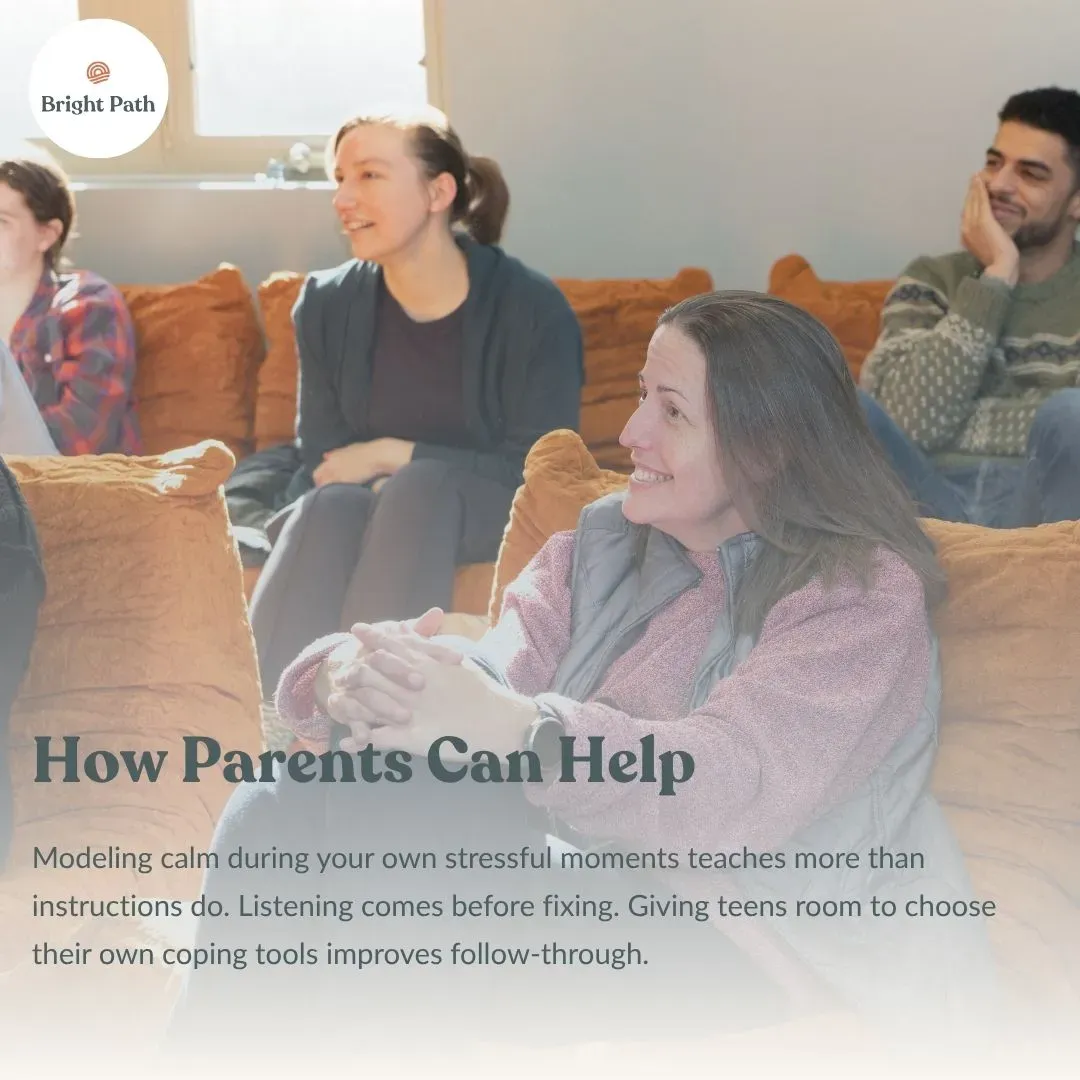
Parents influence how teens learn to handle pressure, often without saying a word. Modeling calm during your own stressful moments teaches more than instructions do. Teens tend to copy the coping habits they see at home.
Listening comes before fixing. Validating a teen's feelings tells them their experience is real and safe to share. From there, families can practice breathing, planning, or movement together rather than treating it as a chore.
Giving teens room to choose their own coping tools improves follow-through. A low-pressure home, predictable routines, and open conversation form the base. When stress persists despite this support, professional guidance is a sensible next step.
When to Seek Professional Support
Everyday stress is manageable at home, but some situations call for more. When stress lasts for weeks and disrupts sleep, eating, mood, friendships, or school, it may point to anxiety or depression. Persistent distress deserves a professional evaluation rather than a wait-and-see approach.
Structured programs offer intensive skill-building when weekly therapy is not enough. A partial hospitalization program supports teens who need structured daytime clinical care while living at home each evening. For teens balancing recovery with school and activities, an intensive outpatient program builds coping skills across several sessions each week.
If a teen is in crisis or thinking about self-harm, reach out for immediate help. You can call or text the 988 Suicide and Crisis Lifeline, or text HOME to 741741 for the Crisis Text Line. Asking for help early is a sign of strength, not failure.
References
- Centers for Disease Control and Prevention. (2024). Youth Risk Behavior Survey data summary and trends report: 2013–2023. Atlanta, GA: U.S. Department of Health and Human Services. CDC
- Centers for Disease Control and Prevention. (2024). Mental health conditions and care among children and adolescents.
- Health Resources and Services Administration. (2024). National Survey of Children's Health, 2023. Rockville, MD: U.S. Department of Health and Human Services.
- American Academy of Child and Adolescent Psychiatry. (2019). Stress management and teens (Facts for Families No. 66). Washington, DC: Author.