


Teen eating disorders affect 2.7% of U.S. adolescents aged 13 to 18 at some point in their lives, according to the National Institute of Mental Health’s summary of National Comorbidity Survey Adolescent Supplement data collected from 2001 to 2004. Female teens, teens aged 17 to 18, and LGBTQ+ youth report the highest rates, and emergency department visits for eating disorders among U.S. adolescents aged 12 to 17 were 55% higher in fall 2022 than in fall 2019, according to the CDC.
Eating disorders affect both physical and mental health and carry an elevated risk of death. The statistics below cover prevalence, LGBTQ+ youth, service use, ethnicity, and mortality, and each one names its source and the years its data were collected.
Key Takeaways
- About 2.7% of U.S. teens aged 13 to 18 have had an eating disorder at some point in their lives (NCS-A, 2001 to 2004).
- U.S. female teens have a higher lifetime prevalence of eating disorders (3.8%) than male teens (1.5%) (NCS-A, 2001 to 2004).
- U.S. teens aged 17 to 18 have the highest lifetime prevalence of eating disorders of any teen age group, at 3.0% (NCS-A, 2001 to 2004).
- Emergency department visits for eating disorders among U.S. adolescents aged 12 to 17 were 55% higher in fall 2022 than in fall 2019 (CDC, 2023).
- 22.36% of children and adolescents aged 6 to 18 screened positive for disordered eating in a 2023 meta-analysis of 32 studies from 16 countries.
- 16.64% of U.S. high school students surveyed between 1999 and 2013 reported unhealthy weight control behaviors (Zhao, Tran, and Mattie, 2024).
- 9% of LGBTQ+ youth aged 13 to 24 in the United States reported an eating disorder diagnosis in The Trevor Project’s survey fielded in late 2020.
- Transgender boys (12%) and nonbinary youth assigned female at birth (11%) reported the highest eating disorder diagnosis rates among LGBTQ+ youth in that survey.
- Native/Indigenous (12%) and Multiracial (10%) LGBTQ+ youth in the U.S. reported the highest rates of diagnosed eating disorders in that survey.
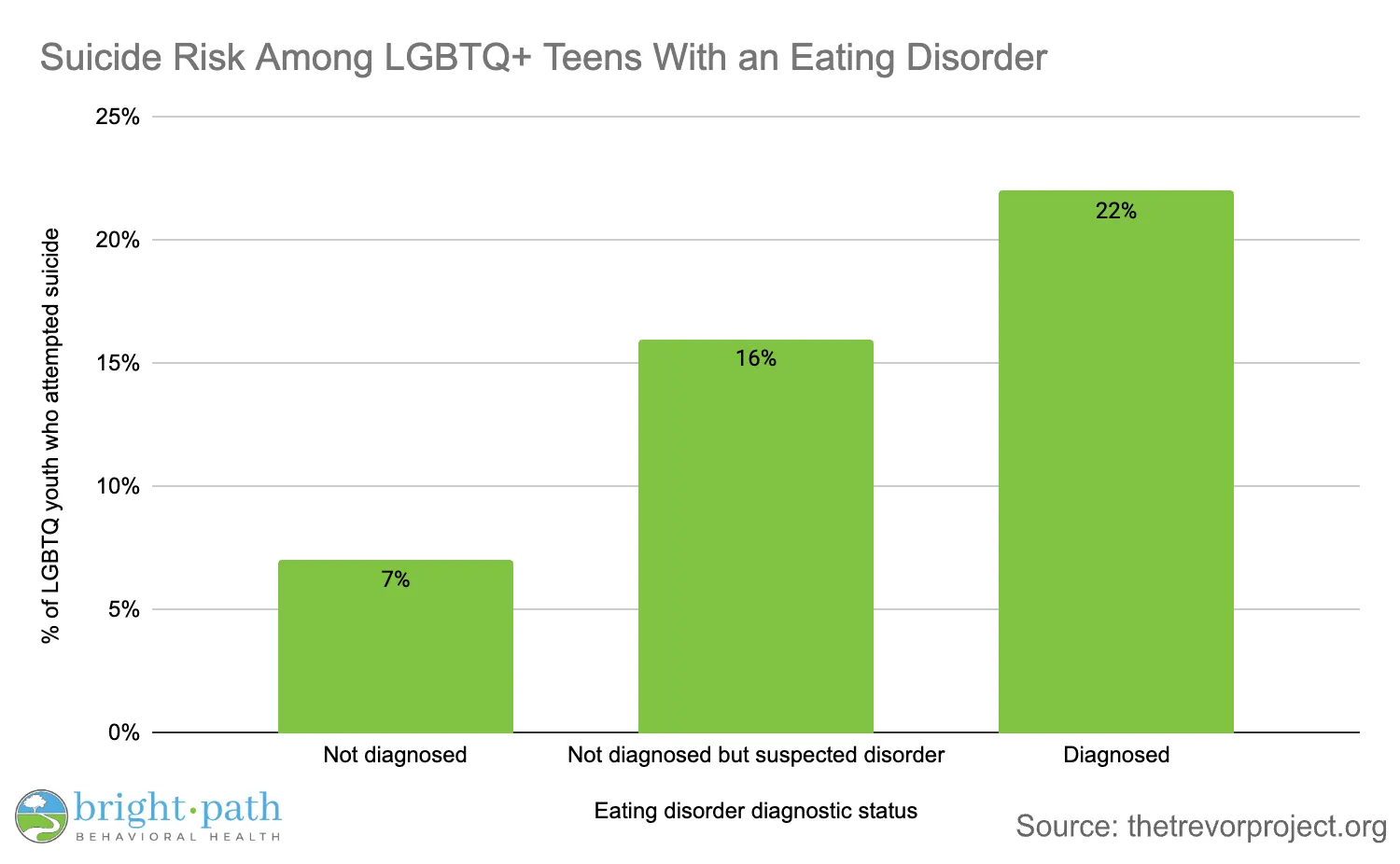
- LGBTQ+ youth with an eating disorder diagnosis had nearly 4 times the odds of a past-year suicide attempt compared with youth who never had or suspected one (The Trevor Project, 2022).
- 54% of LGBTQ+ youth aged 13 to 24 in a 2018 online survey reported ever being diagnosed with an eating disorder (The Trevor Project and NEDA).
- Between 73% and 88% of U.S. teens with eating disorders had contact with a service provider (NCS-A, 2001 to 2004).
- Only 3% to 28% of U.S. teens with eating disorders had discussed their eating or weight problems with a professional (NCS-A, 2001 to 2004).
- U.S. children aged 9 to 12 who reported racial or ethnic discrimination had 3 times higher odds of binge eating disorder (ABCD Study, 2018 to 2020).
- 23.6% of U.S. adolescents hospitalized for an eating disorder at 12 children’s hospitals needed rehospitalization within a year (Rappaport et al., 2024, data from 2010 to 2022).
The Prevalence of Eating Disorders Among U.S. Teens
- According to the National Institute of Mental Health’s summary of the National Comorbidity Survey Adolescent Supplement (NCS-A), a face-to-face survey of 10,123 U.S. adolescents conducted between 2001 and 2004:
- Around 2.7% of U.S. adolescents (aged 13 to 18) have had an eating disorder at some point in their lives.
- Eating disorders are more common in female teenagers, with a lifetime prevalence of 3.8%, compared to 1.5% in males.
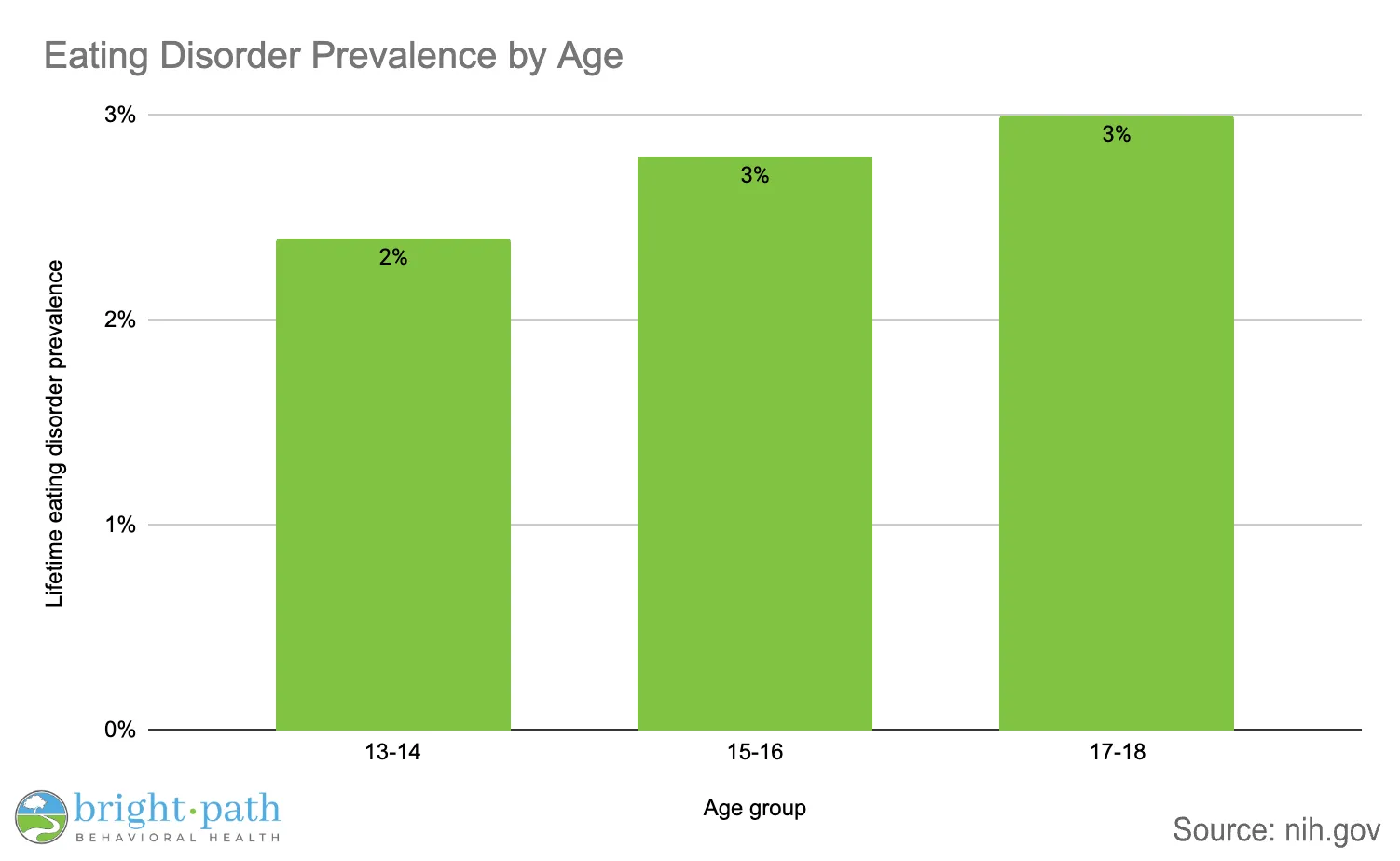
- Among teenage age groups, individuals aged 17 to 18 have the highest lifetime rate of an eating disorder at 3.0%, compared with 2.8% at ages 15 to 16 and 2.4% at ages 13 to 14.
- According to López-Gil et al.’s 2023 meta-analysis “Global Proportion of Disordered Eating in Children and Adolescents” in JAMA Pediatrics, 22.36% of 63,181 children and adolescents aged 6 to 18, drawn from 32 studies in 16 countries, screened positive for disordered eating on the SCOFF questionnaire. Girls screened positive more often (30.03%) than boys (16.98%). A positive SCOFF screen signals disordered eating, not a diagnosed eating disorder, and the meta-analysis excluded data collected during COVID-19.
- According to Zhao, Tran, and Mattie’s 2024 study “Unhealthy weight control behaviors and health risk behaviors in American youth” in the Journal of Eating Disorders, 16.64% of 109,023 U.S. high school students surveyed in the CDC Youth Risk Behavior Surveillance System between 1999 and 2013 engaged in unhealthy weight control behaviors, such as fasting, taking diet pills, vomiting, or taking laxatives.
- The KFF/CNN Mental Health in America survey, conducted from July 28 to August 9, 2022, found that two-thirds of U.S. adults (67%) and parents (65%) were very or somewhat worried about eating disorders negatively affecting the lives of teenagers.
- According to Swanson et al.’s 2011 study “Prevalence and Correlates of Eating Disorders in Adolescents” in Archives of General Psychiatry, based on NCS-A interviews conducted from 2001 to 2004:
- The lifetime prevalence of eating disorders among U.S. teens (aged 13 to 18 years) was 0.3% for anorexia nervosa, 0.9% for bulimia nervosa, and 1.6% for binge eating disorder. Another feeding disorder, avoidant/restrictive food intake disorder (ARFID), is not driven by body image concerns.
- The prevalence of subthreshold eating disorders was 0.8% for subthreshold anorexia nervosa and 2.5% for subthreshold binge eating disorder.
- Among teens with an eating disorder in the past 12 months, 97% with anorexia nervosa, 78% with bulimia nervosa, and 63% with binge eating disorder reported some degree of role impairment in daily life.
Eating Disorders in LGBTQ+ Teens
- According to The Trevor Project’s February 2022 research brief “Eating Disorders among LGBTQ Youth,” based on its 2021 National Survey on LGBTQ Youth Mental Health of 34,759 respondents fielded from October to December 2020:
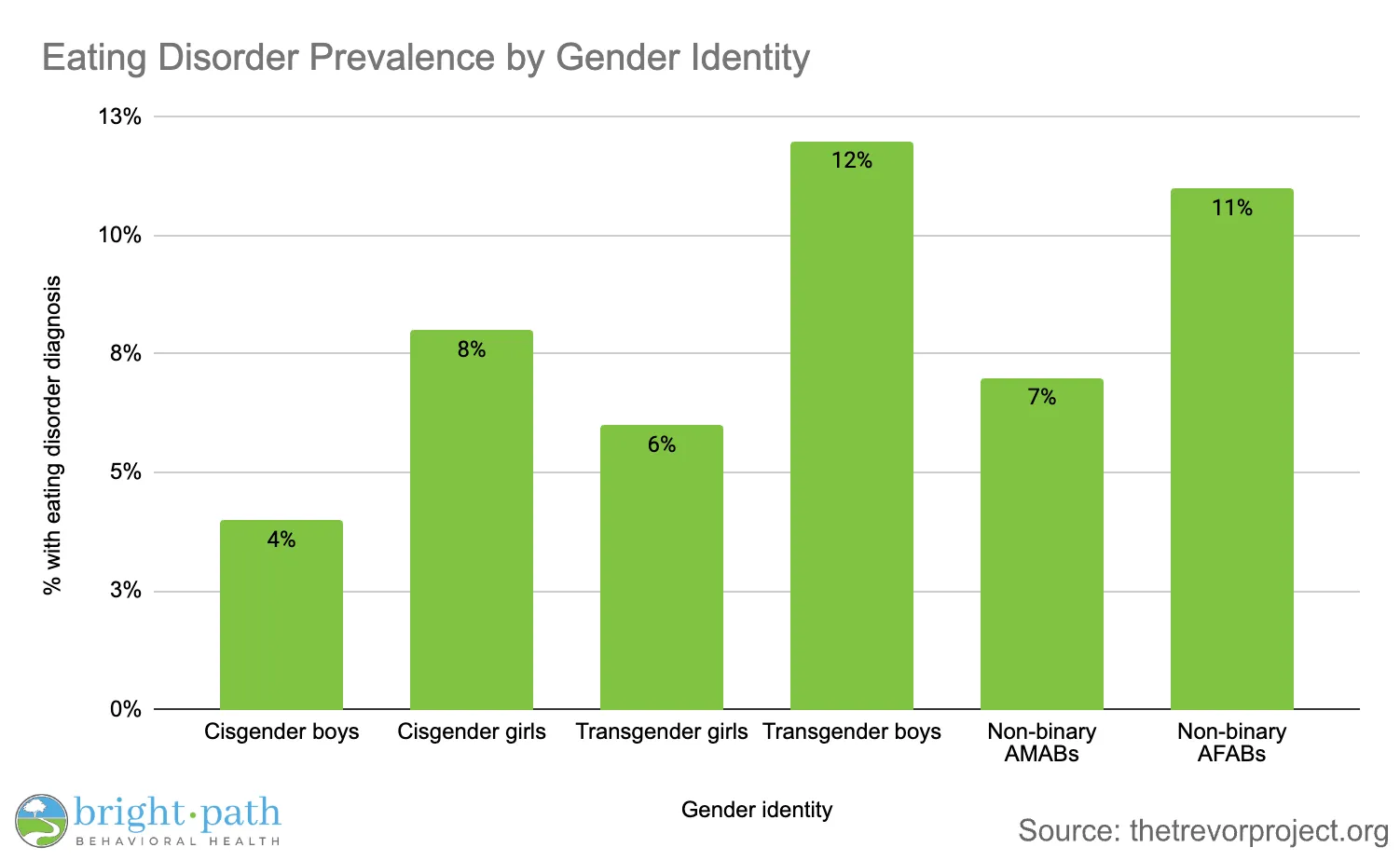
- 9% of surveyed LGBTQ+ youth (aged 13 to 24) reported having been diagnosed with an eating disorder, while another 29% believed they may have one without a formal diagnosis.
- Transgender boys and nonbinary youth assigned female at birth (AFAB) had the highest prevalence of eating disorder diagnoses at 12% and 11% respectively.
- Native/Indigenous (12%) and Multiracial (10%) LGBTQ+ youth reported the highest rates of diagnosed eating disorders in the survey. In addition, roughly one-third (33%) of individuals in both groups suspected they may have an eating disorder but had not been formally diagnosed.
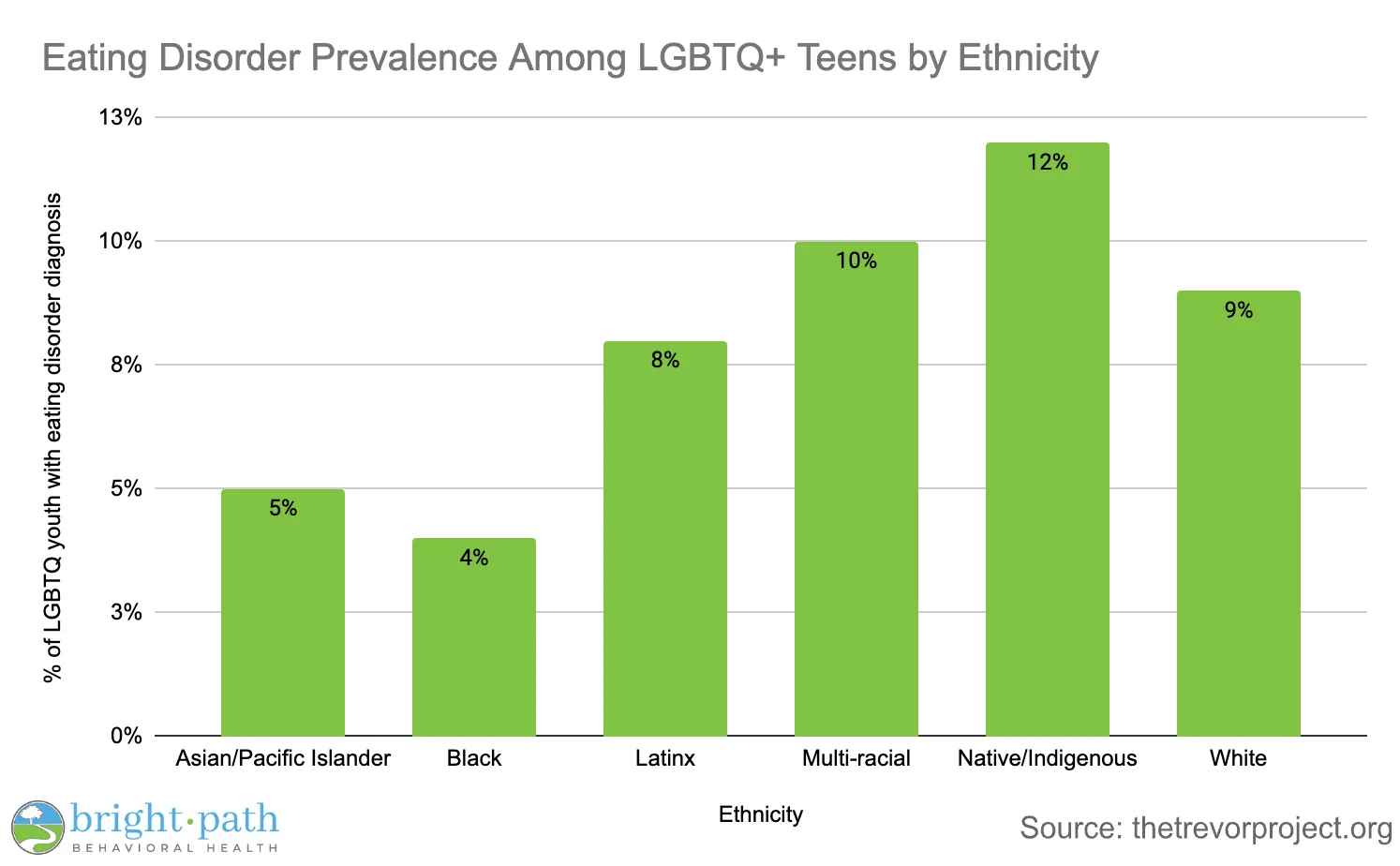
- Black LGBTQ+ youth had similar rates of suspecting they have an eating disorder as their White LGBTQ+ peers (28% vs. 27%), even though White LGBTQ+ youth were diagnosed with eating disorders at more than double the rate of Black LGBTQ+ youth (9% vs. 4%).
- LGBTQ+ youth who had ever been diagnosed with an eating disorder had nearly 4 times greater odds (adjusted odds ratio 3.94) of attempting suicide in the past 12 months than those who had never had or suspected an eating disorder.
- According to “Eating Disorders Among LGBTQ Youth: A 2018 National Assessment” by The Trevor Project, the National Eating Disorders Association, and Reasons Eating Disorder Center, an online survey of 1,034 LGBTQ+ youth aged 13 to 24 fielded in January and February 2018:
- 54% of the surveyed youth reported that they have been diagnosed with an eating disorder at some point in their lives.
- Of the 46% of LGBTQ+ youth who did not have a formal diagnosis, 54% shared concerns that they might be suffering from an undiagnosed eating disorder.
- Cisgender female LGBTQ+ youth had the highest reported rates of eating disorder diagnoses, with 54% stating they have received a diagnosis.
- High rates of eating disorders were also found among gender non-conforming and transgender male LGBTQ+ youth, with 40% of gender non-conforming and genderqueer respondents and 39% of transgender males reporting a diagnosis.
- 58% of LGBTQ+ youth diagnosed with an eating disorder stated they had contemplated suicide. Of these individuals, those with bulimia nervosa had the highest rate of suicidal ideation (96%), followed by anorexia nervosa (92%), binge eating disorder (86%), and other eating disorders (85%).
- 34% of LGBTQ+ youth who attempted suicide in the past year were diagnosed with an eating disorder.
A teen in crisis can call or text 988, or chat at 988lifeline.org, to reach the 988 Suicide & Crisis Lifeline, which offers Spanish-language and ASL options.
Service Use Among Teens With Eating Disorders
- According to Anderson et al.’s 2023 CDC report “Emergency Department Visits Involving Mental Health Conditions, Suicide-Related Behaviors, and Drug Overdoses Among Adolescents” in Morbidity and Mortality Weekly Report, which used National Syndromic Surveillance Program data from January 2019 to February 2023, emergency department visits for eating disorders among U.S. adolescents aged 12 to 17 were 55% higher in fall 2022 than in fall 2019. Visits rose for both girls (57%) and boys (37%).
- According to Rappaport et al.’s 2024 study “Clinical Characteristics of US Adolescents Hospitalized for Eating Disorders 2010-2022” in Hospital Pediatrics, 12 U.S. children’s hospitals in the PEDSnet network recorded 13,403 eating disorder hospitalizations of patients aged 12 to 21, with a large increase during the COVID-19 pandemic. Anorexia nervosa accounted for 57.5% of cases, 85.9% of patients were female, and 23.6% required rehospitalization for eating disorder treatment within one year.
- According to Swanson et al.’s 2011 study “Prevalence and Correlates of Eating Disorders in Adolescents,” based on NCS-A data collected from 2001 to 2004:
- Between 73% and 88% of adolescents diagnosed with eating disorders had interacted with service providers, including mental health professionals, school counselors, or general healthcare services.
- Only 3% to 28% of these adolescents had specifically discussed their eating or weight problems with a professional.
Teen Eating Disorders and Ethnicity
- According to Raney et al.’s 2023 study “Racial discrimination is associated with binge-eating disorder in early adolescents: a cross-sectional analysis” in the Journal of Eating Disorders, U.S. children aged 9 to 12 who reported racial or ethnic discrimination had 3 times higher odds (odds ratio 3.31) of meeting criteria for binge eating disorder than those who did not. The study analyzed 11,075 participants in the Adolescent Brain Cognitive Development Study from 2018 to 2020 and measured an association at one point in time, not a cause.
Teen Eating Disorders and Mortality Rates
- According to Crow et al.’s 2009 study “Increased mortality in bulimia nervosa and other eating disorders” in the American Journal of Psychiatry, which followed 1,885 patients of a U.S. academic eating disorders clinic for 8 to 25 years, crude mortality rates were 4.0% for anorexia nervosa, 3.9% for bulimia nervosa, and 5.2% for eating disorder not otherwise specified. The study covered patients of all ages rather than teens only, and it found elevated suicide mortality for bulimia nervosa and eating disorder not otherwise specified.
Frequently Asked Questions
Is Cyberbullying Linked to Eating Disorders in U.S. Teens?
Yes. Cheng et al.’s 2023 study “Cyberbullying and eating disorder symptoms in US early adolescents” found that among 10,258 U.S. adolescents aged 10 to 14 (ABCD Study, 2018 to 2020), cyberbullying victims were 2.41 times as likely to worry about weight gain and 2.64 times as likely to feel distress about binge eating.
Victims were also 1.95 times as likely to report binge eating and 1.95 times as likely to report compensatory behaviors to prevent weight gain.
Learn more about cyberbullying in our post called Teenage Cyberbullying Statistics 2026.
Are Eating Disorders Linked to Suicide in U.S. Teens?
Yes. Patel et al.’s 2021 study of 122,020 U.S. adolescents hospitalized with major depression (2012 to 2014 data) found that those with an eating disorder had 5 times the odds of experiencing suicidal ideation. A teen in crisis can call or text 988, or chat at 988lifeline.org.
Which Eating Disorder Is the Most Common in U.S. Teens?
Binge eating disorder is the most common eating disorder among U.S. adolescents, with a lifetime prevalence of 1.6%, compared with 0.9% for bulimia nervosa and 0.3% for anorexia nervosa, according to Swanson et al.’s 2011 analysis of NCS-A data from 2001 to 2004.


Clinically reviewed by Dr. Shantel Sullivan, Ed.D., LCSW, Chief Executive Officer