
-1.svg)
The signs of anxiety in teenage girls include excessive worry, irritability, fatigue, difficulty concentrating, physical complaints like headaches or stomachaches, social withdrawal, and sleep issues.
While anxiety is a normal part of adolescence, it becomes a concern when it starts to interfere with your daughter’s ability to function at school, connect with others, or enjoy daily life.
In North Carolina, nearly 40% of high school girls reported experiencing symptoms of anxiety or depression, according to the 2023 North Carolina Youth Risk Behavior Survey (NC YRBS). This growing mental health concern highlights the importance of early identification and support.
For many parents, it is difficult to distinguish between typical teen stress and a more serious anxiety disorder, especially since many teenage girls learn to hide their distress. They appear “fine” on the outside while silently struggling inside.
What Are the Most Common Signs of Anxiety in Teenage Girls?
The most common signs of anxiety in teenage girls include excessive worry, avoidance behavior, irritability, and mood swings. While some symptoms are easy to spot, others are subtle or easily misinterpreted. Look for consistent patterns that disrupt your daughter’s mood, behavior, or daily life over time.
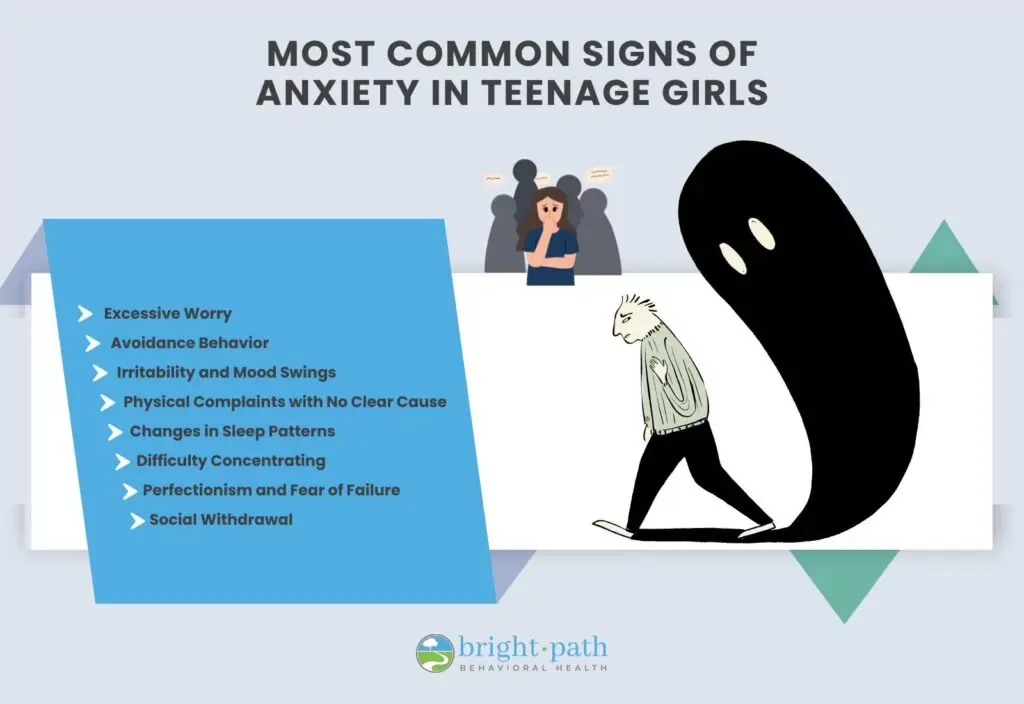
Here are the key signs of anxiety in teenage girls:
- Excessive Worry: Constant worry about school, friendships, health, or the future, even when there’s no apparent reason, is a sign of generalized anxiety.
- Avoidance Behavior: Skipping school, refusing social invitations, avoiding eye contact, or steering clear of new experiences indicate that anxiety is limiting her ability to engage.
- Irritability and Mood Swings: If your daughter is more reactive than usual or easily overwhelmed by small triggers, she could be emotionally exhausted by anxious thoughts.
- Physical Complaints with No Clear Cause: Frequent headaches, stomachaches, dizziness, muscle tension, or a racing heart are common physical symptoms of anxiety in teen girls.
- Changes in Sleep Patterns: Trouble falling asleep, staying asleep, or waking up feeling unrested are signs that her mind is staying active at night due to worry or panic.
- Difficulty Concentrating: Anxiety impacts her ability to focus in class, complete homework, or follow conversations, mistaken for “laziness” or distraction.
- Perfectionism and Fear of Failure: Many anxious teens place enormous pressure on themselves to succeed, and even small mistakes feel catastrophic.
- Social Withdrawal: Girls with anxiety pull away from friends, stop engaging in activities they once enjoyed, or seem “disconnected” from others.
Is My Daughter Just Stressed or Does She Have An Anxiety Disorder?
To understand if your daughter is just stressed or if she has an anxiety disorder, you need to talk to her. It’s normal for teens to feel nervous about exams, changing schools, or conflicts with friends. But when anxiety is persistent, disproportionate, and interferes with daily life, it meets the criteria for an anxiety disorder.
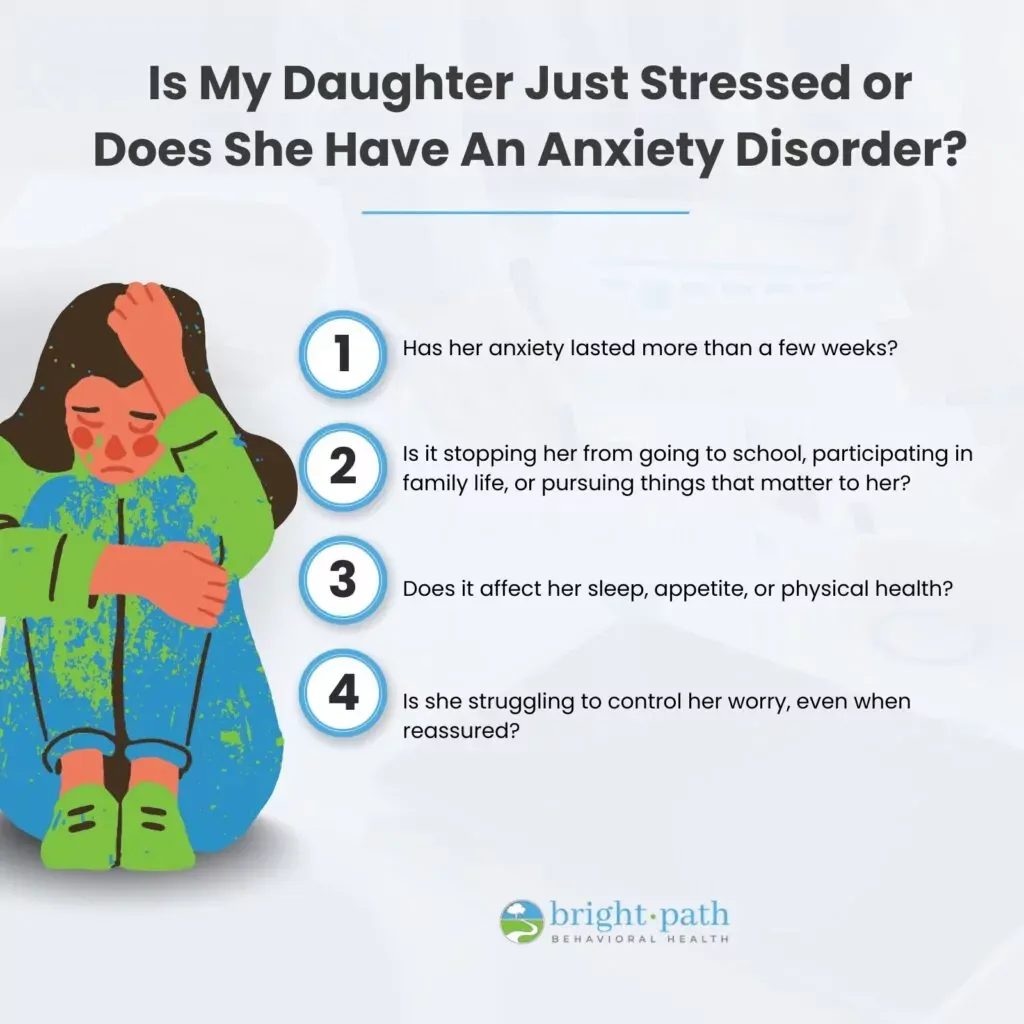
Ask yourself the following questions:
- Has her anxiety lasted more than a few weeks?
- Is it stopping her from going to school, participating in family life, or pursuing things that matter to her?
- Does it affect her sleep, appetite, or physical health?
- Is she struggling to control her worry, even when reassured?
If the answer to most of these is yes, seeking support from a licensed teen therapist is an important next step.
What Anxiety Disorders Are Most Common in Teen Girls?
The most common anxiety disorders in teen girls include generalized anxiety disorder, social anxiety disorder, and panic disorder. Several types of anxiety disorders develop during adolescence.
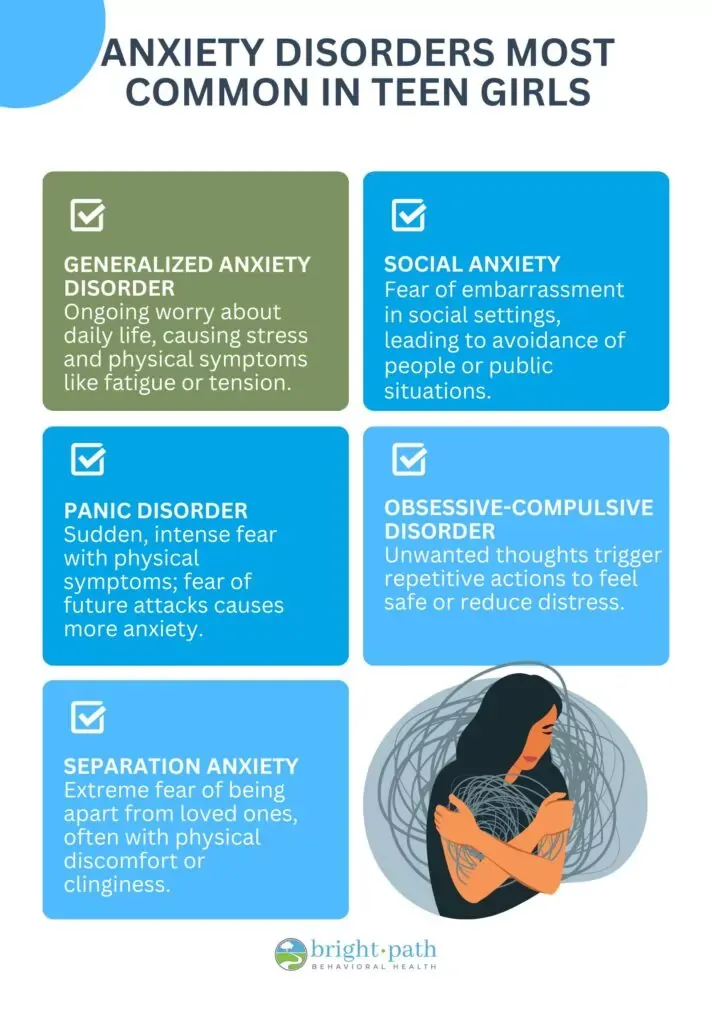
The following are the most common anxiety disorders in teen girls:
Generalized Anxiety Disorder (GAD)
Generalized Anxiety Disorder in teenage girls involves constant, uncontrollable worry about everyday matters ranging from school performance to family safety to social situations. Unlike occasional stress, this anxiety persists most days for at least six months and feels impossible to turn off. It leads to physical symptoms like muscle tension, headaches, irritability, restlessness, or fatigue. Girls with GAD appear overly responsible or perfectionistic, and even minor concerns feel overwhelming or catastrophic.
Social Anxiety Disorder
Social Anxiety Disorder causes intense fear of being judged, embarrassed, or negatively evaluated by others. For teenage girls, this manifests in school settings such as avoiding group projects, dreading public speaking, or skipping social events out of fear of humiliation. Even everyday interactions like ordering food or asking a teacher for help feel paralyzing. This fear is more than shyness; it leads to avoidance behaviors that interfere with friendships, academics, and self-confidence.
Panic Disorder
Panic Disorder is marked by sudden and repeated panic attacks, episodes of overwhelming fear that come on quickly and peak within minutes. During an attack, a teen girl experienced a racing heart, shortness of breath, dizziness, chest pain, nausea, or feelings of losing control. The intensity mimics a serious medical event, which adds to the fear. Over time, she begins to fear the panic attacks themselves and avoids places or situations where one might occur, leading to a cycle of avoidance and worsening anxiety.
Obsessive-Compulsive Disorder (OCD)
OCD involves distressing, intrusive thoughts (obsessions) and repetitive behaviors or mental rituals (compulsions) performed to reduce anxiety. For teen girls, obsessions center around cleanliness, safety, harm, or perfection. Compulsions include repeated hand-washing, checking locks, counting, or arranging items in a specific way. These rituals are time-consuming and interfere with school, friendships, and family life. Many teens feel ashamed or confused by their compulsions, making them reluctant to ask for help.
Separation Anxiety
While separation anxiety is commonly associated with younger children, it persists or emerges in the teenage years. Adolescent girls with separation anxiety experience excessive distress about being apart from caregivers or loved ones. They fear something bad will happen if they’re not together and avoid sleepovers, school trips, or even short separations. This anxiety also causes physical complaints like nausea or stomachaches before separation. It reflects deeper fears of abandonment, safety, or loss.
What Should I Do If My Daughter Says She’s Anxious?
If your daughter says she’s anxious, believe her even if she doesn’t “look anxious” to you. Many teenage girls internalize anxiety and put on a brave face at home, especially if they’re worried about disappointing others or being misunderstood.
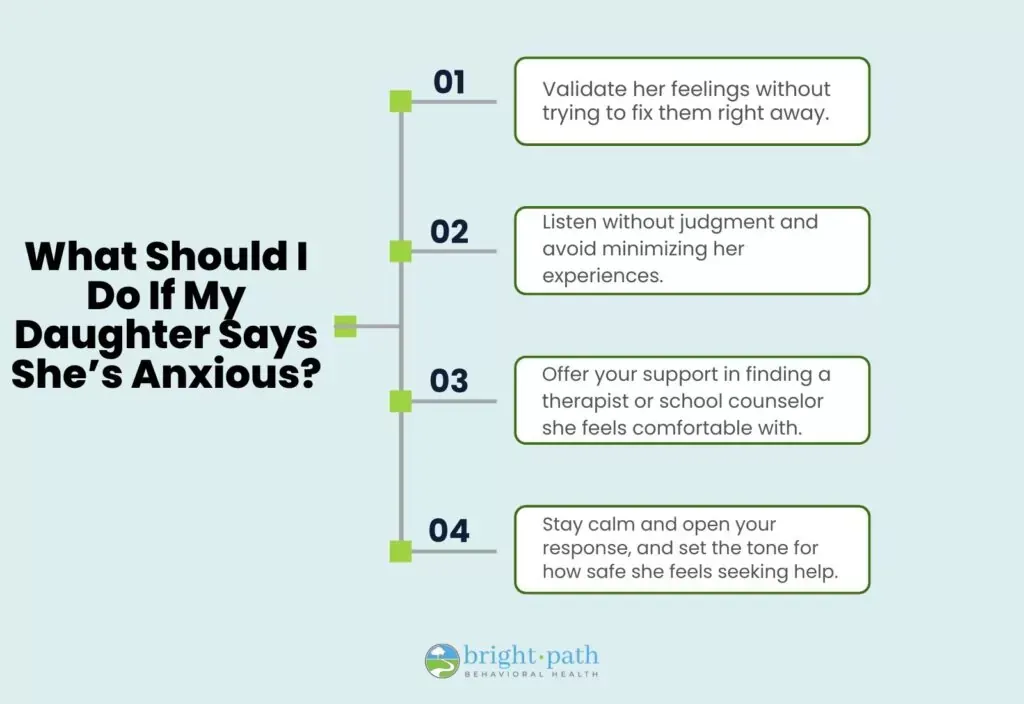
If your daughter tells you she’s feeling anxious, do the following:
- Validate her feelings without trying to fix them right away.
- Listen without judgment and avoid minimizing her experiences.
- Offer your support in finding a therapist or school counselor she feels comfortable with.
- Stay calm and open your response, and set the tone for how safe she feels seeking help.
As a Parent, How Can I Support My Teenage Daughter Through Anxiety?
As a parent, you can support your teenage daughter through anxiety by helping her build the tools to manage it. Always consult a professional and be a part of her journey.
Here’s how you can support your daughter through anxiety:
- Foster open communication: Make space for daily check-ins. Even a simple “How are you really doing?” opens the door to deeper conversations.
- Promote healthy routines: Regular sleep, physical activity, screen limits, and nutritious meals all help regulate mood and anxiety levels.
- Model calm behavior: Your own responses to stress, how you talk about worry, handle conflict, or prioritize self-care influence hers.
- Encourage professional help: If anxiety is disrupting school, relationships, or mental health, therapy is an empowering and effective step. Evidence-based counseling, such as CBT (Cognitive Behavioral Therapy), is highly effective for teenage anxiety.
- Practice coping strategies together: Try breathing exercises, mindfulness apps, or grounding techniques she uses when she’s overwhelmed. Sometimes, doing them with her makes all the difference.
When Should I Seek Therapy for My Anxious Teen Daughter?
You should seek therapy for your anxious teen daughter right away. You don’t have to wait for things to get “bad enough.” If your daughter’s anxiety is limiting her life, causing emotional distress, or making it hard for her to cope day to day, a therapist can help.
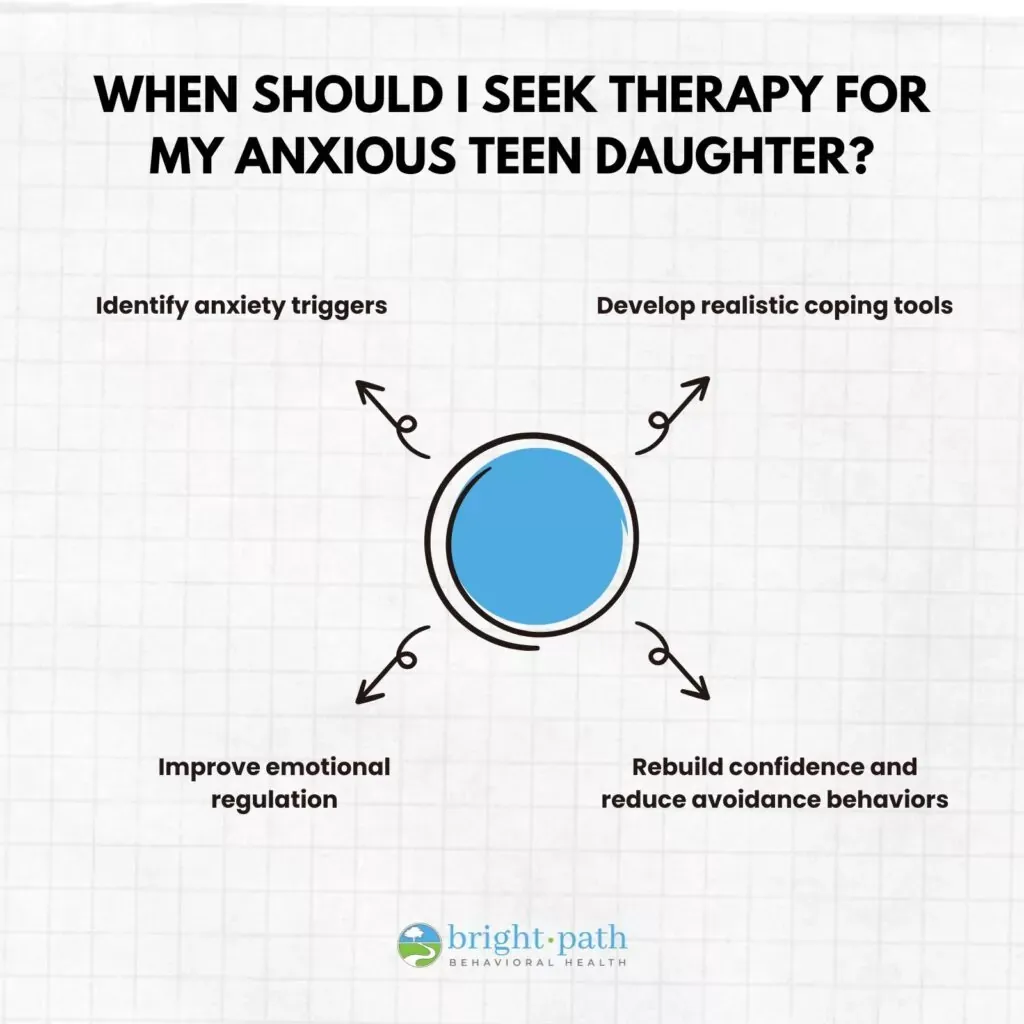
Teen counselors use personalized, evidence-based strategies to:
- Identify anxiety triggers
- Develop realistic coping tools
- Improve emotional regulation
- Rebuild confidence and reduce avoidance behaviors
Counseling provides a confidential space where your daughter can explore her thoughts, build resilience, and learn how to manage anxious feelings with guidance from a mental health professional.
Does Insurance Cover Treatment for Anxiety in Teenage Girls in North Carolina?
Yes, insurance covers treatment for anxiety in teenage girls in North Carolina, especially if the provider is in-network and the treatment is deemed medically necessary. Most private insurance plans, as well as Medicaid, include coverage for therapy, psychiatric evaluations, and sometimes medication.
Parents should check their specific plan details to confirm co-pays, session limits, and provider eligibility. Preauthorization is sometimes required for certain services, like psychological testing or intensive outpatient programs.