
-1.svg)
Supporting a teen struggling with depression feels overwhelming, but you’re not alone, and neither are they. Whether you’re a parent, caregiver, or educator in North Carolina, knowing how to respond with compassion and clarity makes a world of difference. Teen depression goes far beyond mood swings; it’s a serious mental health condition that affects how teens think, feel, and function daily.
Rates of teenage depression have nearly doubled in the past decade, especially in the face of growing academic pressure, social media influence, and post-pandemic challenges. From 2019 to 2021 in North Carolina, the risk of teenagers experiencing one or more major depressive episodes increased by 46%.
This guide is designed to help you recognize the early warning signs, like withdrawal, irritability, or sudden changes in behavior, so you respond with empathy rather than judgment.
We’ll also walk you through common causes, proven strategies to offer emotional and practical support, and when to seek professional help. Together, we create a more understanding, supportive environment where teens in North Carolina heal, grow, and thrive.
What is Teen Depression?
Teen depression is a mental health condition that causes persistent sadness, irritability, and a loss of interest in daily life. Unlike normal mood swings, it lasts for weeks or longer and affects how a teen thinks, feels, and functions at home, school, and socially.
Teens with depression withdraw from friends, lose motivation, sleep too much or too little, or struggle with concentration. Physical symptoms like fatigue or headaches also appear without a clear cause.
It’s more than just a phase; it’s a serious condition that needs support and professional care. With early recognition and the right help, teens recover and rebuild their emotional well-being.
Need to Know: Impact Of Teen Depression On Academic Performance
What are the Signs and Symptoms of Teen Depression?
The signs and symptoms of teen depression include emotional, behavioral, physical, and cognitive changes that persist over time and interfere with daily life. These symptoms vary from one teen to another but go beyond normal teenage ups and downs. Recognizing them early helps in getting the right support and treatment.
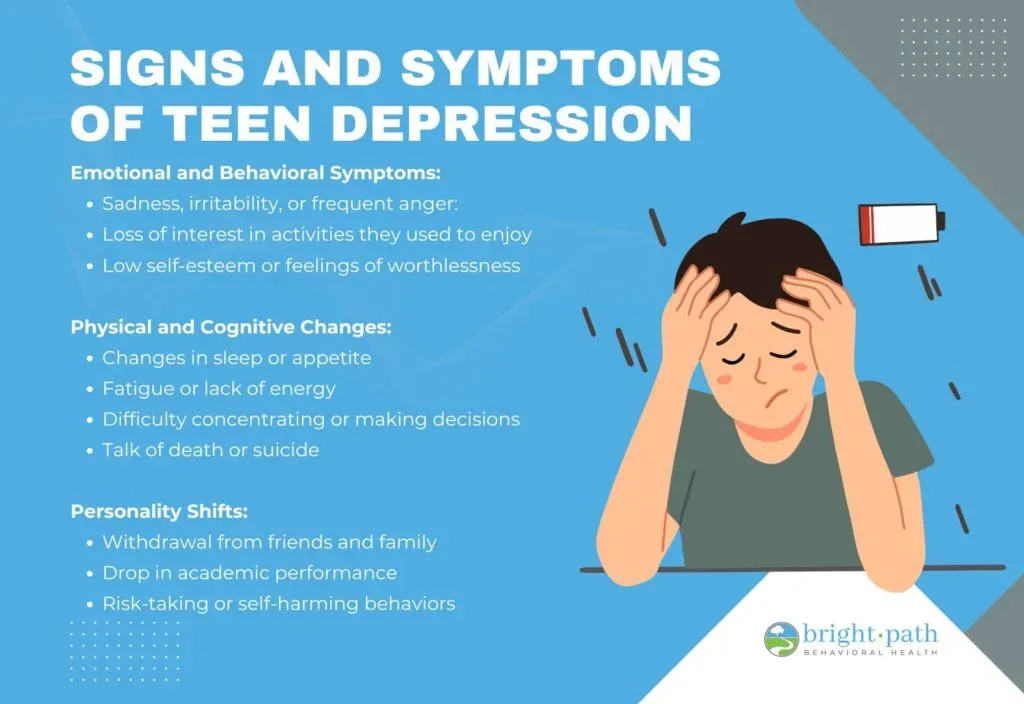
Emotional and Behavioral Symptoms:
- Sadness, irritability, or frequent anger: Teens seem constantly upset, moody, or easily frustrated.
- Loss of interest in activities they used to enjoy: A lack of enthusiasm for hobbies, sports, or social time.
- Low self-esteem or feelings of worthlessness: Talking negatively about themselves or feeling like a burden.
Physical and Cognitive Changes:
- Changes in sleep or appetite: Sleeping too much or too little, sudden weight changes, or loss of appetite.
- Fatigue or lack of energy: Ongoing tiredness that doesn’t improve with rest.
- Difficulty concentrating or making decisions: Trouble staying focused, remembering things, or thinking clearly.
- Talk of death or suicide: Expressing hopelessness or making comments about dying or disappearing.
Personality Shifts:
- Withdrawal from friends and family: Avoiding social situations and isolating themselves.
- Drop in academic performance: Sudden disinterest in school or slipping grades.
- Risk-taking or self-harming behaviors: Engaging in dangerous activities or intentionally hurting themselves.
What are the Common Causes of Depression in Teens?
The common causes of depression in teens include a mix of biological, psychological, and environmental factors. Adolescence is a time of major change, and for some teens, these changes feel overwhelming, especially when combined with outside pressures or internal struggles. Understanding these causes helps caregivers respond with empathy and the right kind of support.
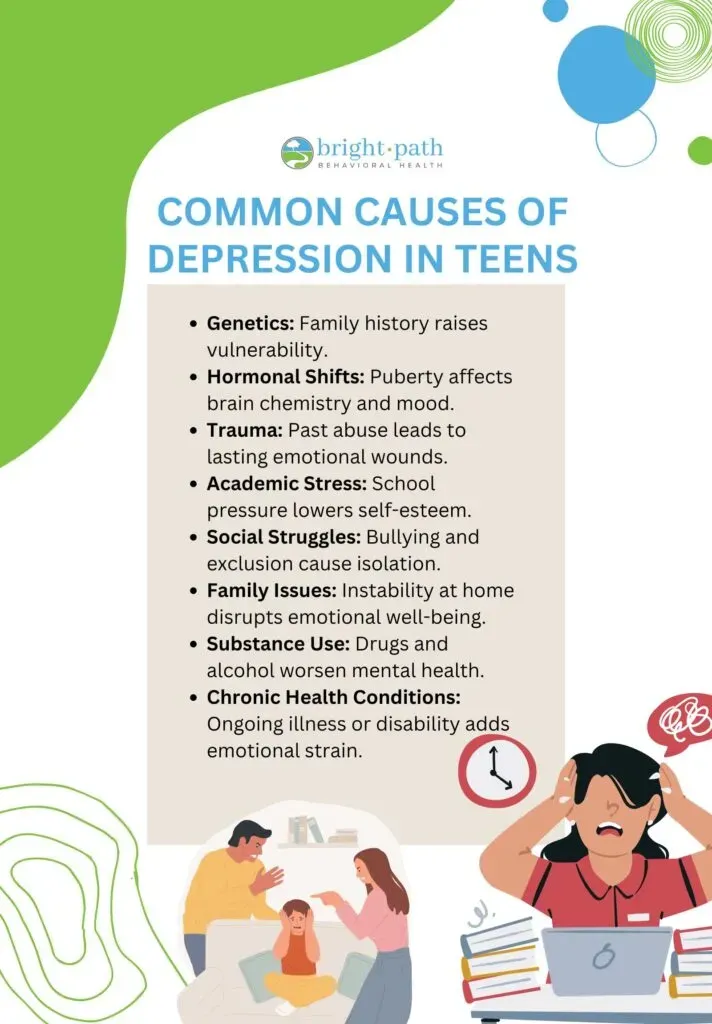
Here are the causes:
- Genetics and family history: Teens with a family history of depression or other mental health conditions are at a higher risk.
- Hormonal changes: Shifts in brain chemistry during puberty impact mood and emotional regulation.
- Trauma or abuse: Past experiences of emotional, physical, or sexual abuse lead to long-term emotional struggles.
- Academic pressure: High expectations, school workload, or fear of failure contribute to stress and low self-esteem.
- Social challenges: Bullying, peer pressure, or difficulty fitting in lead to feelings of isolation or rejection.
- Family conflict or instability: Divorce, financial struggles, or strained relationships at home deeply affect a teen’s emotional health.
- Substance use: Alcohol or drug use worsens existing emotional issues and interferes with brain development.
- Chronic illness or disability: Living with health challenges increases the risk of depression due to physical limitations or emotional stress.
How to Help a Teen With Depression?
To help a teen with depression starts with a willingness to listen without judgment. Teens do not always express their struggles openly, but your support is a lifeline. Early intervention, open communication, and access to the right resources make a significant difference in their recovery and overall well-being.
Here are the ways to help your teen with depression:
Start a Supportive Conversation
To start a supportive conversation with a teen who is experiencing depression feels difficult, but your approach makes all the difference. Begin by choosing a calm, private setting where they feel safe and not pressured. Create an environment that encourages openness without fear of being judged.
Use gentle, open-ended questions to invite dialogue:
“What’s been bothering you lately?”
“Do you want to talk about how you’re feeling?”
Avoid offering immediate solutions, making comparisons, or minimizing their feelings. Instead, focus on listening, validating their emotions, and showing that you’re there for them, without pushing too hard.
Keep the door open even if they don’t want to talk right away. Regular, caring check-ins help build trust and let them know they’re not alone.
Validate Their Feelings
Validation helps teens feel seen and understood, which is especially important when they’re struggling with depression. Acknowledge their emotions without trying to minimize or fix them. Let them know it’s okay to feel what they’re feeling.
Say things like:
“That sounds hard.”
“I’m here for you, no matter what.”
Avoid dismissive phrases such as “You’ll be fine” or “Others have it worse,” which make them feel unheard or guilty for expressing pain. Instead, focus on being present, empathetic, and supportive, showing them that their feelings are valid and that you’re there to help them through it.
Seek Professional Help When Needed
If your teen’s symptoms persist for more than two weeks or you notice signs of self-harm or suicidal thoughts, it’s time to seek professional help. Don’t wait; early intervention makes a big difference in their recovery.
Talk to a doctor, pediatrician, or mental health professional to get a proper evaluation. Treatment options include:
- Therapy: Evidence-based approaches like Cognitive Behavioral Therapy (CBT) or Interpersonal Therapy (IPT) help teens manage thoughts and emotions.
- Medication: Antidepressants are recommended, but only after a thorough clinical assessment by a qualified provider.
Involve your teen in discussions about their treatment plan. Giving them a voice in the process helps build trust, encourages engagement, and supports long-term healing.
Encourage Healthy Daily Habits
Supporting your teen’s mental health also means helping them build daily habits that nurture their body and mind. Small, consistent changes have a big impact on mood, energy, and emotional resilience.
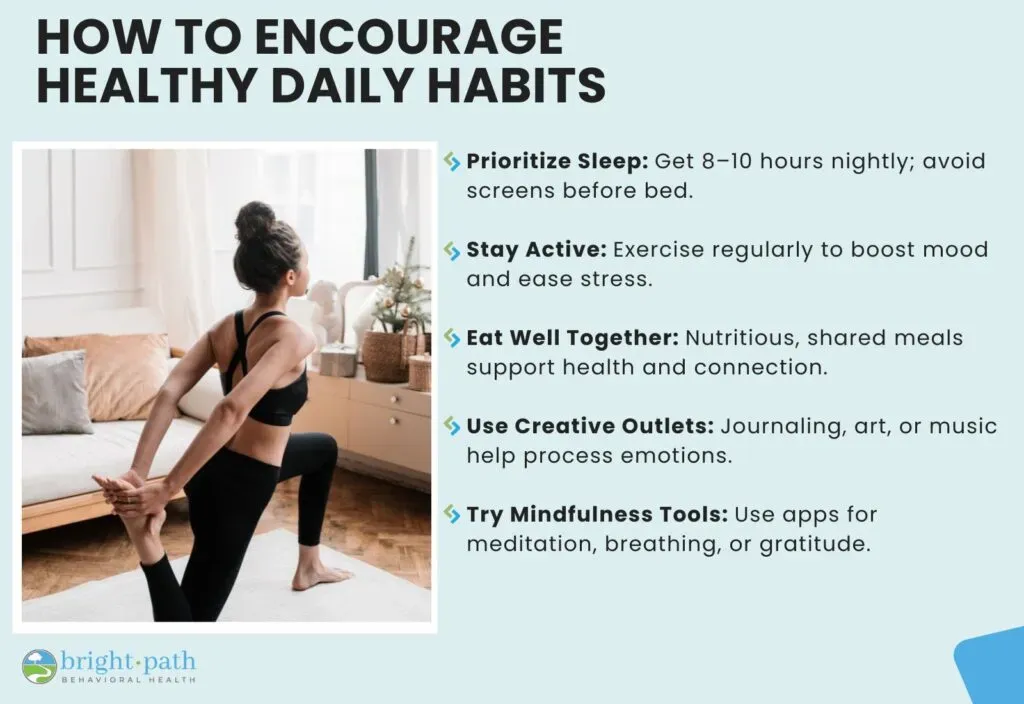
- Prioritize sleep and limit screen time: Aim for 8–10 hours of quality sleep and reduce late-night phone or social media use.
- Encourage physical activity: Regular movement, whether it’s walking, dancing, or team sports, boosts mood and reduces stress.
- Cook and eat nutritious meals together: Shared meals provide structure and a chance to connect while supporting overall health.
- Promote journaling, art, or other creative outlets: These activities help teens express emotions in a safe, productive way.
- Introduce mindfulness or mental wellness apps: Guided breathing, meditation, or gratitude exercises help teens manage anxiety and build coping skills.
Building these habits together shows your support and reinforces that healing takes time and daily care.
How to Create a Supportive Home Environment for Teens with Depression?
To create a supportive home environment for a teen with depression, you need to foster emotional safety, reduce stress, and maintain consistent, compassionate communication. Your home doesn’t have to be perfect, just a place where your teen feels accepted, heard, and understood. Even small, intentional changes make a big difference in their healing process.
Here are some practical ways to support them at home:
- Be Patient and Present: Let your teen move at their own pace emotionally. Show up consistently, even when they seem withdrawn or distant.
- Reduce Pressure: Give them space to breathe by easing academic, social, or extracurricular demands during difficult periods.
- Stay Connected With Their World: Ask about their music, interests, or online activities to show you care and to keep communication open.
- Model Healthy Coping Skills: Demonstrate calm ways to manage stress, such as deep breathing, journaling, or taking breaks.
- Encourage Routine Without Rigidity: Maintain gentle daily structure (like meals or sleep times) without being overly strict, allowing room for emotional needs.
When to Take Immediate Action for Teens with Depression?
To take immediate action for a teen with depression, you need to recognize signs that suggest they are in serious emotional danger. While some symptoms develop gradually, certain behaviors indicate a possible mental health crisis and require urgent intervention. Acting quickly protects your teen from harm and connects them with the support they need.
Be alert to these critical warning signs:
- Expressing hopelessness or saying they feel like a burden: Phrases like “I can’t do this anymore” or “You’d be better off without me” signal serious emotional distress.
- Sudden calmness after a deep low: A drastic mood shift from sadness to unusual calm indicates they’ve decided to end their life.
- Talking or joking about death: Any mention of death, dying, or suicide, even if said casually, must be taken seriously.
- Giving away possessions or writing goodbye messages: These actions reflect suicidal planning and require immediate help.
In these moments, contact a mental health professional, call a suicide prevention hotline, or go to the nearest emergency room. Your quick response saved a life.
What if a teen refuses to talk or denies being depressed?
If a teen refuses to talk or denies being depressed, it is frustrating and worrying, but it’s not uncommon. Many teens struggle to express their emotions or fear being judged. Instead of pushing them to open up, focus on creating a calm, non-judgmental presence. Let them know you’re there whenever they’re ready, and express concern using gentle language like, “I’ve noticed you haven’t seemed like yourself lately, and I’m here if you want to talk.” Sometimes, teens are more comfortable opening up to another trusted adult, like a teacher, counselor, or family friend. Keep a close eye on their behavior for signs of worsening depression, and don’t hesitate to reach out to a mental health professional for guidance. Your quiet consistency and care build trust over time and encourage them to seek help when they’re ready.
Is medication safe for teens?
Yes, medication is safe for teens when prescribed and monitored by a qualified mental health professional. Antidepressants like SSRIs are commonly used to treat moderate to major depression and are FDA-approved for adolescent use. While side effects occur, they are usually manageable with proper monitoring. Medication is most effective when combined with therapy, and decisions must always involve the teen and their caregiver. With the right care, medication is a helpful part of a teen’s recovery.